
Sauces & Condiments
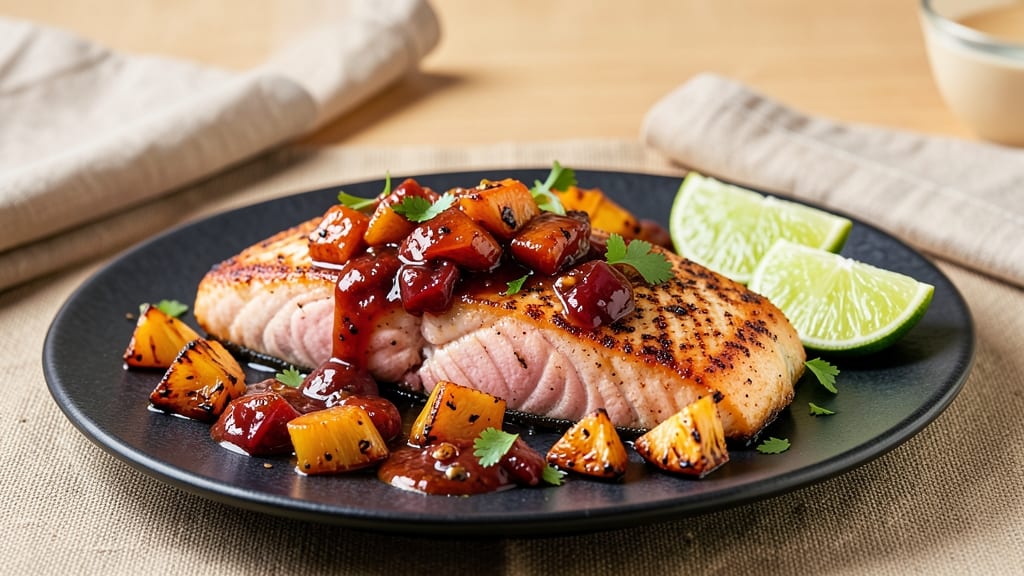
Roasted pineapple habanero sauce salmon delivers a perfect balance of sweet heat that transforms simple ingredients into a restaurant-worthy dish. The caramelized edges on the salmon contrast beautifully with the tangy, slightly spicy sauce made from roasted pineapple and habanero—every bite is a harmony of flavors. This recipe combines the best of grilling and roasting techniques to create a dish that's both elegant and approachable.
The secret lies in two key steps: first, roasting the pineapple until it's tender and caramelized, which intensifies its natural sweetness and forms the base of the sauce. Then, marinating the salmon in a blend of citrus and herbs ensures it stays moist while developing a golden crust.
The habanero adds a fiery kick, but the pineapple's sweetness balances it perfectly, creating a sauce that's both bold and smooth.
What makes this dish truly special is how the flavors come together—juicy, perfectly cooked salmon with a crispy exterior, topped with a vibrant sauce that's sweet, tangy, and just spicy enough to leave a lasting impression.
The texture contrast between the tender salmon and the slightly charred pineapple adds another layer of complexity.
Pair this dish with a side of quinoa or a fresh green salad to round out the meal, and don't forget to garnish with fresh cilantro or a sprinkle of sesame seeds for extra flair.
This recipe is perfect for impressing guests or treating yourself to a flavor-packed dinner that feels like a vacation in every bite.
Ingredients for roasted pineapple habanero sauce salmon
Sweet caramelized pineapple meets fiery habanero—this salmon is pure flavor explosion.
| Ingredient | Amount | Notes |
|---|---|---|
| Fresh Atlantic Salmon Fillets 🐟 | 1 ½ lb | Skin-on, center-cut preferred |
| Fresh Pineapple 🍍 | 1 whole | Yellow variety, cut into chunks |
| Habanero Peppers 🌶️ | 2 whole | Seeds removed for mild heat |
| Extra-Virgin Olive Oil 🫒 | ½ cup | For roasting and marinade |
| Fresh Lime Juice 🍋 | ¼ cup | Freshly squeezed, no pulp |
| Fresh Cilantro 🌿 | ¼ cup | Chopped, for garnish |
| Garlic Cloves 🧄 | 4 cloves | Minced for marinade |
| Fresh Ginger 🌿 | 1 tbsp | Grated, fresh preferred |
| Soy Sauce 🥢 | 2 tbsp | Low-sodium preferred |
| Honey 🍯 | 1 tbsp | Wildflower for floral notes |
| Sesame Seeds 🌰 | 1 tbsp | Toasted for garnish |
| Salt 🧂 | 1 tsp | Kosher or sea salt |
| Black Pepper 🌶️ | ½ tsp | Freshly ground preferred |
| Brown Sugar 🍚 | 1 tbsp | Lightly packed |
The pineapple is your secret weapon here. Look for fully ripe pineapples—they'll be heavy for their size and smell sweet at the base. Trader Joe's and Whole Foods carry the best quality, but any grocery store's yellow pineapple will work. Roasting it until caramelized transforms its flavor from tart to rich and jammy—this is what balances the habanero's heat. For the habanero, remove seeds and membranes to control the spice level; if you want extra heat, keep a few seeds in. The salmon should be skin-on for crispy edges—ask your fishmonger for center-cut fillets if possible, as they're less likely to have bones.
No habanero? Scotch bonnet or serrano peppers work in a pinch, but reduce the amount to half—these peppers pack serious heat. Running low on lime juice? Key lime juice or even lemon juice will work, though the flavor will shift slightly. The ginger can be swapped for galangal if you're feeling adventurous, but fresh ginger is more accessible and still delivers that zingy punch. For the honey, agave or maple syrup are great substitutes if you're avoiding honey. And if you can't find sesame seeds, toasted pumpkin seeds give a similar crunch with a different flavor profile.
This sauce keeps beautifully—store it in an airtight container in the fridge for up to 5 days, though it's best used within 2-3 days for maximum freshness. The salmon fillets should be used within 2 days of purchase for peak texture. To prep ahead, roast the pineapple and make the sauce a day in advance, then reheat gently before serving. The leftovers reheat wonderfully—just warm in a saucepan over low heat with a splash of water to prevent drying out. Garnish with fresh cilantro and sesame seeds right before serving to keep everything vibrant.
Why You'll Love This Recipe
- Sweet Heat Magic: That caramelized pineapple and charred habanero blend is next-level—like a tropical vacation in your mouth. The lime juice ties it all together so the heat doesn’t overpower, just lingers in the best way.
- One-Pan Wonder: Honestly, this is my lazy chef moment: salmon and pineapple roast together, no flipping, no fuss. Just toss everything on a sheet pan, set the timer, and walk away. Twenty minutes later, dinner’s ready.
- Leftover Hack: Between us, this sauce keeps perfectly for days—better than takeout, I swear. Drizzle it over rice, toss with noodles, or just eat it straight with crackers. (Yes, I’ve done that.)
- Budget-Friendly Luxury: Fresh salmon feels fancy, but the pineapple and habanero stretch it into two meals without breaking the bank. Plus, you’re using the whole fruit—no wasted rinds or cores here. Smart, right?
Step-by-step instructions for roasted pineapple habanero salmon
This fusion dish delivers caramelized salmon edges with sweet-spicy glaze—here's how to nail it every time.
Roast the Pineapple and Habanero for Sweet Heat Base
Preheat your oven to 400°F and line a baking sheet with parchment paper. Cut the whole fresh pineapple into 1-inch chunks (peel removed) and halve the 2 whole habanero peppers lengthwise, removing seeds and membranes. Toss everything with 2 tablespoons soy sauce, 1 tablespoon honey, and 1 tablespoon brown sugar until evenly coated.
Spread the pineapple and habanero on the baking sheet in a single layer. Roast for 20-25 minutes until the pineapple is tender with caramelized edges and the habanero softens. Watch closely after 15 minutes—the pineapple should release easily from the pan when gently pressed. Let cool slightly before processing.
Blend the Sauce with Aromatics
While the pineapple roasts, combine the 4 cloves garlic cloves (minced), 1 tablespoon fresh ginger (grated), and 0.5 cup extra-virgin olive oil in a small bowl. Set aside for the marinade. Transfer the roasted pineapple and habanero to a blender with 0.25 cup fresh lime juice and blend until completely smooth, scraping down the sides as needed.
Taste the sauce—it should balance sweet, spicy, and tangy. If needed, add 1-2 tablespoons water to thin slightly. Strain through a fine-mesh sieve to remove any fibrous bits, then stir in 1 teaspoon salt and 0.5 teaspoon black pepper. This sauce will transform your salmon from ordinary to extraordinary.
Marinate the Salmon for Maximum Flavor
Pat the 1.5 lb fresh atlantic salmon fillets (skin-on) completely dry with paper towels. In a bowl, whisk together the garlic-ginger oil, 0.25 cup fresh lime juice, and 0.25 cup chopped fresh cilantro. Place the salmon skin-side down in a shallow dish and pour half the marinade over it, massaging gently to coat. Let marinate for 15-20 minutes while you prepare the remaining sauce.
For the other half of the marinade, mix it with 1 tablespoon toasted sesame seeds (lightly toast in a dry pan) and set aside. The skin-side marinating ensures crispy skin while the flesh stays moist—this is the secret to perfect texture.
Roast the Salmon with Sweet-Spicy Glaze
Preheat your oven to 375°F. Transfer the marinated salmon to a parchment-lined baking sheet, skin-side up. Spoon the blended pineapple-habanero sauce evenly over the top, spreading to the edges. Roast for 12-15 minutes until the salmon reaches 145°F internally and the edges caramelize beautifully.
Here's the magic moment: the sauce should bubble and darken slightly. If the edges aren't caramelizing enough, broil for 1-2 minutes at the end, watching closely to prevent burning. The skin should crisp while the flesh remains tender—this balance is everything.
Garnish and Serve with Crispy Edges
Remove the salmon from the oven and immediately sprinkle with the reserved sesame seed marinade. Let rest for 5 minutes before carefully transferring to plates. The salmon should have a deep golden crust on the edges with perfectly tender flesh underneath.
Serve with extra sauce spooned alongside—this isn't just a topping, it's the star. The sweet-spicy glaze cuts through the richness of the salmon while adding vibrant color to every bite. Pair with steamed jasmine rice or a simple green salad to complete the meal.
Pro Tips For Making Roasted Pineapple Habanero Sauce Salmon
- CHAR THE PINEAPPLE FIRST: I used to roast the pineapple chunks with the salmon, but they’d turn to mush by the time the fish was done. Instead, char them skin-side down in a dry pan over high heat for 3-4 minutes until blackened—this caramelizes the sugars and keeps them firm. Then toss them into the sauce later.
- SALMON SKIN UP, NOT DOWN: If your salmon fillets have skin, leave it on—but flip the fish skin-side up when roasting. I learned this the hard way when the skin stuck to the pan and tore, ruining the presentation. The skin crisps beautifully and protects the flesh from overcooking.
- HABANERO HANDLING: Wear gloves when seeding and chopping habaneros—trust me, you’ll regret it if you don’t. For a balanced heat, use one habanero (seeds removed) per 2 cups of sauce, and balance it with 1 tablespoon of lime juice. Too much pepper, and the pineapple’s sweetness gets lost.
- ROAST LOW AND SLOW: Salmon cooks fast, but if you crank the oven to 450°F, you’ll end up with dry fish. Start at 375°F for 12-15 minutes—this lets the habanero-pineapple sauce reduce properly while keeping the salmon tender. The last 2 minutes at 425°F gives it color without overcooking.
Common mistakes when making perfect results
Over-Roasting Pineapple
Watch that pineapple like a hawk—roasting it past 25 minutes turns it mushy and turns your sauce into a watery glaze. The goal is tender with caramelized edges, not cooked-down pulp.
I've ruined this sauce twice by letting it burn—now I set a timer and check every 5 minutes after 20 minutes. 🌶️
Skipping the Marinade Time
Rushing the 15-20 minute marinade means flavorless salmon. The acid in lime juice and ginger need time to break down proteins for maximum penetration. I once served salmon marinated for just 5 minutes—it tasted bland.
Pro tip: Use a shallow dish so the salmon gets fully coated on both sides.
Uneven Sauce Distribution
Slathering sauce only on top leaves the edges dry and flavorless. Spread that habanero-pineapple glaze to the very edges of your salmon fillets—this creates the perfect caramelized crust we're after. I learned this the hard way when my first attempt had crispy centers and soggy edges. 🔥
Broiling Too Long
That broiler is a double-edged sword—just 1-2 minutes max for extra color. I once left mine in for 4 minutes and came back to rubbery salmon. Keep a close eye and use a timer. The moment the edges turn golden, pull it out immediately.
Using Raw Habanero Directly
Fresh habanero straight from the blender makes the sauce too fibrous. Always strain it through a fine-mesh sieve first. I've made this mistake and ended up with a gritty texture that ruined the smoothness. The straining step is non-negotiable for that silky sauce consistency.
Overcrowding the Pan
Piling salmon fillets too close together steams them instead of browning. Leave at least 1 inch between fillets on your baking sheet. I once crammed three fillets on a sheet meant for two—the result was pale, sad salmon. Proper spacing gives you that restaurant-quality crust we all crave. ✨
Nutrition facts
Frequently asked questions
Can I use frozen pineapple instead of fresh?
Fresh pineapple gives the best caramelized texture, but you can use frozen in a pinch. Thaw it completely first, then pat dry thoroughly to prevent a watery sauce. The flavor won't be as vibrant, but it still works—just expect slightly less sweetness in the final glaze.
How can I make this sauce less spicy?
Remove all seeds and membranes from the habanero before roasting, and use only 1 pepper instead of 2. For extra control, blend in 1 tablespoon honey or brown sugar to balance the heat. If it's still too hot, stir in a splash of coconut milk to dilute the spice.
What's the best way to store leftovers?
Store the sauce in an airtight container in the fridge for up to 5 days, and the salmon for 2 days. Reheat the sauce gently over low heat with a splash of water. For salmon, warm it in a skillet with a little olive oil to restore crispiness. Always reheat to 145°F for safety.
Can I grill this salmon instead of roasting?
Grill the salmon over medium-high heat for 4-5 minutes per side until it reaches 145°F. Brush with the sauce in the last 2 minutes to prevent burning. The grill adds beautiful char marks that pair perfectly with the sweet-spicy glaze.
What sides pair best with this dish?
Jasmine rice or coconut rice soaks up the sauce beautifully. For freshness, try a mango avocado salad or quick-pickled cucumbers. The creamy texture of rice balances the spicy-sweet salmon perfectly, while crisp greens cut through the richness.