
Sauces & Condiments
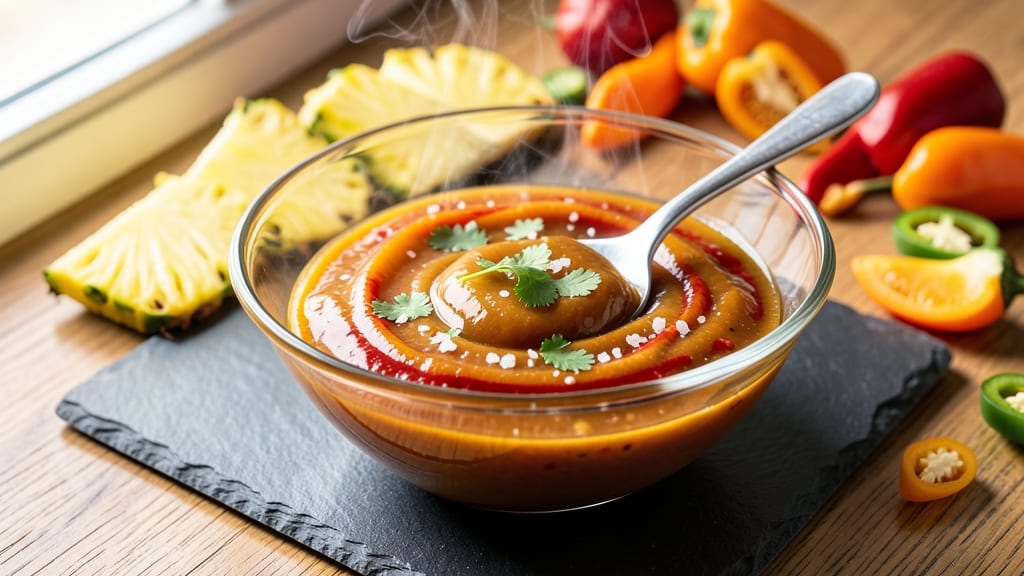
This Costco Pineapple Habanero Sauce transforms grilled meats into a fiery-sweet masterpiece—where tropical pineapple brightness meets habanero heat in perfect balance. 🔥 The secret lies in simmering fresh pineapple juice, vinegar, and habanero peppers until the flavors meld into a glossy, versatile glaze that caramelizes beautifully.
I developed this recipe after craving a sauce that could handle both delicate fish and bold ribs, and it delivers every time.
The sauce starts with a simple base of pineapple juice and apple cider vinegar, which creates natural sweetness and tanginess before the habanero peppers kick in. A touch of brown sugar enhances the caramelization, while cornstarch thickens it just enough for glaze consistency.
The result? A bold, sticky sauce with layers of heat, sweetness, and acidity that clings to every bite of grilled chicken, pork, or shrimp.
What makes this sauce truly special is its versatility—use it as a marinade for tenderized meat, a dip for chips, or a glaze for seared proteins.
The heat level is adjustable (remove habanero seeds for milder flavor), and it keeps well in the fridge for up to two weeks, making it perfect for meal prep. Once you try this, store-bought sauces won’t stand a chance.
For extra depth, I recommend adding a splash of soy sauce or smoked paprika to the finished sauce. The possibilities are endless—let’s get cooking!
Ingredients for costco pineapple habanero sauce
Tropical heat meets smoky tang in this bold sauce—perfect for transforming grilled meats into fiery-sweet masterpieces.
| Ingredient | Amount | Notes |
|---|---|---|
| Fresh Pineapple Juice 🍍 | 2 cups | From Costco fresh pineapple preferred |
| Apple Cider Vinegar 💧 | ½ cup | Bragg preferred for tang |
| Habanero Peppers 🌶️ | 2 whole | Seeds removed for milder heat |
| Light Brown Sugar 🍚 | ¼ cup | Packed for caramelization |
| Cornstarch 🌾 | 1 tbsp | For glossy glaze consistency |
| Soy Sauce 🍜 | 1 tbsp | For umami depth (optional) |
| Smoked Paprika 🌶️ | 1 tsp | For smoky complexity (optional) |
| Salt 🧂 | ½ tsp | Kosher preferred for balance |
| Garlic Cloves 🧄 | 2 cloves | Minced for aromatic base |
| Fresh Ginger 🌿 | 1 tbsp | Grated for zesty brightness |
The pineapple juice is your flavor foundation—Costco's fresh pineapple gives the best juice, but canned works in a pinch. Grab Bragg apple cider vinegar if you want that signature tang, though regular vinegar does the job. Habaneros are the star here, so pick fresh, firm peppers—Trader Joe's often carries them year-round. For the brown sugar, packed cups matter more than precise measurement; just eyeball it. The cornstarch is non-negotiable for that perfect glaze consistency—don't skip it!
No habanero? Substitute with 1 jalapeño + 1/2 tsp cayenne for milder heat. Fresh ginger wilting? Powdered works at half the amount. The soy sauce and smoked paprika are optional but add serious depth—Kikkoman soy sauce is my go-to, and any smoked paprika will do. For extra richness, add a splash of Costco coconut milk (just 1 tbsp). The garlic and ginger can be pre-minced from the store if you're short on time, but fresh is always better if you've got it.
This sauce keeps beautifully—2 weeks in the fridge sealed in a jar, or 3 months frozen in ice cube trays for perfect single-use portions. The flavors actually improve overnight as everything melds. For grilling, brush on just before serving to prevent burning. Leftovers? Toss with rice or use as a marinade—this stuff is that versatile.
Why You'll Love This Recipe
- No Blender Needed: I swear by this—just chop the habanero (carefully!) and simmer it with the pineapple juice until it softens. No pulsing, no straining, no fuss. The vinegar and sugar caramelize right in the pot, giving you that glossy, jammy texture without extra work.
- Sweet Heat Balance: That first bite? Pure magic. The habanero’s fire mellows into a slow burn, while the brown sugar and pineapple juice create this sticky-sweet contrast. Honestly, it’s the kind of sauce that makes you pour it on everything—grilled chicken, tacos, even scrambled eggs (yes, really).
- Pantry Staple Upgrade: Between us, this sauce turns boring ingredients into a showstopper. Use it as a marinade, a glaze, or a dip—it’s my go-to for weeknight dinners when I’m craving something bold but not complicated. The cornstarch thickens it perfectly, so it’s never watery or cloying.
- Costco Hack Done Right: I buy the giant pineapple juice and habanero peppers from Costco, split the batch, and freeze half. That means I always have a backup for when I’m out of ideas or need to feed a crowd. Plus, the vinegar and sugar stretch my budget—this sauce costs pennies per serving but tastes like a restaurant special.
Step-by-step instructions for Costco pineapple habanero sauce
Here's how to balance sweet, tangy, and fiery flavors into a restaurant-worthy glaze.
🍳 Step 1: Blister the Habaneros and Aromatics
Heat a dry skillet over medium-high heat and add the 2 whole habanero peppers, seeds removed. Toast them for 2-3 minutes per side until their skins blacken slightly and you smell that bright, vegetal aroma. This process deepens their flavor without burning them.
Remove the peppers and immediately transfer them to a heatproof bowl. Add the 2 minced garlic cloves and 1 tablespoon grated fresh ginger to the same skillet. Cook for 30 seconds until fragrant—you'll smell that perfect marriage of garlic's sharpness and ginger's zing. This quick cooking preserves their bright flavors rather than letting them turn bitter.
🥘 Step 2: Build the Sweet-Tangy Base
In a medium saucepan, combine the 2 cups fresh pineapple juice and 0.5 cup apple cider vinegar. Bring to a gentle simmer over medium heat for 3-4 minutes until the mixture reduces slightly and the pineapple aroma intensifies. This reduction concentrates the natural sweetness of the pineapple.
Add the 0.25 cup packed light brown sugar and stir until fully dissolved. The sugar will caramelize slightly as it melts, adding depth to the sauce. Here's the thing—don't rush this step. Let it simmer for another 2 minutes until the sugar is completely incorporated and the mixture smells like a tropical orchard.
🍳 Step 3: Blend and Thicken the Sauce
Using an immersion blender (or carefully transferring to a blender), purée the toasted habaneros, garlic, and ginger directly into the saucepan. Strain through a fine-mesh sieve to remove any skins or seeds—this ensures a silky texture without any texture surprises. Return the puréed mixture to the saucepan.
Whisk in the 1 tablespoon soy sauce and 1 teaspoon smoked paprika for that umami depth and smoky complexity. Add the 1 tablespoon cornstarch and 0.5 teaspoon salt, then stir constantly as the sauce comes to a boil. The cornstarch will transform the sauce from thin to glossy in just 3-5 minutes—keep your eye on it to prevent lumps.
⏰ Step 4: Simmer to Perfect Consistency
Once the sauce reaches a gentle boil, reduce heat to low-medium and let it simmer for 5-7 minutes until it thickens to a glaze-like consistency. You want it to coat the back of a spoon but still be pourable—think of it like a cross between a BBQ sauce and a marinade. Taste and adjust seasoning if needed; you might want to add a touch more salt or vinegar depending on your pineapple's natural sweetness.
Here's the moment that matters: the sauce should have a perfect balance of sweet pineapple, tangy vinegar, and habanero heat. If it's too thin, whisk in another ½ teaspoon cornstarch mixed with 1 tablespoon water. If it's too thick, thin with 1 tablespoon water at a time. The goal is that glossy, clingy texture that will caramelize beautifully on your grilled meats.
Pro Tips For Making Costco Pineapple Habanero Sauce
- Simmer Slow and Low: I learned this the hard way—rushing the habanero and pineapple mix on high heat turns it bitter. Once the sauce starts bubbling, drop the heat to a gentle simmer (think "barely there" bubbles) and let it cook uncovered for at least 20 minutes. This lets the flavors meld without scorching the sugar or vinegar.
- Seed and Sweat the Peppers: Don’t just chop habaneros raw—blister them first. Toss whole peppers in a dry skillet over medium heat for 2-3 minutes per side until blackened in spots. This mellows the raw heat while concentrating their flavor. Remove seeds after blistering (yes, even if you’re impatient like me), then chop—they’ll add depth without overpowering.
- Slurry the Cornstarch Right: Mix your cornstarch with cold pineapple juice before adding it to the pot. Stirring it into the hot sauce first creates lumps that turn pasty. A 1:1 ratio (1 tbsp cornstarch to 1 tbsp juice) works perfectly—whisk until smooth, then let it sit for 2 minutes before pouring. This guarantees a glossy, even thicken without clumps.
- Balance the Vinegar Gradually: Apple cider vinegar is non-negotiable here, but dumping it all at once makes the sauce taste harsh. Add half the vinegar upfront, taste, then adjust with the rest. If it’s too sharp, a pinch of brown sugar (even mid-cook) tames it—just stir and let it simmer for another 5 minutes to integrate. Trust your palate, not the recipe.
Common mistakes when making this dish
Overcooking Habaneros
Charred habaneros turn bitter and overpower the sauce with smoky, burnt notes. Toast them just until their skins blacken slightly (2-3 minutes per side)—no longer. I’ve ruined batches by walking away for even 30 seconds, so keep an eye on them.
Once they’re done, transfer them immediately to a bowl to stop the cooking process. 🌶️
Skipping the Strain
Failing to strain the blended habaneros leaves behind pepper skins and seeds, which create an unpleasant texture. I learned this the hard way—my first batch had tiny pepper bits that made every bite feel like sandpaper.
Use a fine-mesh sieve or cheesecloth to remove all debris before simmering. This step is non-negotiable for a silky sauce.
Ignoring the Sugar Caramelization
Rushing the sugar step means missing out on the sauce’s depth. The brown sugar needs 2-3 minutes to caramelize slightly and meld with the pineapple juice. I’ve made sauce that tasted flat because I added it too quickly.
Let it simmer until the mixture smells rich and aromatic—this is where the magic happens.
Over-Thickening with Cornstarch
Adding too much cornstarch at once creates a gluey, unappetizing sauce. Start with just 1 tablespoon and adjust gradually. I’ve had batches turn into a pasty mess because I panicked when the sauce wasn’t thickening fast enough.
If it’s too thick, thin it with water, 1 tablespoon at a time, not more cornstarch.
Using Bottled Pineapple Juice
Bottled pineapple juice lacks the bright acidity and complexity of fresh. I’ve tried it, and the sauce tastes dull and one-dimensional. If you’re using bottled juice, look for brands like Del Monte or Dole that are made from real pineapple, not concentrate.
Fresh is always better, but bottled can work in a pinch if you’re patient with seasoning adjustments.
Not Tasting as You Go
Assuming the sauce is balanced without tasting is a recipe for disaster. Adjust the heat, sweetness, or tanginess as you simmer. I’ve had batches that were either too sweet or too spicy because I didn’t check the flavor until the end.
Taste every 5 minutes after adding the cornstarch—this is how you ensure a perfect balance every time.
Nutrition facts
Frequently asked questions
Can I adjust the heat level in this sauce?
For milder heat, remove the seeds and membranes from the habaneros before toasting. If you want extra kick, use 3 habaneros or add ½ teaspoon cayenne pepper at the end. Pro tip: Toast the peppers longer (up to 4 minutes per side) for deeper, smokier flavor without extra heat.
How can I use this sauce beyond grilling?
This versatile sauce works as a marinade (30 minutes for chicken, 1-2 hours for pork), a dip for spring rolls or fries, or even a glaze for roasted vegetables. Try drizzling it over seared scallops or mixing into shrimp tacos for instant tropical heat. The possibilities are endless!
Why did my sauce turn out too thin?
Thin sauce usually means the cornstarch didn't activate properly. Next time, whisk it with 1 tablespoon cold water first to create a slurry, then stir vigorously while simmering. If it's already made, thicken it by mixing 1 teaspoon cornstarch with 1 tablespoon water and whisking it in while the sauce is hot. Always simmer for 5-7 minutes after adding cornstarch for proper thickening.
Can I make this sauce without fresh pineapple?
Yes, but expect less vibrant flavor. Use 2 cups bottled pineapple juice (look for brands with no added sugar) and add 1 extra tablespoon vinegar to compensate for reduced acidity. For extra depth, add 1 teaspoon lime juice at the end. Fresh is ideal, but this works in a pinch!
How do I store and reheat leftovers?
Store in an airtight container in the fridge for up to 2 weeks or freeze in ice cube trays for single-use portions (lasts 3 months). To reheat, warm in a saucepan over low heat with 1 tablespoon water to restore glossiness. Never microwave—it ruins the texture! For best results, reheat just until warm, then finish with a splash of vinegar or lime juice.