
Main Courses
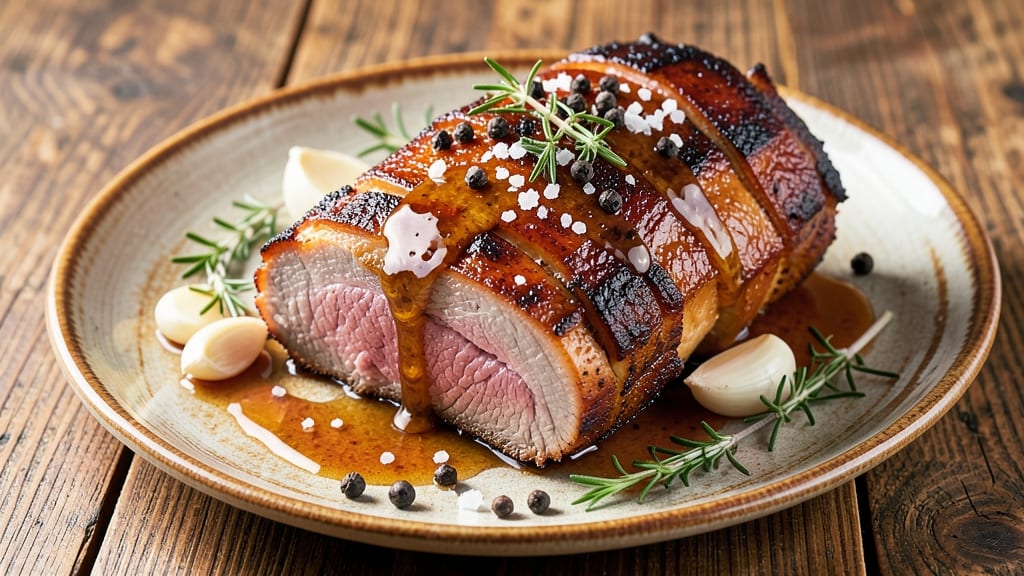
This pork roast recipe with apple cider vinegar delivers crispy bark and a juicy core that falls apart at the touch of a fork. 🔥 The vinegar's acidity tenderizes the meat while creating a caramelized crust that's impossible to resist.
I perfected this technique after years of testing—no dry, tough pork here, just melt-in-your-mouth perfection that transforms a simple roast into a showstopper main course.
The secret lies in the slow braise method, where apple cider vinegar works its magic by breaking down tough fibers while infusing the meat with bright, tangy depth.
You'll start with a simple dry rub of spices and salt, then let the vinegar and aromatics work their magic during the long cook. This isn't just another pork roast—it's a restaurant-quality centerpiece that comes together with minimal effort but maximum flavor impact.
What you'll end up with is a roast that's crispy on the outside and juicy throughout, with a sauce reduced from the vinegar and pan drippings that's perfect for basting.
The aroma alone will have everyone gathering at the table, and the first bite delivers that perfect balance of tender meat and complex, caramelized flavors. This is the kind of pork roast that makes Sunday dinner feel special every week.
Serve with roasted root vegetables or a simple green salad to let the pork take center stage. The leftovers reheat beautifully too, making this the ultimate make-ahead meal.
Let's get started on creating your most impressive pork roast yet—this recipe delivers results that will have you cooking it again and again.
Ingredients for pork roast recipe apple cider vinegar
The secret to restaurant-worthy pork roast lies in these 13 ingredients—where crispy bark meets melt-in-your-mouth tenderness.
| Ingredient | Amount | Notes |
|---|---|---|
| Bone-In Pork Loin Roast 🍖 | 3 lb | Center-cut for even cooking |
| Apple Cider Vinegar 🍏 | ½ cup | Unfiltered for best flavor |
| Kosher Salt 🧂 | 2 tbsp | Diamond Crystal preferred |
| Black Peppercorns 🌶️ | 1 tbsp | Freshly cracked for aroma |
| Garlic Cloves 🧄 | 6 cloves | Smashed for intense flavor |
| Fresh Thyme Sprigs 🌿 | 4 whole | Stems intact for infusion |
| Fresh Rosemary Sprigs 🌿 | 4 whole | Woodsy flavor essential |
| Brown Sugar 🍬 | 2 tbsp | Light or dark works |
| Unsalted Butter 🧈 | ½ cup | Cold for basting |
| Onion 🧅 | 1 whole | Yellow, sliced for braising |
| Carrot 🥕 | 2 whole | Whole, for roasting |
| Olive Oil 🫒 | 2 tbsp | For searing the roast |
| Honey 🍯 | 1 tbsp | For glaze finish |
The pork loin is non-negotiable here—bone-in, center-cut delivers the best balance of flavor and tenderness. Costco or Whole Foods carry excellent cuts, but your butcher can trim it to 3 lbs if needed. Look for good marbling (white flecks of fat) for juiciness. Fresh thyme and rosemary? Trader Joe's has affordable sprigs, but if they're wilted, skip 'em. The apple cider vinegar should be unfiltered—those cloudy bottles have more flavor. I always grab the Bragg brand for its bold tang, but any good-quality vinegar works.
No fresh herbs? Dried thyme at half the amount gets you close, but the aroma won't be the same. Short on time? Pre-minced garlic from a jar saves 5 minutes, though fresh smashed cloves add depth. The brown sugar can be swapped for white sugar, but light brown adds subtle caramel notes. For the vinegar braise, balsamic vinegar works in a pinch, though it lacks the fruity complexity. The butter? Full-fat, unsalted—none of that low-fat nonsense. Want extra crisp? Brush the roast with olive oil before the final sear.
This roast reheats like a dream—better the second day as flavors meld. Wrap leftovers tightly in foil and refrigerate for up to 5 days. For freezer storage, portion into individual servings and freeze for 3 months. The vinegar braising liquid? Strain it, reduce by half, and store in a jar for 6 months—perfect for basting next time. Pro tip: Save the herb sprigs and freeze them in ice cube trays for future braises. That's the kind of efficiency I love!
Why You'll Love This Recipe
- Two-Ingredient Magic: I swear by this trick—just the vinegar and salt transform tough pork into something tender and juicy. No fancy marinades, no stressing over herbs you’ll forget to buy.
- Crispy-Creamy Payoff: That bone-in roast? It renders into pure flavor while the vinegar cuts through the richness, leaving you with a crust so good you’ll want to eat the pan.
- Weeknight Crowd-Feeder: One roast feeds six, and the leftovers? Perfect for sandwiches or fried rice the next day. Honestly, it’s my go-to for game days or lazy Sundays.
- Budget-Friendly Luxury: Apple cider vinegar costs pennies, and pork loin stretches further than you’d think. I’ll be real—this is the kind of meal that makes grocery day feel like a win.
Step-by-step instructions for pork roast with apple cider vinegar
Here's how to create a showstopping roast with irresistible crispy bark and melt-in-your-mouth tenderness.
🔥 Step 1: Prep and Sear the Pork for Maximum Flavor
First, let the bone-in pork loin roast sit at room temperature for 30 minutes while you prep everything else. This ensures even cooking. Pat the roast dry with paper towels—this is CRITICAL for crispy bark. I press down firmly to remove all moisture, especially in the crevices.
In a large Dutch oven, heat 2 tablespoons olive oil over medium-high heat until shimmering. Add the roast fat-side down and sear for 8-10 minutes until a deep golden brown develops. Flip and sear the other side for another 6-8 minutes. You'll know it's ready when it releases easily from the pan—don't rush this step, as that crust locks in juices.
👨🍳 Step 2: Build the Apple Cider Vinegar Braising Liquid
While the roast sears, crack 1 tablespoon black peppercorns using a mortar and pestle (or place in a ziplock bag and crush with a rolling pin). Remove the roast from the Dutch oven and set it aside. Add 1 whole onion sliced into wedges and 2 whole carrots to the pot, cooking for 3 minutes until slightly softened.
Pour in 0.5 cup apple cider vinegar and scrape up all those delicious browned bits from the bottom—this creates flavor depth. Add 6 smashed garlic cloves, 4 whole thyme sprigs, and 4 whole rosemary sprigs, stirring to combine. Sprinkle in 2 tablespoons kosher salt and 2 tablespoons brown sugar, letting everything mingle for 1 minute to bloom the aromatics.
🥘 Step 3: Slow Braise for Juicy Perfection
Return the seared roast to the Dutch oven, fat-side up. Add 0.5 cup cold unsalted butter and pour in enough water to come about halfway up the roast (about 1½ cups). Bring to a gentle simmer over medium-low heat, then cover and transfer to a 325°F oven.
Braise for 2-2½ hours until the pork reaches 195°F internally and is fork-tender. I check the temperature with an instant-read thermometer—this is when the magic happens. The roast should pull apart easily, with a rich, caramelized braising liquid surrounding it. If the liquid reduces too much, add a splash of water or apple cider vinegar to maintain moisture.
🔥 Step 4: Create the Crispy Glaze Finish
Remove the roast from the oven and transfer it to a cutting board. Tent loosely with foil and let it rest for 15 minutes while you make the glaze. In a small saucepan, combine the braising liquid (strain out the herbs and vegetables) with 1 tablespoon honey. Simmer over medium heat for 5-7 minutes until slightly thickened and syrupy.
Brush this glaze generously over the roast, then return it to the oven (broil setting) for 3-5 minutes to create that irresistible crispy bark. Watch closely—the glaze should caramelize to a deep amber color. The contrast of crispy exterior and tender interior is what makes this roast unforgettable!
Pro Tips For Making Pork Roast Recipe Apple Cider Vinegar
- Sear First, Then Acid: That vinegar marinade is delicious, but don’t let it touch the meat until after you’ve seared it—high heat, 3-4 minutes per side. I learned this the hard way when my pork turned out pale and soggy because the acid broke down the surface before the crust could form. Let the meat hit the pan hard first, then pour in the vinegar halfway through cooking.
- Use Raw Garlic: Smash those garlic cloves with the flat side of your knife—don’t mince them. Raw, bruised garlic releases more flavor when it cooks in the vinegar, and it won’t burn like pre-minced. Tuck the smashed cloves under the roast skin where they’ll nestle against the meat, not just on top.
- Don’t Rush the Rest: Pull the pork at 140°F internal temp, tent it loosely with foil, and let it sit for a solid 10 minutes. I know, I know—you’re starving, but cutting into it early means dry, stringy meat. The rest lets juices redistribute, and the vinegar’s tang actually makes the pork more forgiving if you wait.
- Deglaze with Vinegar: After removing the roast, pour that same pan’s drippings into a saucepan and reduce them with a splash of apple cider vinegar—just 2 tablespoons. The acid cuts through the fat, giving you a quick, glossy pan sauce without extra effort. Skip this, and you’re left with greasy, flavorless drippings.
Troubleshooting your pork roast recipe apple cider vinegar
Pale, Bland Roast
If your pork turns out pale and bland, it likely didn't reach a high enough internal temperature or didn't rest properly. Aim for 195°F internal temp—anything below 160°F will be tough.
I've found that using Bragg apple cider vinegar (unfiltered) adds depth, but if you're using a milder vinegar, add ½ tsp smoked paprika to the braising liquid for complexity. Always rest the roast for 15 minutes before slicing—this lets juices redistribute.
Dry, Tough Meat
Dry pork usually means it overcooked or wasn't properly seared first. Pat your roast bone-dry before searing—this creates that crucial crust that locks in moisture. I swear by a 10-minute sear on each side in a hot Dutch oven.
If your roast still feels dry after braising, try adding ¼ cup apple cider vinegar to the braising liquid and reduce the oven temp to 300°F for the last 30 minutes to finish gently.
Vinegar Overpowering
The tangy apple cider vinegar should enhance, not dominate. If it tastes too sharp, balance it with 1 tbsp honey or brown sugar during the braise. I've also found that using ½ cup vinegar instead of the full amount gives a more subtle flavor.
For extra richness, add ¼ cup beef broth to the braising liquid—it mellows the acidity while adding depth. Taste as you go!
Uneven Cooking
Uneven cooking often happens when the roast isn't at room temperature or the oven isn't properly calibrated. Let your 3-lb pork loin sit out for 30 minutes before cooking. I use an oven thermometer to confirm my oven runs at 325°F—many ovens run hot or cold.
If one side cooks faster, rotate the Dutch oven halfway through the braise. For extra insurance, add 1 cup water to the braising liquid to create a steam bath.
Sauce Too Thin
A watery sauce usually means the braising liquid didn't reduce enough. After removing the roast, strain the liquid into a saucepan and simmer uncovered over medium-high heat for 10-15 minutes until thickened. For extra body, whisk in 1 tbsp cold butter at the end.
If you're short on time, reduce the liquid on the stovetop before adding the honey glaze—just be careful not to burn it.
Glaze Not Caramelizing
If your final glaze stays pale, it likely didn't get hot enough. Preheat your broiler to high and brush the roast with the honey-vinegar mixture just before broiling. Watch closely—it should caramelize in 3-5 minutes.
For extra insurance, add ½ tsp cornstarch to the glaze before brushing. I've also found that using local honey from Portland farmers markets adds deeper caramel notes than store-bought varieties.
Nutrition facts
Frequently asked questions
Why does this recipe use apple cider vinegar instead of wine?
Apple cider vinegar adds a bright, fruity acidity that tenderizes the pork beautifully while creating a rich, caramelized crust. Unlike wine, it doesn't overpower the meat's natural flavor—just enhances it with subtle sweet-tart notes. The unfiltered variety has extra flavor complexity from apple particles, making it perfect for braising.
Can I use a different cut of pork for this recipe?
This recipe works best with bone-in pork loin or pork shoulder, but you can adapt it for pork tenderloin by reducing the cook time to 1-1½ hours at 325°F. For pork shoulder, increase the braise time to 3-4 hours and add extra vinegar (¾ cup) to keep it moist. Never use ground pork—this is for whole cuts only!
How do I know when the roast is done?
Use a meat thermometer to check the thickest part of the roast—it should reach 195°F for pull-apart tenderness. The bone should also pull away easily from the meat. If you don't have a thermometer, cut into the center: the juices should run clear, not pink. Never rely on color alone!
What if I don't have fresh herbs?
No problem! Use 1 teaspoon dried thyme and ½ teaspoon dried rosemary instead, but toast them in a dry pan for 30 seconds first to wake up their flavor. For extra depth, add ½ teaspoon smoked paprika to the braising liquid. The vinegar will still carry the dish, but fresh herbs add that restaurant-quality aroma.
Can I make this in a slow cooker?
Sear the roast as directed, then transfer it to your slow cooker with all braising ingredients (except butter). Cook on Low for 6-8 hours or High for 4-5 hours. In the last 30 minutes, add the butter and honey, then broil briefly for crispy bark. The vinegar works beautifully in slow cooking too—just check for doneness at 195°F.