
Main Courses
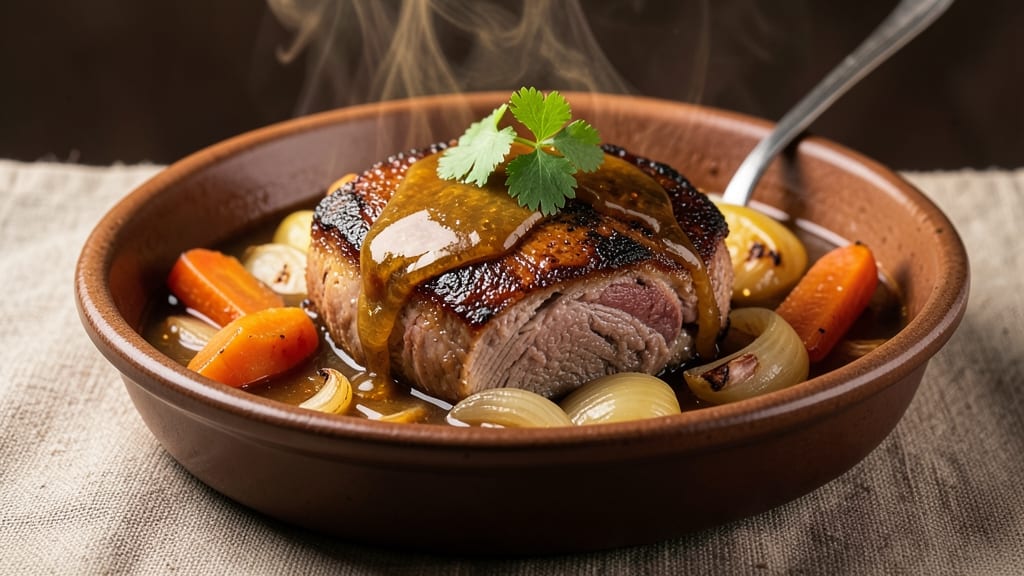
This pork estofado recipe with pineapple juice delivers melt-in-your-mouth tenderness with a tropical twist that transforms ordinary weeknight dinners. 🌟 The secret lies in slow-braising tough pork cuts until they practically fall apart, while pineapple juice tenderizes and adds a bright, fruity contrast to the rich, savory sauce.
I first discovered this technique while traveling through the Caribbean, where home cooks use pineapple juice to cut through the richness of braised meats—a trick that elevates this dish beyond traditional recipes.
The process begins with searing pork chops or pork shoulder to lock in flavors, then simmering them for hours in a blend of pineapple juice, tomatoes, and aromatic vegetables.
The result is a dish where the pork becomes fork-tender while absorbing the sweet-tangy sauce, creating a balance that's both comforting and exciting. This method works beautifully with bone-in cuts, as the marrow infuses additional richness into the sauce.
What you'll end up with is a restaurant-quality dish that's perfect for feeding a crowd or meal prepping for the week. The pineapple juice not only tenderizes but also adds a subtle sweetness that complements the savory depth of the braised pork.
Serve it with crusty bread to soak up every last drop of that flavorful sauce—it's the kind of meal that makes you feel like you've traveled to a tropical paradise without leaving your kitchen.
Between you and me, this recipe became a family favorite after I made it for our first Thanksgiving in Portland. The kids devoured it, and my husband declared it "the best pork dish ever."
The beauty of this recipe is its versatility—it works equally well with pork chops for a quicker version or pork shoulder for a deeper, more complex flavor profile. Let's get cooking!
Ingredients for pork estofado recipe with pineapple juice
Pantry staples meet tropical flavors in this slow-cooked pork masterpiece.
| Ingredient | Amount | Notes |
|---|---|---|
| Pork Shoulder 🥩 | 3 lb | Bone-in preferred for flavor |
| Pineapple Juice 🍍 | 1 ½ cups | Freshly squeezed preferred |
| Tomato Sauce 🍅 | 1 cup | Canned San Marzano preferred |
| Yellow Onion 🧅 | 1 whole | Medium size, diced |
| Garlic Cloves 🧄 | 6 cloves | Fresh, minced |
| Carrots 🥕 | 4 medium | Peeled, sliced into rounds |
| Green Bell Pepper 🌶️ | 1 whole | Medium size, chopped |
| Olive Oil 🫒 | ½ cup | Extra-virgin for richness |
| Bay Leaves 🌿 | 2 whole | Dried, standard size |
| Thyme 🌿 | 1 tbsp | Dried, or 1 tbsp fresh |
| Salt 🧂 | 1 ½ tsp | Kosher or sea salt |
| Black Pepper 🌶️ | 1 tsp | Freshly ground preferred |
| Red Wine 🍷 | ½ cup | Dry, like Cabernet Sauvignon |
| Chicken Broth 💧 | 1 cup | Low-sodium preferred |
The pork shoulder is where the magic happens—bone-in cuts give you that rich marrow flavor that turns the sauce into liquid gold. Trader Joe's and Whole Foods carry excellent cuts, but any grocery store's butcher section works. Look for good marbling—white flecks throughout the meat—that's your sign of juicy, flavorful pork. Pineapple juice is non-negotiable here; freshly squeezed has the best balance of sweetness and acidity, but canned works in a pinch if you grab the kind with no added sugar. The carrots and bell pepper add natural sweetness that pairs perfectly with the pineapple's tang.
No red wine? Dry white wine or extra chicken broth works just fine—just don't skip the acid. Fresh thyme is ideal, but dried at one-third the amount gets you close. For the tomato sauce, San Marzano cans are worth the splurge—they're sweeter and less acidic than regular brands. The garlic can be roasted for a sweeter flavor (just wrap the whole cloves in foil with the pork while it sears), but regular minced works too. If you're short on time, pre-diced onions and bell peppers from the freezer section save prep work without sacrificing flavor.
This dish tastes even better the next day as all the flavors meld together. Store leftovers in the fridge for up to 5 days—the sauce thickens nicely when reheated. For freezing, portion into containers and it keeps for 3 months. I always make a double batch because it disappears fast. The sauce reduces beautifully, so you can easily halve the liquid ingredients if you prefer a thicker consistency. Serve with crusty bread to soak up every last drop of that tropical-savory goodness.
Why You'll Love This Recipe
- Pantry Magic: I swear by this recipe when I forget to shop. The pineapple juice and tomato sauce are my secret weapons—no fancy ingredients, just a pantry raid and a slow simmer. That pork shoulder? It practically melts into tender perfection while you’re scrolling through your phone.
- Sweet-Savory Magic: The pineapple juice cuts through the richness of the pork, balancing the deep, caramelized tomato sauce. Honestly, the garlic and onion build layers of flavor that make every bite feel like a hug—especially when it’s cold outside.
- Leftovers for Days: This dish tastes even better the next day, which is perfect because I always make too much. I’ll be real: my kids beg for it for lunch, and my partner sneaks seconds when he thinks I’m not looking. (Yes, even on a Tuesday night.)
- One-Pot Wonder: Minimal chopping required—just dice the onion, smash the garlic, and let the pork shoulder do the work. One pot, one stove, and an hour later, you’ve got a meal that feeds the whole family without stressing you out. That’s my kind of cooking.
Step-by-step instructions for pork estofado with pineapple juice
This tropical twist on classic estofado delivers melt-in-your-mouth pork with vibrant flavors.
🔥 Step 1: Sear the Pork Shoulder for Maximum Flavor
Heat the 0.5 cup olive oil in a large Dutch oven over medium-high heat until shimmering. Pat the 3 lb pork shoulder completely dry with paper towels—this ensures a perfect crust. Working in batches if needed, add the pork and sear on all sides until deeply golden brown, about 8-10 minutes per side.
Don't rush this step. The deep color means all those meaty flavors will dissolve into your sauce later. Once browned, remove the pork and set it aside on a plate. You'll notice the oil looks darker now—that's all the flavor starting to build.
👨🍳 Step 2: Sauté the Vegetables and Aromatics
In the same Dutch oven, add the diced yellow onion and cook for 5 minutes until softened and translucent. Add the minced garlic cloves and cook for another 30 seconds until fragrant—this prevents burning. Stir in the sliced carrots and chopped green bell pepper, cooking for 4-5 minutes until they begin to soften.
The vegetables should release their juices and create a light layer at the bottom of the pan. This is where all the magic happens—those caramelized bits will form the base of your sauce. Here's the thing—don't overcrowd the pan or the vegetables will steam instead of brown.
🍳 Step 3: Deglaze and Build the Sauce Base
Pour in the 0.5 cup red wine and scrape up all those browned bits from the bottom with a wooden spoon. This is called deglazing, and it captures all the flavor that would otherwise stick to the pan. Let the wine simmer for 2-3 minutes until reduced by half, then stir in the 1 cup tomato sauce and 1.5 cups pineapple juice.
The pineapple juice adds a bright tropical element that balances the richness of the pork. Bring the mixture to a gentle simmer, then add the 2 whole bay leaves, 1 tbsp thyme, 1.5 tsp salt, and 1 tsp black pepper. The spices should mingle with the other flavors, creating a fragrant aroma that fills your kitchen.
⏰ Step 4: Slow-Braise Until Fork-Tender
Return the pork to the Dutch oven, nestling it into the sauce. Add the 1 cup chicken broth to help create a rich, flavorful liquid. Cover tightly with a lid and transfer to a 325°F oven. Here's where patience pays off—braise for 2.5-3 hours until the pork is fork-tender and easily pulls apart with two forks.
Check the liquid level occasionally and add a splash of water or broth if it reduces too much. You'll know it's ready when the pork separates easily and the sauce has thickened into a glossy consistency. The pork should have a deep mahogany color and be incredibly tender—this is the reward for slow cooking.
🍽️ Step 5: Finish and Serve with Tropical Flair
Remove the pork from the oven and let it rest for 10 minutes before serving. This resting time allows the juices to redistribute throughout the meat, ensuring each bite is moist and flavorful. Skim off any excess fat from the surface of the sauce if desired, then taste and adjust seasoning if needed.
Serve the pork estofado family-style straight from the Dutch oven, allowing everyone to enjoy the rich sauce. The combination of tender pork, sweet pineapple, and savory vegetables creates a dish that's both comforting and exciting. Pair with crusty bread to soak up every last drop of that delicious sauce—you'll want to savor every bite!
Pro Tips For Making Pork Estofado Recipe With Pineapple Juice
- Sear the Pork Shoulder First: Don’t skip the browning—this is where the deep, caramelized flavor starts. Cut the pork into 2-inch chunks, pat them very dry with paper towels, then sear in a hot Dutch oven with oil until golden on all sides. I used to rush this, and the stew always tasted flat until I realized the Maillard reaction is non-negotiable here.
- Deglaze with Pineapple Juice: After searing the pork, immediately pour in the pineapple juice and scrape every bit of browned bits from the bottom—this is the flavor base. Let it simmer for 3-4 minutes to cook off the raw alcohol taste before adding onions and garlic. (Yes, even if you’re impatient like me.)
- Simmer Low and Slow: Pork shoulder needs time—don’t rush it. After adding tomato sauce and liquids, reduce heat to a gentle simmer (tiny bubbles, not rolling) and cover partially. Cook for at least 2.5 hours, stirring occasionally, until the pork shreds easily. I learned this the hard way when I walked away and came back to rubbery meat.
- Use Fresh Pineapple Juice: Canned pineapple juice lacks brightness—save it for smoothies. Fresh pineapple juice (strained) adds a tangy depth that cuts through the richness of the pork. If you’re short on time, squeeze fresh juice from a pineapple, then freeze the leftover pulp for smoothies later. (Your future self will thank you.)
Troubleshooting great pork estofado recipe with pineapple juice
Pork Too Tough?
If your pork shoulder isn't tender enough after braising, you likely didn't cook it long enough. 3 hours minimum is required for true fork-tenderness with a 3 lb cut. I've learned the hard way—once I rushed it to 2 hours and ended up with chewy pork.
For tougher cuts, extend to 3.5 hours or add 1 cup extra pineapple juice halfway through to speed up tenderization. 🌟
Sauce Too Thin?
Pineapple juice is the culprit here—it's naturally watery. To thicken, remove the pork and simmer the sauce uncovered for 10-15 minutes on the stovetop. For extra richness, whisk in 1 tbsp cornstarch mixed with 2 tbsp cold water until it thickens.
I've also had success adding ½ cup tomato paste at the end for depth without thinning the sauce.
Flavor Too Mild?
Your pork might need more acidity or umami. Boost flavor by adding 1 tbsp soy sauce or ½ tsp smoked paprika during the last 30 minutes of cooking. For heat, stir in 1 tsp hot sauce or ½ tsp cayenne pepper at the end.
I keep a bottle of Penzeys Caribbean Jerk Seasoning handy for these moments—just 1 tsp works wonders.
Pineapple Overpowering?
If the tropical flavor dominates, balance it with more savory elements. Add ½ cup additional chicken broth or ¼ cup red wine vinegar to cut through the sweetness. For depth, stir in 1 tbsp Worcestershire sauce or ½ tsp fish sauce (trust me, it works!).
The key is to let the pork's richness shine through while keeping the pineapple's brightness.
Fat Floating on Top?
Skimming fat is essential for a clean presentation. Use a fat separator spoon or ladle to remove excess fat after resting. For a foolproof method, chill the sauce in the fridge for 2 hours—the fat solidifies on top and can be easily spooned off.
I also recommend using a Lodge Dutch oven with a lid that fits tightly to minimize fat rise during cooking.
Vegetables Too Soft?
If your carrots and bell peppers turn to mush, they cooked too long. Add them only during the last 30-45 minutes of braising. For extra texture, blanch them in boiling water for 2 minutes before adding to the pot.
I've also had success roasting the vegetables at 400°F for 15 minutes before adding them to the braise for deeper flavor without overcooking.
Nutrition facts
Frequently asked questions about pork estofado with pineapple juice
Can I use pork chops instead of pork shoulder for this recipe?
Yes, but you'll need to adjust the cooking time! Thin-cut pork chops will cook much faster—about 30-45 minutes at 325°F—so they won't benefit from the same long braise. For best results, use bone-in pork chops (about 1.5 inches thick) and reduce the pineapple juice to 1 cup to prevent over-tenderizing. The sauce will still work beautifully, just with quicker cooking.
What's the best way to store leftovers?
Store in an airtight container in the fridge for up to 5 days, or freeze for 3 months. The flavors actually improve overnight as the sauce reduces further! For reheating, warm gently on the stove over medium-low heat—never microwave, as it makes the pork dry. Add a splash of water or broth if the sauce thickens too much during reheating.
Can I substitute white wine for the red wine?
Use ½ cup dry white wine instead, but add ½ tsp extra lemon juice to maintain acidity. The white wine will keep the dish lighter, especially if you prefer a brighter flavor profile. For a non-alcoholic version, use ½ cup apple cider vinegar diluted with ½ cup water—it works surprisingly well for deglazing.
Why does the pineapple juice make the pork more tender?
The pineapple juice contains bromelain, a natural enzyme that breaks down meat fibers—just like how marinades tenderize meat! The acidity also helps dissolve collagen in connective tissues. For best results, use freshly squeezed juice (canned works too) and add it early in the braising process to maximize tenderizing effects.
What sides pair best with this dish?
This tropical pork shines with crusty bread for soaking up sauce, mashed sweet potatoes, or coconut rice. For a lighter option, try a fresh mango-avocado salad with lime dressing. The contrast of creamy sides with the rich, tangy pork creates a perfect balance. My family also loves serving it with steamed jasmine rice and quick-pickled onions for extra crunch.