
Sauces & Condiments
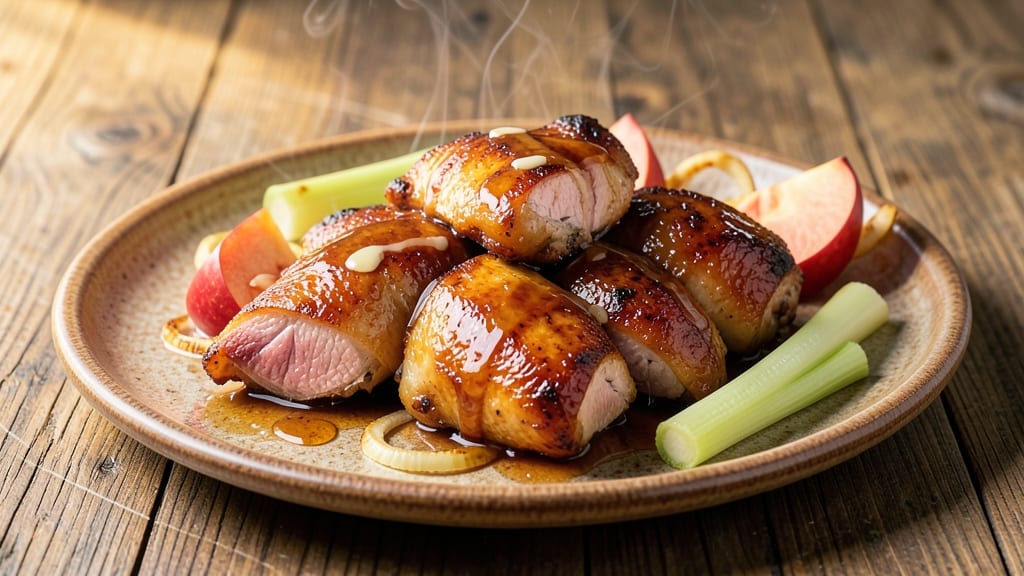
This apple glazed chicken recipe delivers crispy, golden-brown chicken bathed in a sweet-tart apple glaze that caramelizes beautifully. The secret lies in balancing tender chicken with a glaze that thickens into a sticky, celery-infused sauce—every bite stays coated in that perfect blend of fruit and spice.
I developed this version after years of testing, ensuring the glaze doesn’t just drip away but clings to the chicken like a second skin.
The process starts with juicy chicken thighs or breasts, seared to a golden finish before simmering in a flavor-packed glaze made from apples, celery, onions, and warm spices.
The key is reducing the glaze slowly until it thickens into a glossy syrup, then basting the chicken repeatedly to lock in moisture and flavor. This isn’t just a sauce—it’s the star of the dish, with a depth that comes from caramelization and aromatic spices.
What you’ll end up with is restaurant-quality chicken that’s crispy on the outside, tender inside, and dripping with glaze that’s both sweet and tangy. The celery adds a subtle earthiness that cuts through the fruit’s natural sweetness, while a pinch of cinnamon and cloves ties everything together.
Serve it with roasted potatoes or a simple green salad to let the chicken shine.
This recipe is designed for weeknight dinners but feels special enough for company. The glaze can be made ahead and reheated, making it a versatile option for meal prep or last-minute gatherings. Once you try this version, you’ll never settle for store-bought glazes again.
Ingredients for apple glazed chicken
Juicy chicken thighs meet caramelized apple glaze—just 12 ingredients for restaurant-style flavor.
| Ingredient | Amount | Notes |
|---|---|---|
| Boneless, Skinless Chicken Thighs 🍗 | 1 ½ lb | Cut into even-sized pieces |
| Apples 🍎 | 2 medium | Sweet-tart variety like Honeycrisp |
| Celery Stalks 🧅 | 3 whole | Diced, not pre-chopped mix |
| Yellow Onion 🧅 | 1 medium | Diced, yellow or red |
| Unsalted Butter 🧈 | 3 tbsp | Cold, for searing |
| Apple Cider Vinegar 🍶 | ½ cup | For tangy depth |
| Brown Sugar 🍚 | ¼ cup | Light or dark |
| Ground Cinnamon 🌿 | 1 tsp | Freshly ground preferred |
| Ground Cloves 🌶️ | ¼ tsp | Whole cloves work too |
| Salt 🧂 | 1 tsp | Kosher or sea salt |
| Black Pepper 🌶️ | ½ tsp | Freshly ground |
| Olive Oil 🫒 | 1 tbsp | For finishing |
The apples make or break this glaze. Honeycrisp or Fuji work best—they hold up to cooking without turning mushy. Trader Joe's usually has them pre-cut, but grab whole ones and dice them yourself for better texture. If you can't find sweet-tart apples, Granny Smith mixed with Gala gives you that perfect balance. The celery? Don't use the pre-chopped mix from the bag—it's usually waterlogged. Fresh stalks add that earthy depth the glaze needs. For the chicken, thighs stay juicier than breasts, but if you prefer breasts, pound them thin so they cook evenly.
No apple cider vinegar? White vinegar or lemon juice works in a pinch, but you'll lose some of that classic apple cider tang. The brown sugar can be swapped for white, but light molasses at half the amount adds more depth. Short on cinnamon? Pumpkin pie spice does the trick. The butter is non-negotiable for searing—it adds richness the olive oil can't match. If you're watching fat, use half butter, half olive oil for the initial sear. The cloves are optional but worth it—they add warmth that ties everything together.
This glaze reheats beautifully—make extra and store it in the fridge for up to 5 days. The chicken? Best served fresh, but leftovers reheat well in a 350°F oven for 15 minutes. Freeze the glaze separately for up to 3 months—it's perfect for quick weeknight dinners. I always double the glaze recipe because it disappears fast. Keep the apples and celery prepped in the fridge until ready to use, and the spices in a dark, airtight container to keep them fresh.
Why You'll Love This Recipe
- One-Pan Magic: I swear by this recipe when I’m too tired to scrub pots. Toss everything—chicken, apples, celery, onion—onto one sheet pan, drizzle with butter, and let the oven do the work. The apples caramelize right alongside the chicken, so you’re left with zero cleanup and maximum flavor.
- Sweet-Savory Balance: That first bite of tender chicken with the glossy apple glaze? It’s like autumn in a skillet. The sharpness of the apples cuts through the richness of the butter, while the celery and onion add a subtle crunch that keeps every mouthful interesting.
- Leftovers That Shine: Between us, this dish tastes better the next day. The chicken stays juicy, the glaze thickens into a sticky-sweet sauce, and I’ve reheated portions straight from the fridge for lunch without a single complaint. Pack it for work or freeze half—it’s that good.
- Budget-Friendly Feast: Chicken thighs are my go-to for affordable protein, and apples stretch further than you’d think. A few stalks of celery and one onion round out the veggies without breaking the bank. Honestly, it’s the kind of recipe that makes me feel like I’m feeding a crowd without stressing over the grocery bill.
Step-by-step instructions for apple glazed chicken
Here's how to create tender, crispy chicken thighs with a sticky-sweet apple glaze that clings perfectly.
Sear the Chicken for Maximum Crispiness
Pat the 1.5 lb boneless, skinless chicken thighs completely dry with paper towels—this is non-negotiable for crispy skin. Cut them into even-sized pieces to ensure they cook uniformly. Heat a large skillet over medium-high heat and add 1 tablespoon olive oil. Once shimmering, add the chicken pieces in a single layer, being careful not to overcrowd.
Let them sear undisturbed for 4-5 minutes until golden brown on one side. You'll see those beautiful caramelized patches form—that's when you know it's ready to flip. Season immediately with 1 teaspoon salt and ½ teaspoon black pepper while they're hot. The chicken will release easily when it's ready to turn, and that's your perfect signal. Transfer to a plate and set aside.
Build the Flavor Base with Celery and Onion
In the same skillet (no need to wipe it clean—those browned bits are pure flavor), add 3 tablespoons cold unsalted butter. Let it melt completely over medium heat, then add the 1 medium diced yellow onion and 3 whole diced celery stalks. Cook for 5-6 minutes, stirring occasionally, until the vegetables soften and turn translucent.
Here's where the magic starts: add 2 medium diced apples (peeled and cored if you prefer) and cook for another 4-5 minutes until they begin to soften and release their juices. You want them to break down just enough to release their natural sweetness but still hold some texture. The mixture should smell like an autumn orchard—this is your reward for paying attention.
Create the Sticky-Sweet Glaze
Pour in the ½ cup apple cider vinegar and scrape up any browned bits from the bottom of the pan with a wooden spoon. This deglazing step captures all the flavor you've built so far. Add ¼ cup brown sugar, 1 teaspoon ground cinnamon, and ¼ teaspoon ground cloves, stirring to combine. Let the mixture simmer for 3-4 minutes until it thickens slightly and coats the back of a spoon.
The glaze should be syrupy but still pourable—this consistency ensures it'll cling perfectly to the chicken. If it's too thick, add 1 tablespoon water to loosen it. Taste and adjust seasoning with more salt if needed. This is your flavor checkpoint: the glaze should balance sweet, tangy, and spiced notes.
Coat and Finish the Chicken
Return the seared chicken to the skillet and spoon the glaze over the top, making sure each piece is well-coated. Cover the skillet and let it simmer over medium-low heat for 8-10 minutes, stirring occasionally. The chicken needs to finish cooking through while absorbing all that delicious glaze.
You'll know it's done when the chicken reaches an internal temperature of 165°F and the glaze has thickened into a sticky, glossy coating. If the glaze gets too thick before the chicken is done, add another splash of water or apple cider vinegar to maintain the right consistency. The result should be chicken that's perfectly tender with a glaze so sticky it practically drips off your fork.
Pro Tips For Making Apple Glazed Chicken
- CRISP THE THIGHS FIRST: Start with a screaming-hot pan—no butter yet—and sear the chicken thighs for 3-4 minutes per side until deep golden. This locks in juices and builds flavor before the apples turn everything mushy. (Yes, even if you’re impatient like me.)
- PEEL AND GRATE APPLES: Skip the knife—peel, core, and grate the apples on the large holes of a box grater. This gives you fine, even pieces that melt into the sauce instead of sinking to the bottom. Toss them with a pinch of salt while you work; it draws out moisture and keeps them from making the pan soggy.
- DON’T SKIP THE DEGLAZE: After browning the chicken, let the pan cool for 30 seconds, then hit it with ¼ cup apple cider or white wine (or even chicken broth in a pinch). Scrape up those fond bits—this is where all the flavor hides. Ignore it, and you’re left with bland chicken and sad apples.
- UPGRADE WITH A SPLASH OF CIDER: Swap half the water in the recipe for unsweetened apple cider vinegar or cider reduction. It cuts through the sweetness, balances the butter, and makes the glaze cling to the chicken instead of pooling at the bottom. (I used to skip this—now I can’t.)
Regional styles of this recipe
Southern Comfort Style
In the South, this dish often becomes a slow-cooked masterpiece with a deeper, smokier twist. I like to add ½ teaspoon smoked paprika to the glaze and cook the chicken in a cast-iron skillet over low heat for 20 minutes after searing, covered with foil.
The result? A tender, fall-apart texture with a glaze that's almost molasses-like in richness. Serve it with cornbread and collard greens for the full Southern experience. 🍗
Midwest Apple Butter Twist
Up north, they take the glaze to another level by blending in ¼ cup apple butter (like Smucker's) during the final simmer. This creates a thicker, fruitier sauce that clings even better.
I've also seen versions where they add ½ cup diced dried apples to the glaze for extra chewiness. Pair it with mashed potatoes and roasted Brussels sprouts for a hearty Midwestern feast. 🍎
Pacific Northwest Tart Version
The West Coast loves their bright, tangy flavors, so I adjust the glaze by adding 1 tablespoon lemon juice and reducing the sugar to 2 tablespoons. They also prefer green apples like Granny Smith for that sharp contrast.
Serve it with wild rice pilaf and grilled asparagus to let the chicken shine without competing flavors. The glaze becomes almost jam-like in texture, perfect for dipping bread. 🌿
New England Spiced-Up Classic
New England chefs often boost the spice profile with ½ teaspoon nutmeg and ¼ teaspoon allspice in the glaze. They also like to finish the dish with a drizzle of maple syrup (about 1 tablespoon) right before serving.
The combination of maple and apple gives it that quintessential New England sweetness. Try serving it with roasted sweet potatoes and buttery dinner rolls for a cozy fall meal. 🍁
Texas BBQ Fusion
Down in Texas, they take this dish to next-level boldness by adding 1 tablespoon BBQ sauce (like Stubb's) to the glaze and finishing with crumbled bacon. The smoky-sweet-savory combo is unbeatable.
I've also seen versions where they grill the chicken first for that charred flavor before adding the glaze. Serve it with white bread for dipping and pickled jalapeños on the side for heat lovers. 🔥
California Light & Fresh
West Coast health-conscious cooks often halve the sugar and use agave syrup instead of brown sugar for a lighter glaze. They also add 1 tablespoon fresh thyme and zest from 1 lemon for brightness.
Serve it with quinoa and roasted zucchini for a lighter, fresher take. The glaze stays bright and tangy, perfect for warm-weather dinners. 🌶️
Nutrition facts
Frequently asked questions
Can I use chicken breasts instead of thighs?
Yes, but you'll need to adjust the cooking time. Chicken breasts cook faster and can dry out if overcooked. Pound them to an even ½-inch thickness and reduce the final simmering time to 6-8 minutes instead of 8-10 minutes. Use a meat thermometer to check for 165°F internal temperature. For extra moisture, add 2 tablespoons chicken broth to the glaze during the last 2 minutes of cooking.
How do I make the glaze thicker or thinner?
For a thicker glaze, simmer uncovered for 1-2 extra minutes to evaporate moisture. If it gets too thick before the chicken is done, add 1 tablespoon water or apple cider vinegar at a time. For a thinner glaze, add 1 tablespoon water or broth during the final simmer. The ideal consistency should coat the back of a spoon but still be pourable—this ensures it clings perfectly to the chicken.
Can I make this ahead of time?
The glaze can be made up to 3 days ahead and stored in the fridge. Reheat it gently on the stovetop until warm, then finish cooking the chicken in it for 5-7 minutes to let it absorb the flavors. For the full dish, cook the chicken fresh and reheat leftovers in a 350°F oven for 15 minutes—the glaze will stay sticky and delicious.
What if my glaze tastes too sweet?
Balance the sweetness by adding ½ teaspoon lemon juice or apple cider vinegar during the final simmer. For extra depth, stir in ½ teaspoon Dijon mustard or a pinch of smoked paprika. If the chicken is already cooked, serve it with a tangy side like pickled onions or a simple vinaigrette salad to cut through the sweetness.
Why did my glaze turn out runny?
Runny glaze usually happens from too much liquid or not enough cooking time. If it's still pourable but thin, return it to the pan and simmer uncovered for 3-5 minutes, stirring often, until it thickens. For future batches, reduce the apple cider vinegar by 2 tablespoons or add 1 extra tablespoon brown sugar to help thicken it. The glaze should coat the chicken but not pool at the bottom of the pan.