
Salads
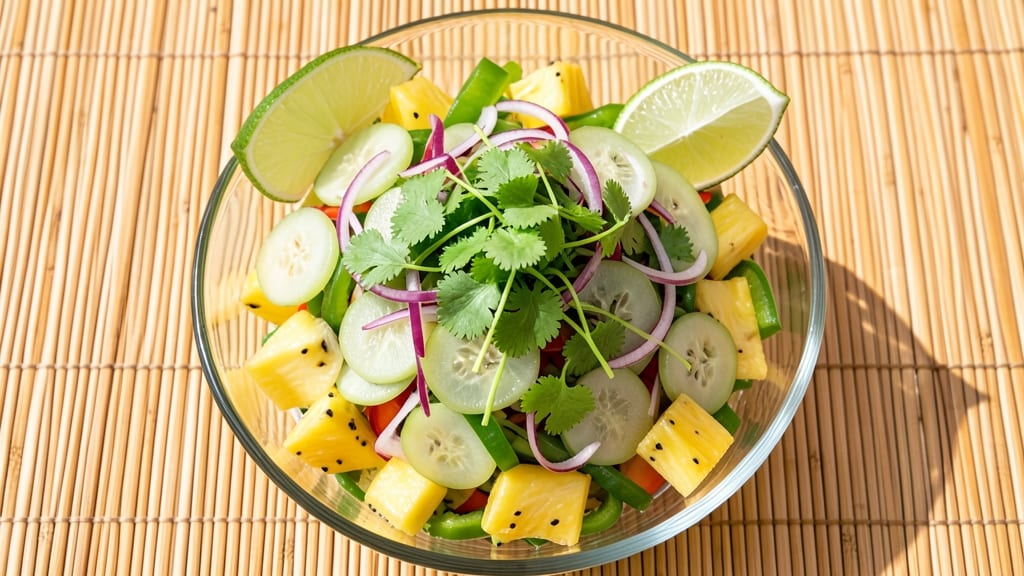
This ampalaya salad with pineapple recipe transforms bitter melon into a vibrant, refreshing dish that balances sweet and tart flavors perfectly. The key lies in properly preparing the ampalaya—washing, slicing, and blanching it to reduce bitterness while preserving its crisp texture.
Filipino cuisine meets tropical freshness in every bite, creating a salad that’s as visually stunning as it is delicious.
The secret to this dish is the harmony between ingredients: tender ampalaya, juicy pineapple, and a light dressing that enhances rather than overpowers. You’ll need ripe pineapple (look for golden-yellow skin and a sweet aroma at the base) and a simple vinegar-based dressing to tie everything together.
This salad is perfect for warm days or as a refreshing appetizer before a meal.
What makes this recipe special is how it turns a humble vegetable into something extraordinary. The ampalaya’s natural bitterness is softened by the pineapple’s sweetness, while the dressing adds a tangy brightness.
Garnish with toasted coconut flakes or crispy fried shallots for extra texture and flavor—these details elevate the dish from simple to spectacular.
Serve this salad as a standalone dish or pair it with grilled fish, shrimp, or even a hearty rice meal. The flavors are bold enough to stand alone but versatile enough to complement other dishes. Ready to try this tropical twist on a classic Filipino salad? Let’s get started!
Ingredients for ampalaya salad with pineapple
Transform bitter melon into a vibrant tropical salad with these fresh, carefully balanced ingredients.
| Ingredient | Amount | Notes |
|---|---|---|
| Ampalaya (Bitter Melon) 🥬 | 2 lb | Fresh, washed, sliced into 1/4-inch rounds |
| Fresh Pineapple 🍍 | 1 whole | Ripe, peeled, cored, chopped into chunks |
| Red Onion 🧅 | 1 whole | Thinly sliced into half-moons |
| Green Bell Pepper 🌶️ | 1 whole | Thinly sliced, seeds removed |
| Fresh Cilantro 🌿 | ½ cup | Chopped, stems removed |
| Lime Juice 🍋 | ½ cup | Freshly squeezed |
| Rice Vinegar 🍶 | ¼ cup | Unseasoned preferred |
| Coconut Sugar 🥥 | ¼ cup | Dissolved in warm water |
| Toasted Coconut Flakes 🥥 | ¼ cup | For garnish, lightly browned |
| Crispy Fried Shallots 🧅 | ¼ cup | Store-bought or homemade |
| Vegetable Oil 🫒 | 2 tbsp | For blanching ampalaya |
| Diamond Crystal Kosher Salt 🧂 | ½ tsp | For blanching water |
| Black Pepper 🌶️ | ¼ tsp | Freshly ground |
The ampalaya is the star—look for firm, bright green melons at Asian markets or well-stocked grocery stores like H Mart or Whole Foods. Avoid any with soft spots or yellowing. For the pineapple, golden-yellow skin and a sweet aroma at the base are key indicators of ripeness. The red onion and green bell pepper should be crisp; store them in the fridge until ready to slice. Coconut sugar adds depth, but if unavailable, light brown sugar works well too. Toast your coconut flakes in a dry pan for 2-3 minutes until golden—this enhances their flavor significantly.
No fresh cilantro? Substitute with mint or Thai basil for a different but complementary flavor. Running low on rice vinegar? Apple cider vinegar or white vinegar will work in a pinch, though the flavor profile shifts slightly. The dressing ratio is crucial: equal parts lime juice and vinegar with dissolved coconut sugar creates the perfect sweet-tart balance. For the ampalaya, blanching in boiling water for 30 seconds reduces bitterness without sacrificing texture. If you can't find crispy fried shallots, toasted sesame seeds add a similar crunch.
Store the ampalaya and pineapple separately in airtight containers for up to 3 days in the fridge. The dressing keeps for 5 days, though it's best used within 3 days for optimal flavor. Assemble the salad just before serving to maintain crispness. For meal prep, store components separately and toss with dressing when ready to eat. Garnishes like toasted coconut flakes and crispy shallots should be added fresh to preserve their texture and flavor. This salad reheats poorly, so enjoy it chilled for the best experience.
Why You'll Love This Recipe
- Here’s what sold me: the pineapple’s bright tang cuts through the bitter melon’s earthy crunch, while the red onion adds a sharp kick. Toss in fresh cilantro, and suddenly you’ve got a salad that tastes like a vacation in your mouth—no fancy dressing needed.
- No Chopping Chaos: I swear, the ampalaya and pineapple do most of the work here—just slice the bitter melon into rounds (no seeds!) and dice the pineapple into bite-sized chunks. That’s it. The onions and peppers add zero fuss; I usually just tear them by hand when I’m tired.
- Sweet-Savory Magic: Here’s what sold me: the pineapple’s bright tang cuts through the bitter melon’s earthy crunch, while the red onion adds a sharp kick. Toss in fresh cilantro, and suddenly you’ve got a salad that tastes like a vacation in your mouth—no fancy dressing needed.
- Lunchbox Legend: Between us, this is my go-to for packed lunches or potlucks. It holds up for days in the fridge (yes, even the pineapple stays fresh), and the flavors only get better as the bitter melon mellows. Honestly, I’ve sent this to work with my kids and had zero complaints.
Step-by-step instructions for ampalaya salad with tropical flavors
Transform bitter melon into a vibrant, refreshing salad with this precise method.
Blanch and Prepare the Ampalaya
Fill a large pot with water and bring to a rolling boil. Add the 2 lb ampalaya (bitter melon), sliced into ¼-inch rounds, along with 2 tablespoons vegetable oil and ½ teaspoon diamond crystal kosher salt. Blanch for exactly 2 minutes—this removes the bitterness while maintaining texture. Immediately drain and transfer to an ice bath to stop cooking.
Once cooled, pat the ampalaya dry with paper towels. The slices should be bright green and firm to the touch. If any slices remain bitter, soak them in cold water with 1 tablespoon lime juice for 5 minutes, then drain again. This step is critical for balancing the salad's flavor profile.
Create the Sweet-Tart Dressing
In a small bowl, whisk together the ½ cup lime juice, ¼ cup rice vinegar, and ¼ cup coconut sugar dissolved in 2 tablespoons warm water. The mixture should be smooth and slightly syrupy. Taste and adjust the balance of sweetness and acidity—you want a vibrant, tangy dressing that complements the tropical flavors.
Set the dressing aside while you prepare the remaining ingredients. The acidity will help tenderize the ampalaya slightly as it sits, enhancing the salad's freshness. If the dressing thickens, whisk in 1 tablespoon water to restore the desired consistency.
Assemble the Crunchy Vegetable Base
In a large mixing bowl, combine the blanched ampalaya with the 1 whole pineapple, chopped into chunks, the 1 whole red onion, sliced into half-moons, and the 1 whole green bell pepper, thinly sliced. Toss gently to distribute the ingredients evenly. The contrast between the crisp pineapple, sharp onion, and mild bell pepper creates a dynamic texture foundation.
Add the ½ cup chopped fresh cilantro and toss again. The cilantro's bright aroma will elevate the salad's freshness. Sprinkle with ¼ teaspoon freshly ground black pepper and mix lightly. This step ensures every bite delivers a balanced mix of textures and flavors.
Combine and Marinate the Salad
Pour the prepared dressing over the vegetable mixture and toss gently but thoroughly. The ampalaya should begin to absorb the dressing immediately, softening slightly while retaining its structure. Let the salad marinate for 10-15 minutes at room temperature—this allows the flavors to meld and the dressing to penetrate the ingredients.
Real talk: Don't skip the marinating time. The acidity in the dressing will help break down the ampalaya's cell walls just enough to make it more palatable, while the sweetness balances the natural bitterness. The salad should glisten slightly from the dressing, indicating proper saturation.
Garnish and Serve Immediately
Transfer the salad to a serving platter or individual bowls. Sprinkle evenly with the ¼ cup toasted coconut flakes and ¼ cup crispy fried shallots. The toasted coconut adds a subtle crunch and nutty depth, while the fried shallots contribute an umami-rich crunch that cuts through the salad's sweetness.
Serve the salad immediately while the ingredients are still crisp and vibrant. The contrast of temperatures—cool salad with warm garnishes—enhances the sensory experience. For best results, prepare this dish just before serving to maintain optimal texture and freshness.
Pro Tips For Making Ampalaya Salad With Pineapple
- SCORE THE AMPALAYA: Use a sharp knife and cut the bitter melon lengthwise—then scrape out the seeds and slimy flesh with a spoon. I learned this the hard way: skipping the scraping leaves a bitter, gummy mess that ruins the salad’s freshness. (Yes, it’s tedious, but worth it.)
- SOAK THE ONIONS: Toss sliced red onions in cold water for 10 minutes before draining and adding to the salad. This cuts the sharpness and keeps them crisp instead of turning mushy or overpowering the pineapple’s sweetness. (Trust me, your mouth will thank you.)
- CHAR THE PEPPERS: Quickly sear the green bell pepper strips in a dry pan over high heat until they blister—just 2-3 minutes. The smoky flavor balances the pineapple’s sweetness and adds depth without extra effort. (No grill? A cast-iron skillet works just as well.)
- SALT THE PINEAPPLE: Sprinkle pineapple chunks with a pinch of salt and let them sit for 15 minutes before mixing with the rest. This draws out excess juice, prevents a soggy salad, and makes the fruit taste even brighter. (I know, it’s counterintuitive—but it’s the thing that matters most.)
Troubleshooting your ampalaya salad with pineapple
Bitter Melon Too Bitter?
If your ampalaya still tastes bitter after blanching, try soaking the slices in ice water with 1 tablespoon lime juice for 5 minutes before draining. This extra step helps neutralize stubborn bitterness while keeping the texture crisp.
For extra insurance, add ½ teaspoon baking soda to the blanching water—it chemically reduces bitterness without altering flavor. 💫
Pineapple Not Sweet Enough?
Use only fully ripe pineapple—look for golden-yellow skin and a sweet aroma at the base. If your pineapple tastes underripe, place it in a paper bag with a banana for 24 hours to speed up ripening.
For added sweetness, toss the chopped pineapple with 1 teaspoon honey before mixing into the salad. This works especially well if your pineapple is borderline ripe.
Dressing Too Thin or Thick?
If your dressing is too thin, whisk in 1 tablespoon coconut sugar or 1 teaspoon cornstarch mixed with water. For a thicker dressing, reduce the lime juice by 1 tablespoon and let it sit for 10 minutes before adjusting.
Pro tip: Use rice vinegar instead of apple cider vinegar—it has a milder acidity that pairs better with tropical flavors. ✨
Salad Too Watery?
Drain excess moisture by placing the salad in a colander and gently pressing down with a clean kitchen towel for 2 minutes. For extra crunch, add ¼ cup toasted sesame seeds or crushed peanuts to absorb any lingering dampness.
If the ampalaya feels soggy, toss it with 1 teaspoon cornstarch before adding the dressing to help firm it up.
Garnishes Too Bland?
For deeper flavor, toast your coconut flakes in a dry pan until golden brown (about 2-3 minutes). For the fried shallots, use high-smoke-point oil (like avocado oil) and fry at 350°F for 3-4 minutes until crispy.
Store-bought fried shallots work, but homemade versions have a fresher, crunchier texture. 🔥
Salad Losing Crunch?
Assemble the salad right before serving to maintain crispness. If prepping ahead, store the ampalaya, pineapple, and vegetables separately in airtight containers for up to 3 days.
Toss with dressing only when ready to eat. For extra crunch, chill the salad for 30 minutes before serving—cold temperatures help preserve texture. 💡
Nutrition facts
Frequently asked questions
Why does the recipe call for blanching the ampalaya?
Blanching removes up to 70% of the bitterness while keeping the ampalaya crisp. The 2-minute boil followed by ice bath stops cooking instantly, preserving texture. This step is crucial for balancing flavors in the salad.
Can I substitute pineapple with another fruit?
Mango or papaya work well for tropical sweetness, but pineapple's acidity helps balance the ampalaya's bitterness. If using mango, add 1 extra tablespoon lime juice to the dressing. Avoid overly sweet fruits like watermelon—they'll overpower the dish.
How do I know when pineapple is ripe enough?
Look for golden-yellow skin and a sweet aroma at the base. The leaves should pull out easily—if they resist, the pineapple needs more time. For extra ripening, place in a paper bag with a banana for 24 hours. Never use green pineapple!
What if I don't have rice vinegar?
Use apple cider vinegar or white vinegar, but reduce to 2 tablespoons instead of ¼ cup. For a sweeter dressing, add 1 extra teaspoon honey. The flavor will be slightly different but still delicious.
Can I make this salad ahead of time?
Store components separately in airtight containers for 3 days. Toss with dressing only when ready to eat to maintain crispness. For garnishes, toast coconut flakes and fry shallots fresh before serving. The salad tastes best when assembled last-minute.