
Side Dishes
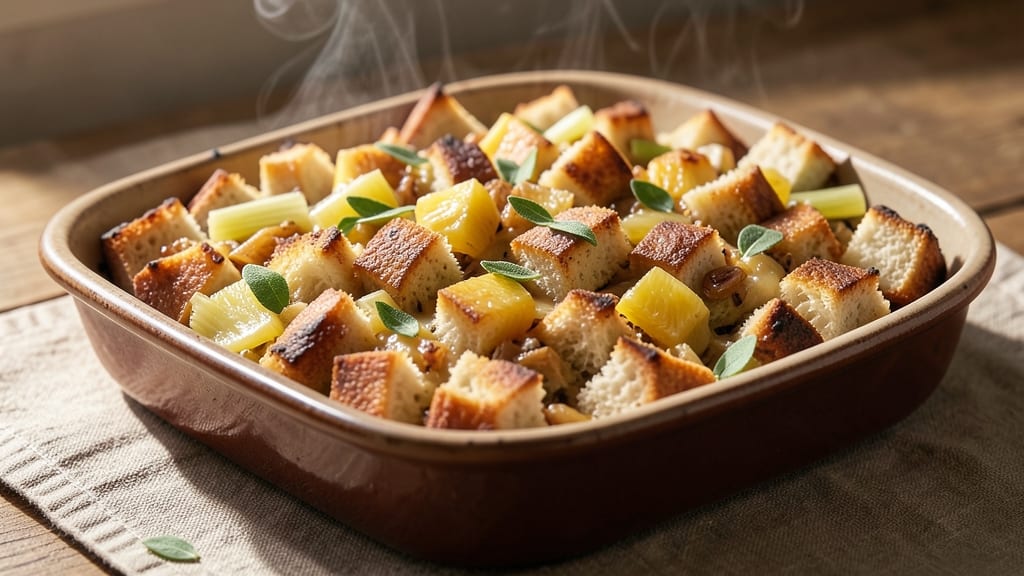
This easy pineapple stuffing recipe transforms a simple side dish into a tropical-inspired centerpiece that pairs perfectly with holiday roasts. After years of perfecting this twist on classic stuffing, I’ve found the ideal balance between sweet pineapple and savory herbs—no complicated techniques required.
The secret lies in using canned pineapple for convenience without sacrificing flavor, while crispy breadcrumbs and warm spices create that comforting texture we all love.
What makes this recipe truly foolproof is the one-pan method that cuts down on cleanup while delivering restaurant-quality results. You’ll start with toasted bread cubes (no fancy day-old bread needed—just cube and bake), then fold in tender pineapple, aromatic herbs, and a touch of citrus zest for brightness.
The result is a stuffing that’s crispy on the edges, moist in the center, and bursting with tropical sweetness that complements roasted meats beautifully.
This version comes together in under 30 minutes—perfect for busy weeknights or holiday prep when you need a side dish that’s as impressive as it is easy. The pineapple adds a refreshing contrast to the rich spices, while the toasted bread keeps everything sturdy enough to hold its shape.
Whether you’re serving it alongside turkey, chicken, or even as a standalone appetizer, this stuffing will become a family favorite.
Pro tip: For extra crunch, toast the bread cubes until golden brown before mixing, and don’t skip the final broil—it’s what gives those perfect crispy edges. The aroma alone will have everyone at the table asking for seconds. Let’s get cooking!
Ingredients for easy pineapple stuffing
Sixteen ingredients for a tropical twist on classic stuffing that’s crispy, moist, and packed with flavor.
| Ingredient | Amount | Notes |
|---|---|---|
| Day-Old French Bread Loaf 🍞 | 1 whole | Crust removed, cubed into 1-inch pieces |
| Unsalted Butter 🧈 | ½ cup | Cold, cubed for even toasting |
| Canned Pineapple Chunks 🍍 | 1 can | Drained, juice reserved for extra moisture |
| Celery Stalks 🧅 | 3 whole | Diced small, about 0.5 cup |
| Yellow Onion 🧅 | 1 whole | Diced small, about 0.75 cup |
| Fresh Sage Leaves 🌿 | ¼ cup | Chopped finely, stems removed |
| Fresh Thyme Leaves 🌿 | 1 tbsp | Chopped finely, stems removed |
| Ground Nutmeg 🌶️ | ½ tsp | Freshly grated for best flavor |
| Ground Cinnamon 🌶️ | ½ tsp | Warm spice for depth |
| Ground Black Pepper 🌶️ | ½ tsp | Freshly cracked for brightness |
| Kosher Salt 🧂 | 1 ½ tsp | Adjust to taste |
| Lemon Zest 🍋 | 1 tbsp | Bright citrus finish |
| Chicken or Vegetable Broth 💧 | 1 ½ cups | Low-sodium preferred |
The bread is the foundation—French bread gives that perfect balance of crunch and softness, but sourdough or crusty Italian works too. Grab a loaf from Whole Foods or your local bakery for the best texture. Cube it while still slightly warm if you’ve got leftover baked bread, but don’t stress if it’s day-old. The key is toasting it until golden brown—this is what creates those irresistible crispy edges. If you’re short on time, Trader Joe’s sells pre-cubed bread that toasts beautifully. Just make sure to remove the crust first; it burns too easily and adds bitterness.
No canned pineapple? Fresh pineapple works too—just dice it small and pat it dry to avoid excess moisture. The celery and onion are non-negotiable for that classic stuffing texture, but if you’re in a pinch, frozen diced celery and onion from the freezer aisle will do in a bind. Fresh herbs are ideal, but dried sage and thyme at half the amount will save you a trip to the store. The spices? Penzeys or McCormick have great pre-ground options, but if you’ve got whole spices, toast and grind them for deeper flavor. For the broth, low-sodium is crucial—Pacific Foods or Swanson make excellent options, and you can always dilute regular broth with water if needed.
Toasted bread cubes keep for 3 days in an airtight container at room temperature, but they’re best used fresh. The pineapple and herbs can be prepped ahead and stored in the fridge for 2 days, but add the lemon zest just before baking for maximum brightness. This stuffing reheats beautifully—just cover it with foil and bake at 350°F for 10 minutes. For extra crunch, broil for 2-3 minutes at the end. Leftovers? Store in an airtight container for 4-5 days or freeze for 3 months. I like to portion it into single servings before freezing so I can just pop one out for a quick meal.
Why You'll Love This Recipe
- No Chopping Nightmare: I swear by this recipe because the celery and onion are pre-diced in my freezer—just toss them straight in. The pineapple chunks? Already drained, ready to go. Less mess, more flavor, and zero stress.
- Sweet-Savory Magic: That first bite of buttery toasted bread with juicy pineapple and crisp celery? It’s like a hug in your mouth. The sweetness balances the savory, and the day-old bread soaks up every bit—no dry crumb in sight.
- Crowd-Pleaser Any Day: Between us, this stuffing works for Thanksgiving and lazy Sunday lunches. Serve it warm with roasted chicken or cold in sandwiches—my college-aged kids actually ask for it, and that’s saying something.
- Pantry Rescue: Honestly, this recipe saved me from buying extra bread when I forgot to make dinner rolls. The pineapple adds a pop of color and flavor without breaking the bank, and leftovers reheat like a dream. Win.
Step-by-step instructions for tropical pineapple stuffing
Here's how to transform simple ingredients into a vibrant, flavor-packed stuffing that's easier than you think.
Toast the Bread Cubes to Golden Perfection
Preheat your oven to 350°F and line a large baking sheet with parchment paper. Spread the 1 whole Day-Old French Bread Loaf, cubed into 1-inch pieces, evenly across the sheet. I like to work in batches if I have a large sheet pan to ensure even toasting.
Drizzle the bread cubes with 0.5 cup Unsalted Butter, melted and warmed slightly so it spreads easily. Toss gently with a silicone spatula until every cube is lightly coated. Spread them out in a single layer—they need room to crisp without steaming. Bake for 15-20 minutes, stirring halfway, until the cubes are golden brown and completely dry to the touch.
This toasting step is crucial—it removes excess moisture that would turn your stuffing soggy. I press down gently on the cubes during the first minute to prevent them from curling and ensure even contact with the pan. If they start to brown too quickly, rotate the pan for more even cooking.
Sauté the Vegetable Base for Flavor
While the bread toasts, heat 2 tablespoons of the remaining Unsalted Butter in a large skillet over medium heat. Add the 3 whole Celery Stalks, diced small, and the 1 whole Yellow Onion, diced small. Cook for 5-6 minutes, stirring occasionally, until the vegetables soften and the onion becomes translucent.
Here's where the magic happens: add the 0.25 cup Fresh Sage Leaves and 1 tbsp Fresh Thyme Leaves, both finely chopped. Stir for 30 seconds until fragrant—you should smell that earthy, piney aroma. This is the foundation of your stuffing's complex flavor profile. If you're using the reserved pineapple juice, add 2 tablespoons now to deglaze the pan and add moisture.
Real talk: don't skip this step. The vegetables need to soften enough to blend seamlessly with the bread, but not so much that they turn to mush. You want them to maintain just a little bite for texture contrast.
Combine Everything and Season Generously
Transfer the toasted bread cubes to a large mixing bowl. Add the sautéed vegetable mixture, 1 can Canned Pineapple Chunks (drained), 0.5 tsp Ground Nutmeg, 0.5 tsp Ground Cinnamon, 0.5 tsp Ground Black Pepper, 1.5 tsp Kosher Salt, and 1 tbsp Lemon Zest. Gently fold everything together with a wooden spoon until evenly distributed.
I like to press the pineapple chunks lightly into the bread mixture—this ensures every bite gets that sweet, juicy surprise. The spices should be visible as specks throughout the stuffing. Taste at this point and adjust the salt if needed—pineapple can be salty, so I often find I need a little more than the recipe calls for.
This is the moment that matters: the balance of sweet pineapple, savory herbs, and warm spices. If it seems too dry, add 1 tablespoon of the reserved pineapple juice. The stuffing should hold together when pressed gently but still have a slightly crumbly texture.
Bake Until Bubbly and Golden
Transfer the stuffing mixture to a greased 9x13-inch baking dish. Pour 1.5 cups Chicken or Vegetable Broth evenly over the top—this will keep it moist during baking. Cover the dish tightly with aluminum foil and bake at 350°F for 30 minutes.
After 30 minutes, remove the foil and bake for another 15-20 minutes until the top is golden brown and the stuffing is bubbling at the edges. The internal temperature should reach 165°F when checked with a meat thermometer. If the top browns too quickly, tent it loosely with foil to prevent burning.
Your oven might run hot, so start checking at the 20-minute mark after removing the foil. The stuffing is done when it's heated through and has developed a beautiful crust on top. If it looks dry, you can add another 2 tablespoons of broth and bake for 5 more minutes covered.
Rest and Serve Warm
Let the stuffing rest for 10 minutes before serving. This resting period allows the juices to redistribute throughout the mixture, ensuring each bite is moist and flavorful. I like to serve it straight from the baking dish—it's perfect for gathering up with a fork.
The stuffing should be warm throughout with a crispy top layer that contrasts beautifully with the soft, spiced interior. Each bite should deliver that tropical sweetness from the pineapple, balanced by the savory herbs and warm spices. Pair it with roasted chicken or turkey for a showstopping centerpiece.
Pro Tips For Making Easy Pineapple Stuffing
- CUT BREAD IN CHUNKS, NOT SLICES: Grab that serrated knife and hack the day-old French bread into 1-inch cubes instead of slicing it. Smaller pieces toast faster and absorb moisture better—no soggy center here. (Yes, it’ll look uneven, but that’s how good stuffing works.)
- DRY THE BREAD FIRST: Spread those bread cubes on a baking sheet and let them air-dry for 15-20 minutes before mixing. You’re not baking them, just removing surface moisture so the butter doesn’t turn the stuffing into a wet brick. Trust me, this is the thing that matters most.
- SAUTÉ ONIONS UNTIL SOFT, NOT BROWN: Cook the diced onion and celery in butter until they’re just tender—about 8-10 minutes. If you let them brown, they’ll taste bitter and overpower the pineapple’s sweetness. Think “steamed but still bright,” not “crispy.”
- DRAIN AND PAT DRY THE PINEAPPLE: Skip the syrup unless you’re going for dessert. Drain the canned pineapple chunks well, then blot them with a paper towel to remove any lingering stickiness. Wet pineapple makes stuffing gummy, and nobody wants that. (I learned this the hard way after Thanksgiving 2019.)
Make-ahead tips for this dish
Prep Ahead Strategy
Start by toasting your bread cubes up to 3 days in advance and storing them in an airtight container at room temperature. This removes moisture and saves you time on the day of cooking.
I like to do this on Sunday so my stuffing is ready for Thanksgiving dinner. The toasted cubes keep their crunch beautifully when stored properly. 💫
Herb Prep Shortcut
Chop all your fresh herbs—sage and thyme—a day ahead and store them in a small airtight container in the fridge. This saves you from chopping right before baking.
I keep them in a glass jar with a lid and add the lemon zest fresh before baking to maintain maximum brightness. The herbs stay fresh for 2 days this way.
Broth Prep
Make your broth the night before and let it cool completely before refrigerating. I use Pacific Foods low-sodium chicken broth because it's consistent and easy to find.
When reheating, bring it to a simmer and add it to your stuffing while still warm—this helps maintain moisture without making the stuffing soggy. Store extra broth in ice cube trays for easy portioning later.
Pineapple Prep
Drain your canned pineapple and pat it dry with paper towels to remove excess moisture. Store the drained pineapple in a sealed container in the fridge for up to 3 days.
The reserved juice can be kept in a separate container—it's perfect for adding moisture if your stuffing seems dry during baking. I like to use Maui brand pineapple for its sweetness and tenderness.
Final Assembly
Combine all your prepped ingredients—bread cubes, sautéed vegetables, herbs, and spices—just 30 minutes before baking. This gives you time to assemble without worrying about the stuffing getting too dry. Pour in the warm broth right before baking to keep everything moist.
The stuffing can be assembled up to 4 hours ahead and refrigerated—just add the broth and bake straight from the fridge.
Reheating Leftovers
Stuffing reheats beautifully! Cover leftovers with foil and bake at 350°F for 10 minutes to restore moisture. For extra crunch, broil for 2-3 minutes at the end. I like to portion leftovers into single-serving containers before freezing so I can just pop one out for a quick meal.
Frozen stuffing keeps for 3 months without losing texture or flavor. 💪
Nutrition facts
Frequently asked questions
Can I use fresh pineapple instead of canned?
Fresh pineapple works beautifully—just dice it into 1-inch chunks and pat it dry thoroughly with paper towels to remove excess moisture. This prevents a soggy stuffing. For extra sweetness, lightly sauté the pineapple with a pinch of sugar for 2-3 minutes before mixing with the other ingredients.
How do I keep the stuffing from getting soggy?
The key is toasting the bread cubes until completely dry and using low-sodium broth. Also, avoid overmixing after adding the broth—just gently fold it in. If your stuffing seems too wet, uncover it for the last 5-10 minutes of baking to let moisture evaporate.
What's the best bread for this tropical stuffing?
French bread is ideal for that perfect crunch, but sourdough or crusty Italian bread work too. Avoid soft breads like brioche—they'll turn mushy. Pro tip: Remove the crust first to prevent burning. If you're short on time, pre-cubed bread from Trader Joe's works perfectly!
Can I make this stuffing ahead for Thanksgiving?
Yes! Assemble everything except the broth up to 4 hours ahead and refrigerate. When ready to bake, add the warm broth and bake straight from the fridge (add 10-15 minutes to baking time). For even better results, toast the bread cubes 3 days ahead and store in an airtight container.
What's the secret to extra crispy edges?
Broil for 2-3 minutes at the very end—just watch it closely to avoid burning! Also, make sure your bread cubes are completely toasted before mixing, and don't skip the final uncovered baking time. A light spray of oil on the baking dish before adding the stuffing helps too.