
Main Courses
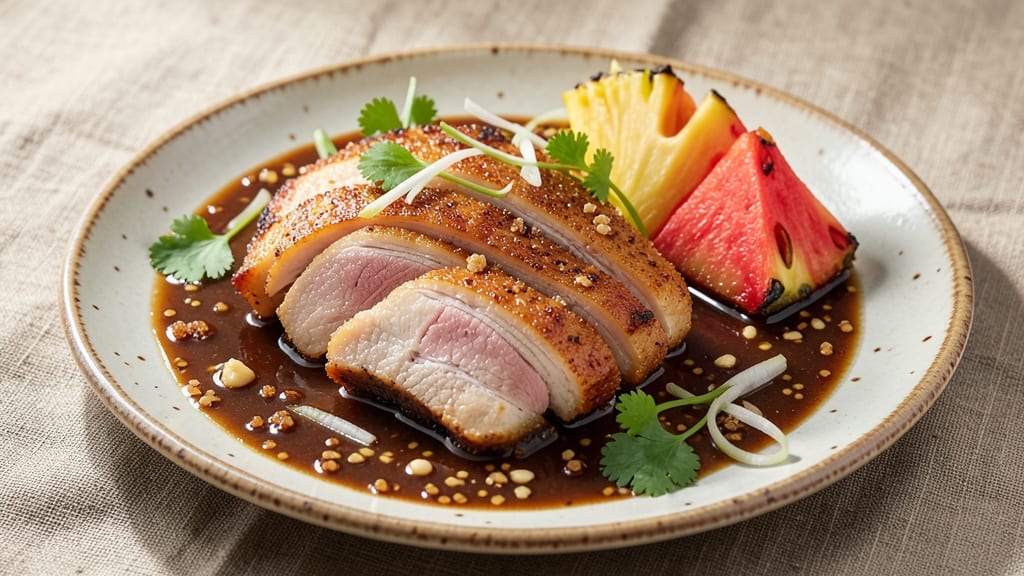
This pork belly pineapple adobo recipe brings the soul of Filipino comfort food to your kitchen, where tender pork belly and sweet pineapple mingle in a rich, caramelized sauce.
The balance of tangy soy, sweet pineapple, and savory garlic creates a dish that's both familiar and exciting—perfect for special occasions or weekend dinners. I've perfected this recipe over years of cooking for crowds, and it never fails to impress.
What makes this dish special is the slow cooking process, which transforms tough pork belly into melt-in-your-mouth perfection while developing a deeply flavorful sauce. The pineapple not only adds natural sweetness but also tenderizes the meat as it cooks.
The key is patience—letting the flavors meld and the sauce reduce to a glossy, sticky finish. By the time you serve this dish, you'll have a restaurant-quality meal with crispy edges on the pork belly and a sauce that's sweet, tangy, and rich all at once.
The aroma alone will have everyone gathering around the table, eager for their first bite. It's the kind of dish that feels like a hug in food form. Serve with steamed jasmine rice to soak up every last drop of that caramelized sauce. Let's get cooking!
Ingredients for pork belly pineapple adobo
Sweet pineapple, savory pork belly, and sticky soy sauce—this recipe delivers restaurant-quality Filipino flavors right to your table.
| Ingredient | Amount | Notes |
|---|---|---|
| Pork Belly 🥓 | 2 ½ lb | Skin-on, cut into 1-inch cubes |
| Fresh Pineapple 🍍 | 1 whole | Peeled, cored, cut into chunks |
| Soy Sauce 🥄 | ½ cup | Dark or regular, not low-sodium |
| Brown Sugar 🍚 | ½ cup | Packed, light or dark |
| Garlic Cloves 🧄 | 8 cloves | Minced, peeled |
| White Vinegar 🍶 | ¼ cup | White or apple cider |
| Olive Oil 🫒 | ¼ cup | Extra-virgin for richness |
| Black Peppercorns 🌶️ | 1 tsp | Freshly cracked |
| Bay Leaves 🌿 | 2 whole | Dried, for depth of flavor |
| Ground Black Pepper 🌶️ | ½ tsp | Freshly ground preferred |
| Salt 🧂 | 1 ½ tsp | Kosher or sea salt |
| Green Onions 🧅 | 3 whole | Sliced, for garnish |
| Jasmine Rice 🍚 | 2 cups | Uncooked, for serving |
| Water 💧 | 3 cups | For rice cooking |
The pork belly makes this dish special. Look for thick-cut pieces with good marbling—Costco or Asian markets usually have the best quality. If you can't find skin-on, don't stress, but it adds that crispy texture. The pineapple should be ripe but firm (think: sweet but not mushy). I always grab fresh pineapple from Trader Joe's—it's sweeter than canned and worth the extra minute to prep. For the soy sauce, Kikkoman or Lee Kum Kee are my go-tos, but any good brand works. The brown sugar? Light or dark doesn't matter here—just make sure it's packed tightly into the measuring cup.
No fresh pineapple? Canned pineapple chunks in juice work in a pinch, but drain well to avoid a watery sauce. Running short on soy sauce? Coconut aminos or tamari are great substitutes, though the flavor will be slightly different. The garlic can be pre-minced from a jar (no judgment), but fresh is always better. If you don't have white vinegar, rice vinegar or apple cider vinegar will do. The green onions are just for garnish, so skip them if you're out—but trust me, they add a nice fresh finish. For the rice, jasmine is ideal, but any long-grain white rice will work.
This dish tastes even better the next day, so make extra if you can. Store leftovers in the fridge for up to 4 days, and freeze portions for 3 months. The sauce thickens as it cools, so you might want to add a splash of water when reheating. I always double the batch—half gets eaten immediately, and the rest becomes lunch for days. The pork belly keeps well, so don't worry about cooking too much. Serve with extra rice to soak up that delicious sauce—every last drop is worth it.
Why You'll Love This Recipe
- One-Pan Magic: I swear, this dish is my go-to when I don’t want to scrub a million dishes. The pork belly renders all its fat into the pan, caramelizing with the pineapple and garlic while you stir—no extra pots, no stress. Just flip the pan onto a plate, and you’re done.
- Sweet-Savory Balance: That first bite of crispy pork belly with the juicy, slightly tangy pineapple? It’s like someone mixed a BBQ joint with a dessert cart. The soy and brown sugar create this addictive glaze that makes every forkful taste like a hug for your taste buds.
- Leftovers That Beg: Honestly, I always make too much because the flavors only get better the next day. The pork stays tender, the sauce thickens just enough to coat everything, and reheating it? It’s like a flavor upgrade—perfect for lazy lunches or when you just don’t feel like cooking.
- Budget-Friendly Luxury: Pork belly might sound fancy, but a slab goes a long way, and the other ingredients are pantry staples. I’ve fed four people for under $15 with this, and they all think I spent hours slaving away. (Between us, I was watching TV the whole time.)
Step-by-step instructions for pork belly pineapple adobo
Here's how to create a perfect balance of caramelized sweetness and rich soy glaze—every bite delivers.
🍳 Step 1: Sear the Pork Belly for Maximum Flavor
Heat a large Dutch oven over medium-high heat and add the 2.5 lb pork belly in a single layer, skin-side down. Let it sear undisturbed for 8-10 minutes until the skin turns a deep golden brown and crispy. I press down gently on the cubes during the first minute to prevent curling and ensure even contact with the pan.
Once the first side is crispy, flip the pork belly and repeat on the other side. This step is crucial—it locks in juices and builds that irresistible caramelized crust. If the pork releases easily from the pan, it's ready to move to the next stage. Transfer the seared pork to a plate and set aside temporarily.
👨🍳 Step 2: Build the Sweet-Savory Adobo Sauce
In the same Dutch oven, add the 0.25 cup olive oil and let it heat for 30 seconds until shimmering. Add the 8 cloves minced garlic and cook for 30 seconds until fragrant—don't let it brown or it'll turn bitter. Stir in the 1 tsp cracked black peppercorns and 2 whole bay leaves, letting them toast for 1 minute to release their aromatic oils.
Pour in the 0.5 cup soy sauce and 0.25 cup white vinegar, scraping up any browned bits from the bottom of the pan. This deglazing step captures all the flavor you've built. Add the 0.5 cup packed brown sugar and 1.5 tsp salt, stirring until the sugar dissolves completely. Return the seared pork belly to the pot, skin-side up.
🔥 Step 3: Simmer Until Tender and Glazed
Bring the mixture to a gentle boil, then reduce heat to low and cover partially with a lid. Let it simmer for 1 hour until the pork is fork-tender and the sauce has thickened slightly. I check the pork periodically—it's done when a knife slides in easily and the meat pulls apart with gentle pressure.
After the initial hour, add the 1 whole fresh pineapple chunks to the pot. The pineapple's natural acids will tenderize the pork further while adding bright sweetness. Continue simmering uncovered for another 30-45 minutes until the sauce has reduced to a glossy glaze and coats the pork beautifully. The aroma at this point is incredible—like a perfect balance of caramel, soy, and tropical fruit.
⏰ Step 4: Rest and Prepare Jasmine Rice
Remove the pork belly from the sauce and transfer it to a serving platter. Tent loosely with aluminum foil and let it rest for 10 minutes—this allows the juices to redistribute throughout the meat. While it rests, prepare the 2 cups jasmine rice according to package instructions using the 3 cups water. I like to use a rice cooker for perfect, fluffy grains every time.
During the resting time, skim any excess fat from the sauce if desired, but leave enough to keep the pork moist. The sauce should now have a beautiful caramelized color with chunks of pineapple floating in it. Taste and adjust seasoning if needed—you might want to add a splash more soy sauce for saltiness or a touch of brown sugar for sweetness.
🍽️ Step 5: Serve with Garnish and Enjoy
Slice the rested pork belly into ½-inch thick slices and arrange over the prepared jasmine rice. Ladle the pineapple adobo sauce generously over the top. Garnish with the 3 whole sliced green onions and a sprinkle of 0.5 tsp freshly ground black pepper for a pop of color and freshness.
This dish is best served immediately while the pork is still warm and the sauce is glossy. The combination of crispy pork belly, sweet pineapple, and savory soy glaze creates a perfect harmony of flavors. Each bite delivers that satisfying contrast of textures—tender pork, juicy pineapple, and that beautiful caramelized crust from the searing process.
Pro Tips For Making Pork Belly Pineapple Adobo
- CRANK THE HEAT FIRST: Start your pork belly in a screaming-hot pan—no simmering, no slow build. The initial sear locks in juices and builds that caramelized crust before the pineapple’s acid starts breaking it down. I used to skip this, and the meat always turned out greasy instead of crispy.
- USE COLD PINEAPPLE CHUNKS: Toss your fresh pineapple chunks in ice water for 10 minutes before adding them to the pan. The cold shock keeps them from turning to mush in the hot adobo sauce, and they’ll release their sweetness in chunks rather than dissolving into syrup.
- SALT THE BELLY IN ADVANCE: Rub the pork belly with 1 tablespoon of salt (per pound) and let it sit uncovered in the fridge for at least 2 hours—yes, even if you’re in a hurry. This guarantees crispy edges and tender layers, not a chewy exterior. I learned this the hard way after a soggy batch.
- STIR THE BROWN SUGAR: Don’t just dump the brown sugar in and walk away. Whisk it into the soy sauce first until it dissolves completely—no grainy bits. Then, let the mixture reduce for 3-4 minutes before adding the pork and pineapple. This prevents clumping and ensures a glossy, balanced sauce.
Storing and reheating this pork belly pineapple adobo
Refrigerator Storage
Let your pork belly adobo cool to room temperature (about 1 hour) before storing. Transfer the pork and sauce to an airtight container, separating them if you prefer.
The pork stays fresh for 4-5 days in the fridge, while the sauce keeps for 5-6 days—though it tastes best within 3 days. I always store the sauce in a separate container because it thickens as it cools, making it easier to reheat. 🥫
Freezer Preservation
For longer storage, freeze the pork belly and sauce separately. Portion the pork into single-serving bags (about ½ lb per bag) and the sauce into quart-sized freezer bags, leaving 1-inch headspace for expansion. Both freeze beautifully for 3 months.
When ready to eat, thaw overnight in the fridge—never microwave directly from frozen. The pork belly reheats best in the oven at 350°F for 20-25 minutes to restore crispiness. 🧊
Reheating Pork Belly
For the best texture, reheat pork belly in the oven. Place slices on a baking sheet lined with parchment paper and heat at 350°F for 15-20 minutes until warmed through. Add a splash of water or pineapple juice to the pan to prevent drying.
Alternatively, use a skillet over medium heat for 3-4 minutes per side to restore that crispy exterior. I avoid microwaving—it turns the pork rubbery. 🔥
Reviving the Sauce
The sauce thickens significantly when chilled, so thin it with 1-2 tablespoons water or pineapple juice before reheating. Warm over medium-low heat for 5-7 minutes, stirring occasionally, until it reaches 165°F.
For extra richness, add a pat of butter or a splash of coconut milk. The sauce should coat the back of a spoon when done—this is your goal. 🍲
Make-Ahead Tips
This dish actually improves overnight! Cook the full recipe a day ahead, then reheat just before serving. The flavors deepen as the sauce reduces further. I often prepare two batches—one for dinner and one for leftovers.
Store components separately in the fridge: pork in one container, sauce in another. When reheating, combine them in a pot over low heat to meld flavors again. 💫
Serving Leftovers
Leftovers make fantastic lunches or quick dinners. Serve pork belly slices over steamed rice or in banana leaves for a tropical twist. The sauce pairs well with soft-boiled eggs or steamed bok choy for a complete meal.
To keep things interesting, add a sprinkle of sesame seeds or chopped cilantro to the reheated dish for freshness. 🌿
Nutrition facts
Frequently asked questions about pork belly pineapple adobo
Can I use pork shoulder instead of pork belly?
The fat content changes the texture, but it works in a pinch! Pork shoulder will be leaner and less crispy, but still delicious. For best results, add 1 extra tablespoon olive oil to the pan when searing and increase simmering time by 15-20 minutes to ensure tenderness. The sauce will still be amazing, though the texture contrast won't be as dramatic.
How do I know when the pork belly is fully cooked?
Your pork is done when it reaches an internal temperature of 195°F and a knife slides in easily with no resistance. For extra assurance, cut into a small piece—the meat should be tender and the fat should start to render. If you're unsure, err on the side of slightly undercooked (it will finish cooking while resting). The skin should be crispy and golden brown, not pale or rubbery.
Can I make this recipe in a slow cooker?
Brown the pork belly first in a skillet, then transfer everything to the slow cooker. Cook on low for 6-7 hours or high for 3-4 hours, adding pineapple in the last 30 minutes. The slow cooker method is perfect for busy days—just stir occasionally and add water if the sauce gets too thick. The flavors will meld beautifully, though the texture may be slightly less crispy than stovetop.
What if my sauce is too thin or too thick?
If your sauce is too thin, simmer uncovered for 10-15 extra minutes to reduce it. For a thicker sauce, mix 1 tablespoon cornstarch with 2 tablespoons water, stir into the sauce, and simmer for 2-3 minutes until it thickens. Pro tip: Skim excess fat from the surface if you prefer a cleaner sauce. The ideal consistency should coat the back of a spoon but still be pourable.
Can I substitute canned pineapple?
Yes, but drain the pineapple thoroughly to avoid a watery sauce. Use 1 (20 oz) can pineapple chunks in juice and reduce the initial liquid by ¼ cup (since canned pineapple contains extra moisture). For best results, add the pineapple in the last 30 minutes of cooking to preserve its texture. Fresh pineapple adds better flavor, but canned works in a pinch!