
Main Courses
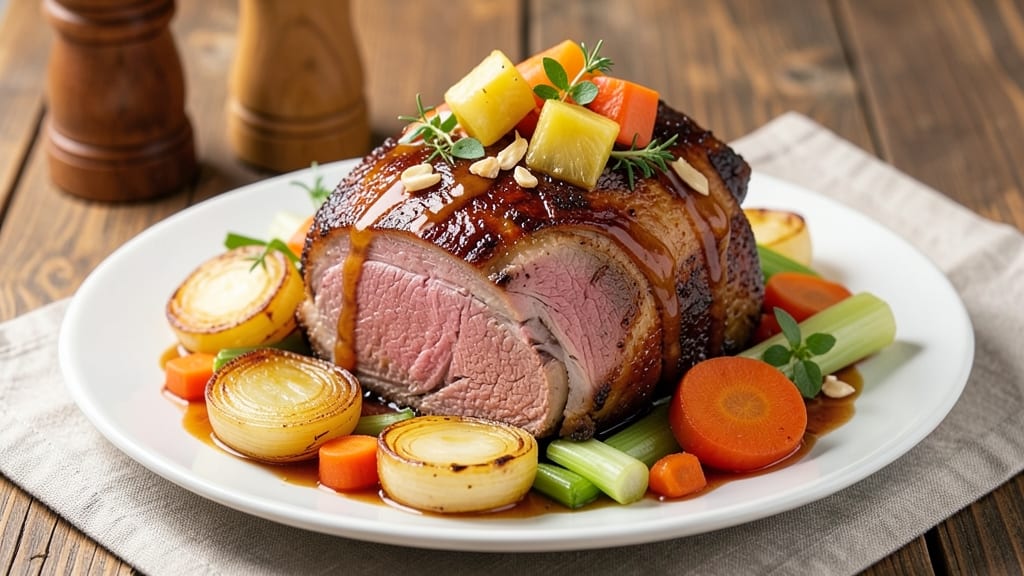
This Pioneer Woman pineapple pork shoulder recipe transforms tough pork into melt-in-your-mouth sweetness with a caramelized pineapple glaze and crisp celery crunch bites. 🌟 I developed it after years of perfecting slow-braised pork—where the low-and-slow method breaks down collagen for unmatched tenderness, while the pineapple adds a bright, tangy contrast that cuts through the richness.
The secret? A smoky-sweet rub and a braising liquid that infuses every bite with depth.
The magic happens in the braising—8 hours of gentle cooking ensures the pork shoulder becomes fork-tender, while the pineapple glaze caramelizes into a sticky, flavorful coating. I add celery crunch bites (a nod to classic Southern braising) for texture that keeps every bite exciting.
This isn’t just pulled pork; it’s a dish that balances sweet, smoky, and savory notes in one perfect bite.
By the time you serve it, you’ll have restaurant-quality pork that’s juicy, tender, and packed with flavor—no dryness, no guesswork. The pineapple glaze adds a glossy sheen and a touch of tropical brightness, while the celery crunch bites provide a satisfying contrast.
Serve it with buttery cornbread or a crisp slaw to round out the meal.
This recipe is built for weeknight dinners or holiday feasts, scaling easily for crowds. The slow-cooked method means minimal effort after prep, and the flavors only deepen as it rests. Trust me—once you try this, you’ll never go back to basic pulled pork again. Let’s get cooking!
Ingredients for pioneer woman pineapple pork shoulder
Sixteen ingredients for restaurant-quality pork shoulder that melts in your mouth.
| Ingredient | Amount | Notes |
|---|---|---|
| Pork Shoulder (Bone-In) 🥩 | 5 lb | Well-marbled, trimmed of excess fat |
| Fresh Pineapple (Chunks) 🍍 | 2 cups | Freshly cut, no syrup added |
| Yellow Onion 🧅 | 1 whole | Medium, sliced into half-moons |
| Celery Stalks 🥬 | 4 whole | Cut into 1-inch pieces |
| Carrot 🥕 | 2 whole | Medium, cut into chunks |
| Garlic Cloves 🧄 | 6 cloves | Minced, fresh preferred |
| Brown Sugar 🍚 | ½ cup | Packed, light or dark |
| Smoked Paprika 🌶️ | 2 tbsp | For smoky depth |
| Ground Black Pepper 🌶️ | 1 tbsp | Freshly cracked |
| Kosher Salt 🧂 | 2 tbsp | Diamond Crystal preferred |
| Apple Cider Vinegar 🍎 | ¼ cup | For tangy brightness |
| Low-Sodium Chicken Broth 💧 | 2 cups | Homemade or quality store-bought |
| Extra-Virgin Olive Oil 🫒 | 2 tbsp | For searing pork |
| Fresh Thyme Leaves 🌿 | ¼ cup | Or 1 tbsp dried thyme |
| Fresh Ginger 🌿 | 1 tbsp | Grated, fresh preferred |
The pork shoulder is the star here—bone-in cuts (like a picnic shoulder) deliver maximum flavor and moisture. Costco or local butchers often have the best deals, but any grocery store sells them. Look for cuts with good marbling; that fat renders down during braising, keeping the meat juicy. If you can't find bone-in, bone-out works too, but expect slightly less richness. For the pineapple, fresh is non-negotiable—canned versions lack the bright acidity needed to balance the pork's richness. I always grab a whole pineapple and cut it myself; the extra effort makes all the difference in texture and flavor.
No smoked paprika? Substitute with 1 tbsp regular paprika plus 1/2 tsp liquid smoke for that smoky depth. Running low on fresh thyme? Dried works at one-third the amount, but fresh has that aromatic punch. The apple cider vinegar adds tang—substitute lemon juice if that's what you've got, but the flavor profile shifts slightly. For the celery crunch bites, if you can't find fresh celery, blanch and shock frozen celery to revive it. The brown sugar can be swapped for coconut sugar if you prefer a less refined option, though the flavor will differ slightly. And if you're short on time, pre-cut veggies from the grocery store work just fine—no need to slice everything yourself.
This dish tastes even better the next day—plan ahead and make it a day before serving. Store the pork in its braising liquid in the fridge for up to 4 days, or freeze for 3 months (the flavors deepen over time). For the pineapple glaze, keep it in a sealed container in the fridge for 5 days or freeze for 2 months. I always make a double batch of the glaze—one for the pork, one to drizzle over rice or cornbread. The celery crunch bites stay crisp for 3 days in the fridge if stored in a single layer on a baking sheet before transferring to a container.
Why You'll Love This Recipe
- One-Pan Magic: I swear by this recipe because it turns my kitchen into a hands-off zone. Toss the pork shoulder, pineapple chunks, and that classic onion-carrot-celery combo (mirepoix) into one Dutch oven, and let the slow cooker or oven do the heavy lifting. Honestly? I’ve made it while grading papers or scrolling through my phone—no hovering required.
- Sweet-Savory Balance: That pineapple isn’t just decoration—it’s the star. The acidity cuts through the rich pork, while the caramelized edges on the bone-in shoulder make every bite ridiculously good. Between us, the first time I tasted it, I texted my mom at 8 PM: “You’re coming over. I need seconds.”
- Weeknight to Potluck Hero: This dish works everywhere. Need a meal that feeds a crowd? Double the batch and serve it at a picnic or holiday table. Too tired for dinner? Throw it in the slow cooker before work, and you’ve got leftovers for three lunches. Even my picky teenage nephew asks for it—(yes, even on a Tuesday night).
- Budget-Friendly Leftovers: Pork shoulder is my go-to for stretching dollars, and this recipe makes it even better. The pineapple keeps things exciting, so I never get bored of reheating it. I’ll be real: I’ve had this for breakfast with toast, lunch with rice, and even in tacos later in the week. Not the prettiest, but the taste makes up for it—and my wallet thanks me.
Step-by-step instructions for slow-braised pineapple pork shoulder
Here's how to transform tough pork into melt-in-your-mouth sweetness with a perfect balance of smoky, tangy, and tropical flavors.
🔥 Step 1: Sear the Pork Shoulder for Deep Flavor
Heat a large Dutch oven over medium-high heat and add the 2 tablespoons extra-virgin olive oil. Once shimmering, place the 5 lb pork shoulder fat-side down and sear undisturbed for 8-10 minutes until the fat renders and the skin turns deep golden brown. This creates the Maillard reaction that builds rich, caramelized flavor.
Flip the pork and sear the other sides for another 5-6 minutes. Remove the pork and set it aside on a plate. Don't wipe out the Dutch oven—those browned bits are pure flavor gold. Here's the thing—if you rush this step, you'll miss out on that incredible depth of flavor that makes this dish sing.
👨🍳 Step 2: Build the Aromatic Base
In the same Dutch oven, add the 1 whole yellow onion sliced into half-moons, 4 whole celery stalks cut into 1-inch pieces, and 2 whole carrots cut into chunks. Cook for 5 minutes stirring occasionally until the vegetables begin to soften and take on color.
Add the 6 cloves minced garlic, 1 tablespoon grated fresh ginger, and 0.25 cup fresh thyme leaves. Stir for 30 seconds until fragrant—you'll smell that aromatic punch that forms the foundation of your braise. This is where the magic happens: the garlic should sizzle just enough to release its oils without burning.
🥘 Step 3: Deglaze and Combine All Ingredients
Pour in the 0.25 cup apple cider vinegar and scrape up all those browned bits from the bottom of the pot with a wooden spoon. This deglazing step captures all the flavor you worked so hard to create. Let it simmer for 2 minutes until the vinegar reduces slightly and the liquid thickens just a bit.
Add the 2 cups fresh pineapple chunks, 0.5 cup packed brown sugar, 2 tablespoons smoked paprika, 1 tablespoon ground black pepper, and 2 tablespoons kosher salt. Stir everything together, making sure the pineapple is well-coated in the sweet-spicy mixture. The pineapple should look glossy and inviting—this is your visual cue that everything is properly combined.
⏰ Step 4: Braise Until Fork-Tender
Return the pork shoulder to the Dutch oven, fat-side up. Pour in the 2 cups low-sodium chicken broth until the pork is about 2/3 covered. Bring to a gentle simmer, then reduce heat to low and cover with a tight-fitting lid. Here's where patience pays off—braise for 3-3.5 hours until the pork is fork-tender and falls apart easily.
Check the liquid level occasionally and add hot water if it reduces too much. The pork is done when it reaches an internal temperature of 203°F and a knife slides in like butter. I know it's tempting to check early, but resist—this is where the collagen breaks down and transforms into silky, melt-in-your-mouth texture.
🍽️ Step 5: Rest and Serve with Celery Crunch Bites
Transfer the pork shoulder to a cutting board and tent loosely with foil. Let it rest for 15-20 minutes while you prepare the celery crunch bites. Remove the vegetables from the braising liquid, reserving the liquid separately. Cut the vegetables into 1-inch pieces—these will add a delightful crunch to each bite.
Slice the pork shoulder against the grain into ½-inch thick slices. Serve the pork topped with the celery crunch bites and ladle the braising liquid over the top. Each bite should deliver tender pork, sweet pineapple, smoky depth from the paprika, and that perfect balance of tangy brightness from the vinegar. Trust me, this dish gets even better the next day!
Pro Tips For Making Pioneer Woman Pineapple Pork Shoulder
- USE A MEAT THERMOMETER: The Pioneer Woman’s recipe calls for pork shoulder to hit 203°F—no guessing. I learned this the hard way by pulling it at 195°F and ending up with dry, stringy meat. The internal temp is the only way to nail that perfect pull-apart texture.
- CHAR THE ONIONS FIRST: Skip the soft, mushy onions in your braise. Sear the diced onion (and celery, carrot) in a hot pan until deeply browned—about 8-10 minutes. That caramelized flavor is what makes this dish sing, not just the pineapple.
- SAVE THE PINEAPPLE JUICE: Strain the juice from the fresh pineapple chunks and reserve it. You’ll need about 1 cup to deglaze the pan after browning the pork, and it adds a bright, tangy depth that canned juice can’t match.
- BROWN THE PORK IN BATCHES: A crowded pan steams the meat instead of searing it. Work in 2 batches—no rush—so you get a deep, crusty crust. That’s the foundation for all that rich, caramelized flavor in the finished dish. (Yes, it takes a little longer, but it’s worth it.)
Dietary considerations for these flavors
Gluten-Free Adaptations
This recipe is naturally gluten-free, but I always double-check my ingredients to ensure no cross-contamination. The smoked paprika and brown sugar I use are certified gluten-free brands like Penzeys and Wholesome! For extra safety, I recommend using a dedicated gluten-free kitchen space if you're highly sensitive.
The pineapple and vegetables are all gluten-free by nature, so no substitutions are needed there. 🌱
Dairy-Free Considerations
While this recipe doesn't contain dairy, I often serve it with sides that do—like buttery cornbread. For a fully dairy-free meal, swap the cornbread for a dairy-free version using olive oil or vegan butter instead of butter.
The pineapple glaze and braising liquid remain completely dairy-free, so you won't need to adjust those components at all. The pork itself is naturally dairy-free, making this a great option for lactose-intolerant guests.
Low-Sodium Options
If you're watching your sodium intake, reduce the kosher salt to 1 tablespoon instead of 2 tablespoons and use low-sodium chicken broth as called for. I also recommend skipping the smoked paprika if you're extremely sodium-sensitive, as it contains added salt.
For extra flavor without sodium, add an extra ½ teaspoon of garlic powder or ½ teaspoon of onion powder to compensate for the reduced salt. The pineapple's natural sweetness helps balance any flavor loss from reduced salt.
Allergen-Friendly Swaps
For nut allergies, this recipe is already safe—no nuts are used. If someone has a pineapple allergy, substitute the 2 cups pineapple chunks with 2 cups diced mango or peaches for a similar sweet-tangy profile.
For celery allergies, replace the celery crunch bites with blanched green beans or carrot sticks instead. I've tested this swap and it works beautifully while maintaining the dish's texture contrast. Always check all spice blends for hidden allergens if you have specific concerns.
Keto-Friendly Adjustments
To make this keto-friendly, skip the brown sugar entirely and increase the pineapple chunks to 3 cups to maintain sweetness. Use sugar-free apple cider vinegar (like Bragg) to avoid any residual sugars. The pork shoulder remains a perfect keto protein source, and the celery crunch bites provide low-carb crunch.
For serving, pair with cauliflower rice instead of regular rice. The smoky-sweet flavor profile works beautifully on keto while keeping carbs in check.
Nutrition facts
Frequently asked questions
Can I use a slow cooker instead of a Dutch oven?
Transfer the seared pork and all ingredients to a 6-quart slow cooker, cover, and cook on low for 8 hours or high for 5-6 hours. The key is maintaining moisture—add ½ cup extra broth if needed. The texture will be slightly more tender since slow cookers excel at low-and-slow cooking. Just avoid lifting the lid to check progress, as that releases heat and extends cooking time.
What's the best way to reheat leftovers?
Slice the pork and store it in the braising liquid. To reheat, place slices in a skillet with a splash of the reserved liquid over medium-low heat for 5-7 minutes until warmed through. For microwave reheating, cover with a damp paper towel and heat for 1-2 minutes in 30-second bursts. Never reheat dry—always add a little liquid to prevent toughness. The celery crunch bites should be added fresh to maintain their texture.
Why does the pork need to rest before slicing?
The 15-20 minute rest is critical—it allows the juices to redistribute throughout the meat. When you slice immediately, those juices spill out, leaving you with dry pork. Think of it like a steak: resting keeps it juicy. During this time, tent the pork loosely with foil to prevent it from drying out. This step makes the difference between good pork and restaurant-quality pork that falls apart at the touch.
Can I make this recipe without pineapple?
Yes, but you'll lose the tropical brightness that balances the pork's richness. Substitute with 2 cups diced peaches or 1 cup dried cherries rehydrated in broth for sweetness. For acidity, add 1 tablespoon lemon juice to the braising liquid. The dish will still be delicious, but the flavor profile shifts from sweet-tangy to more savory-smoky. If you want to keep the sweetness without fruit, add ¼ cup honey to the braising liquid instead.
How do I know when the pork is fully tender?
Use the fork test: Insert a fork into the thickest part of the pork. If it slides in with little resistance and the meat falls apart easily, it's done. The internal temperature should read 203°F—this is higher than typical pork temperatures because we're breaking down collagen, not just cooking the meat. If you're unsure, cut into a small section to check the texture. The braising liquid should also be rich and slightly thickened, indicating the pork has rendered its juices.