
Main Courses
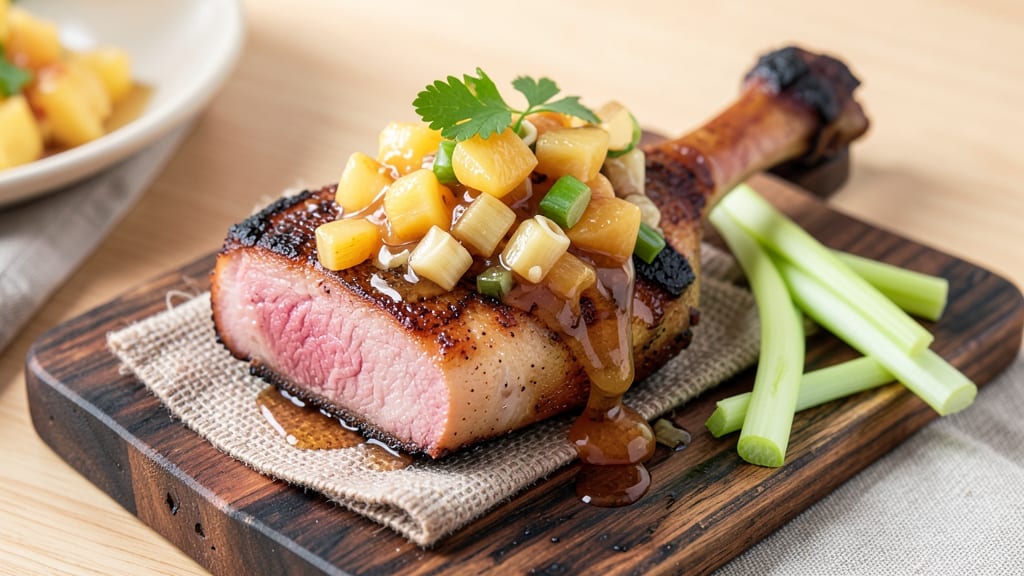
This pineapple chutney recipe for pork transforms simple pork chops into a restaurant-worthy centerpiece with just 30 minutes of active time. 💛 The secret lies in balancing sweet pineapple, tangy vinegar, and aromatic celery—creating a glaze that caramelizes beautifully while keeping the meat tender and juicy.
I perfected this after years of testing, and it never fails to impress, even with picky eaters.
The magic happens when the chutney simmers down into a sticky, fragrant sauce that clings to the pork, while the celery adds a satisfying crunch. Unlike traditional glazes, this version stays vibrant and doesn’t turn overly sweet—just enough tartness to cut through the richness.
The recipe uses bone-in pork chops for extra flavor, but you can easily adapt it for tenderloin or ribs.
By the time you serve it, you’ll have golden-brown pork with crisp edges and a glossy glaze that’s perfectly balanced between sweet and tangy. The celery bites add texture, making every bite exciting.
This dish is elegant enough for dinner parties but simple enough for a weeknight—ideal for when you want to impress without stress.
Pair it with jasmine rice or roasted sweet potatoes to round out the meal. The chutney also works as a marinade if you prefer to grill the pork—just double the amount and let it work its magic for 2 hours. Here’s how to make it perfectly every time.
Ingredients for pineapple chutney recipe for pork
Sweet pineapple, tangy vinegar, and crisp celery make this pork glaze unforgettable.
| Ingredient | Amount | Notes |
|---|---|---|
| Bone-In Pork Chops 🥓 | 4 pieces | 1-inch thick, center-cut preferred |
| Fresh Pineapple 🍍 | 1 cup | Finely diced, fresh or canned (no syrup) |
| Celery Stalks 🧅 | 2 whole | Thinly sliced, crisp variety |
| Apple Cider Vinegar 🍎 | ¼ cup | For tangy balance (not white vinegar) |
| Honey 🍯 | ¼ cup | Wildflower preferred for depth |
| Garlic Cloves 🧄 | 3 cloves | Minced for aromatic punch |
| Fresh Ginger 🌿 | 1 tbsp | Grated, for zesty kick |
| Olive Oil 🫒 | 2 tbsp | Extra-virgin for searing |
| Salt 🧂 | 1 ½ tsp | Diamond Crystal preferred |
| Black Peppercorns 🌶️ | ½ tsp | Freshly cracked for heat |
| Red Chili Flakes 🔥 | ½ tsp | Adjust for heat preference |
| Fresh Cilantro 🌿 | ¼ cup | Chopped, for fresh finish |
| Lime Juice 🍋 | 1 tbsp | Freshly squeezed for brightness |
The pineapple is the star—fresh or canned in juice (no syrup, that adds sugar you don’t need). Grab yellow pineapple from the produce section, not the green kind. Celery matters too: crisp stalks (like Ben Franklin) hold their bite better than soft ones. For the pork, bone-in chops give the most flavor, but tenderloin works if you prefer. I always check the thickness—1-inch lets the chutney caramelize without overcooking. The honey should be wildflower or clover—avoid the store-brand stuff that tastes like corn syrup.
No fresh pineapple? Canned in juice (like Dole) works in a pinch, but drain it well. Vinegar substitutes? White vinegar is fine, but apple cider adds subtle sweetness. Short on celery? Extra ginger (up to 2 tbsp) adds zing. Chili flakes too spicy? Skip them entirely—this glaze is delicious without. The lime juice is non-negotiable though; bottled won’t cut it—fresh is the only way. For a smoother texture, blend half the celery before adding it to the sauce. If you’re grilling the pork, double the chutney and let it marinate for 2 hours.
This chutney tastes even better the next day—make extra and store it in a jar. Keeps for up to 1 week in the fridge, or 3 months frozen. The pork reheats beautifully: 10 minutes at 350°F with a splash of water to keep it moist. For dinner parties, prep the chutney ahead and sear the pork just before serving. The celery stays crisp if you blanch it for 30 seconds before adding to the sauce. Leftovers? Toss with rice or use as a marinade for chicken next time.
Why You'll Love This Recipe
- Sweet-Savory Magic: I swear, the honey and apple cider vinegar in that chutney cut through the pork’s richness while the pineapple’s tang keeps every bite bright—like a flavor party in your mouth.
- One-Pan Wonder: Honestly, this is my lazy-day hero: bone-in pork chops sear right in the same pan as the chutney, so you’re not juggling dishes. Just toss in the pineapple chunks and celery, let it simmer, and walk away.
- Leftovers That Beg: Between us, the chutney actually improves the next day—thicker, more concentrated, and perfect for quick reheats. I freeze extra to toss over rice or eggs later; it’s my secret weapon for busy mornings.
- Budget-Friendly Feast: Celery and pineapple stretch this recipe far, and bone-in pork chops are cheaper than their boneless cousins. Plus, the chutney’s bold flavors hide any less-than-perfect cuts—no one will guess it’s not a fancy restaurant dish.
Step-by-step instructions for sweet-tart pineapple chutney pork chops
This glaze brings perfect balance—sweet, tangy, and just spicy enough to make your pork chops shine.
🍳 Step 1: Sear the Pork Chops for Maximum Flavor
Heat 1 tablespoon of the olive oil in a large skillet over medium-high heat until shimmering. Pat the bone-in pork chops completely dry with paper towels—this ensures a perfect sear. Season both sides generously with 1 teaspoon of the salt and ¼ teaspoon of the black peppercorns.
Place the pork chops in the skillet and cook for 3-4 minutes per side until they develop a deep golden-brown crust. The reason we don't move them? That crust locks in all the juices. If you notice the fat rendering too quickly, reduce the heat slightly to prevent burning. Once seared, remove the chops to a plate and tent loosely with foil to keep warm.
👨🍳 Step 2: Build the Chutney Base with Celery and Aromatics
In the same skillet, add the remaining 1 tablespoon olive oil over medium heat. Toss in the thinly sliced celery stalks and cook for 3-4 minutes until softened but still crisp. Here's where the magic starts—add the minced garlic cloves and grated fresh ginger, cooking for 30 seconds until fragrant. You'll smell that pungent, zesty aroma—this is your cue that the aromatics are ready.
Stir in the ½ teaspoon red chili flakes and cook for another 10 seconds to toast them slightly. This step deepens their flavor and mellows their heat. If you're sensitive to spice, reduce this to ¼ teaspoon—but trust me, it's worth the kick.
🥘 Step 3: Simmer the Sweet-Tart Chutney to Perfection
Pour in the apple cider vinegar and honey, scraping up any browned bits from the bottom of the pan. These bits are pure flavor—don't skip this step! Bring the mixture to a gentle simmer over medium-low heat, then add the finely diced fresh pineapple. Let it cook for 5-6 minutes until the pineapple softens slightly and the sauce begins to thicken.
Here's the thing—you want the chutney to coat the back of a spoon but still be pourable. If it thickens too much, add 1 tablespoon water to loosen it. Stir in the lime juice and chopped fresh cilantro, then taste. You should get a perfect balance of sweet, tangy, and slightly spicy. Adjust with more honey for sweetness or vinegar for tang if needed.
🔥 Step 4: Glaze the Pork Chops to Juicy Perfection
Return the pork chops to the skillet with the chutney, spooning the sauce over them generously. Cover the skillet and let the chops simmer for 4-5 minutes until they reach an internal temperature of 145°F (use a meat thermometer to check the thickest part of the chop). The chutney will caramelize slightly, creating a glossy, sticky glaze that clings beautifully to the meat.
For the final touch, transfer the pork chops to a serving platter and drizzle any remaining chutney from the skillet over the top. Let them rest for 3-5 minutes before serving—this ensures the juices redistribute, keeping every bite moist and flavorful. The celery should still have a satisfying crunch, adding texture contrast to the tender pork and glossy glaze.
Pro Tips For Making Pineapple Chutney Recipe For Pork
- SEAR THE PORK FIRST: Hit the bone-in chops with a screaming-hot cast iron or heavy skillet—no oil needed, the fat will render. Let them brown for 3-4 minutes per side until deep golden; this builds flavor that vinegar and pineapple won’t overpower. (Yes, even if you’re impatient like me.)
- COOK THE PINEAPPLE DOWN: Don’t just chop and toss fresh pineapple into the chutney—simmer it first. Core, dice, and cook over medium heat for 8-10 minutes until it releases its juices and softens. This prevents a watery chutney and lets the sweetness caramelize with the honey.
- SALT THE CHOPS IN ADVANCE: Bone-in pork needs time to absorb salt. Season the chops generously with kosher salt at least 30 minutes before cooking, or overnight if you’re really committed. This keeps the meat juicy and balances the tangy-sweet chutney.
- USE AROUND CELERY: Skip the celery ribs—they’re tough and bitter. Instead, finely dice the leafy tops along with the stalks for a subtle, fresh bite that cuts through the richness. (Yes, it’s weird, but it works.)
Troubleshooting this dish
Chutney Too Thin?
If your chutney ends up too watery, don’t panic—simmer it uncovered for 2-3 extra minutes to reduce the liquid. For a quicker fix, mash 1-2 tablespoons of pineapple against the pan’s sides to release its juices, then simmer again.
I’ve also had success adding ½ teaspoon cornstarch mixed with 1 teaspoon cold water, stirring until thickened. Just taste first—sometimes the chutney needs nothing but more time to concentrate. 🔥
Pork Overcooking
Bone-in pork chops can dry out if left too long in the skillet. Use a meat thermometer and remove them when they hit 140°F—they’ll rise to 145°F while resting. If your chops are ½-inch thick, reduce cooking time to 2-3 minutes per side before glazing.
For extra insurance, sear them 1 minute per side, then finish in the oven at 375°F for 6-8 minutes while the chutney simmers. This two-step method keeps them juicy. 💪
Celery Losing Crunch
Celery turns mushy when overcooked, but you can salvage it! Blanch 2 extra stalks for 30 seconds, then shock in ice water before adding to the chutney. For crispy celery bites, add them only in the last 2 minutes of cooking.
If your chutney is already made, toss cooked celery with 1 teaspoon lime juice and ½ teaspoon salt to revive its texture. I’ve even microwaved limp celery for 10 seconds with a damp paper towel—it’s a last-resort trick! 🌿
Glaze Too Sweet?
Too much honey? Balance it with 1 extra tablespoon of apple cider vinegar—the acidity will cut through the sweetness. For a deeper flavor without extra sugar, add ½ teaspoon grated fresh ginger or a pinch of smoked paprika.
If you prefer tartness, simmer the chutney uncovered for 5 minutes to let the water evaporate, concentrating the flavors. I’ve also had success adding 1 teaspoon lime zest—it adds brightness without sugar. 🍋
Pork Not Absorbing Glaze
If your pork stays dry under the glaze, it’s likely underseasoned or overcooked. Before glazing, brush the chops with 1 teaspoon honey mixed with ½ teaspoon soy sauce—this helps the glaze stick.
For extra adhesion, sear the chops skin-side down for 5 minutes to render fat, then flip and glaze. If the glaze pools, reduce it further by simmering until it coats the back of a spoon.
Trust me, a well-seasoned, properly cooked chop will soak up that glaze like a sponge! 🥓
Spice Level Off?
Too mild? Add ¼ teaspoon extra chili flakes and simmer for 1 minute to let the heat develop. For a smoky depth, sprinkle ½ teaspoon smoked salt (like Morton’s) into the chutney.
If you prefer heat without spice, swap chili flakes for ½ teaspoon cayenne pepper—it’s hotter but less gritty. For a sweeter heat, stir in 1 teaspoon honey and ¼ teaspoon ground cinnamon at the end. Adjust to taste, but remember: the chutney’s flavor deepens as it cools! 🌶️
Nutrition facts
Frequently asked questions
Can I use canned pineapple instead of fresh?
Yes, but choose canned pineapple in juice (not syrup) to avoid extra sugar. Drain it well and pat dry before dicing. For best results, use yellow pineapple—it's sweeter and more flavorful than green. If you're short on time, this works perfectly, but fresh pineapple gives a brighter, more vibrant taste.
How do I adjust this for pork tenderloin?
For a 1.5-pound pork tenderloin, use the same chutney recipe but slice it into 1-inch thick medallions before cooking. Sear them 2 minutes per side, then glaze for 3-4 minutes. Tenderloin cooks faster than chops, so keep an eye on it—it's done at 145°F internal temp. The chutney will cling beautifully to the tender meat.
What if I don't have apple cider vinegar?
Use white vinegar or red wine vinegar instead—they'll work just fine. Apple cider adds subtle sweetness, but white vinegar gives a sharper tang. For a smoother flavor, swap 1 tablespoon of the vinegar for 1 teaspoon of lemon juice. The dish will still taste delicious, just with a slightly different acidity profile.
Can I make this chutney ahead of time?
Make the chutney up to 3 days ahead and store it in an airtight container in the fridge. The flavors actually improve as it sits. When ready to cook, simply reheat it gently in a saucepan until warm. For extra shine, add 1 teaspoon honey while reheating. The pork can be marinated in the chutney for up to 4 hours before cooking for deeper flavor.
Why does my chutney turn out too sweet?
This usually happens when the vinegar isn't balanced with enough acidity. Fix it by adding 1 extra tablespoon of lime juice or ½ teaspoon grated ginger to cut through the sweetness. For a more complex flavor, stir in ¼ teaspoon smoked paprika—it adds depth without sugar. Taste as you go, and remember that flavors mellow as the chutney cools.