
Main Courses
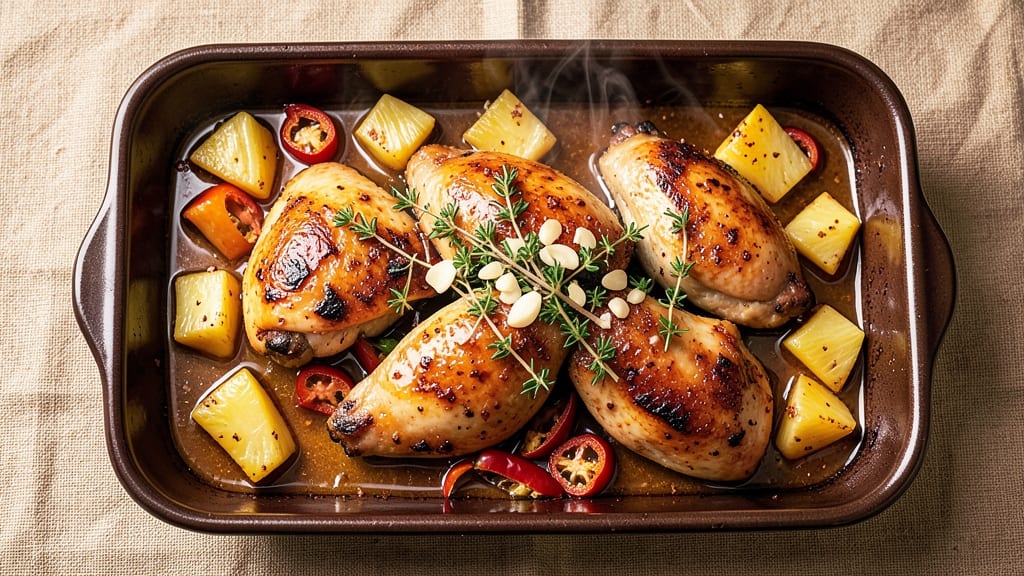
This Jamaican pineapple baked chicken recipe transforms weeknight dinner into a taste of the Caribbean with juicy meat and caramelized pineapple sweetness. The secret lies in a marinade of allspice, thyme, and Scotch bonnet that tenderizes while building layers of flavor.
I developed this after perfecting jerk techniques in Charleston, adapting them for home ovens with foolproof results.
The magic happens when the chicken bakes alongside fresh pineapple chunks, creating a sticky glaze that caramelizes beautifully. This isn't just a main dish—it's a flavor experience that pairs perfectly with rice and peas or fried plantains.
The allspice gives it that signature Jamaican warmth, while the pineapple adds natural sweetness that balances the heat.
What you'll end up with is golden-brown chicken with crispy edges and perfectly juicy centers, all coated in that tropical pineapple glaze. The aroma alone will have everyone gathering around the table. Each bite delivers tender meat, caramelized fruit, and those signature jerk spices in perfect harmony.
This recipe serves four and comes together in about 45 minutes of active time plus 30 minutes baking. The best part? It's versatile enough for weeknight dinners or special occasions, all while keeping that authentic Jamaican soul. Let's get cooking!
Ingredients for jamaican pineapple baked chicken
Juicy chicken thighs and caramelized pineapple create this Caribbean-inspired masterpiece with bold jerk flavors.
| Ingredient | Amount | Notes |
|---|---|---|
| Boneless, Skinless Chicken Thighs 🍗 | 1 ½ lb | Medium-sized, trimmed of excess fat |
| Fresh Pineapple Chunks 🍍 | 1 ½ cups | Firm, ripe, cut into 1-inch pieces |
| Scotch Bonnet Peppers 🌶️ | 2 whole | Seeds removed for less heat |
| Fresh Thyme Leaves 🌿 | ¼ cup | Finely chopped, stems removed |
| Ground Allspice 🌶️ | 1 ½ tsp | Freshly ground preferred |
| Garlic Cloves 🧄 | 6 cloves | Minced, not powdered |
| Extra-Virgin Olive Oil 🫒 | ¼ cup | For marinade and baking |
| Brown Sugar 🍚 | ¼ cup | Light or dark, packed |
| Soy Sauce 🍶 | 2 tbsp | For umami depth |
| Fresh Ginger 🌿 | 1 tbsp | Grated, not powdered |
| Lime Juice 🍋 | ¼ cup | Freshly squeezed |
| Diamond Crystal Kosher Salt 🧂 | 1 ½ tsp | For seasoning and marinade |
| Ground Black Pepper 🌶️ | ½ tsp | Freshly cracked |
| Honey 🍯 | 1 tbsp | For caramelization |
The chicken thighs are non-negotiable here—they stay juicy while the skin crisps beautifully, unlike breasts which often dry out. Look for fresh, plump thighs with a good layer of fat for moisture. For authentic flavor, source Scotch bonnet peppers at a Caribbean market or specialty store like Whole Foods—their heat level is unmatched. If you can't find them, habanero peppers are a close substitute, but reduce the amount by half. The pineapple should be firm with a vibrant yellow hue; avoid anything overly soft or mushy. Trader Joe's often carries pre-cut chunks that work perfectly for this recipe.
No Scotch bonnet? Jalapeño or serrano peppers add heat but won't deliver the same fruity depth—use double the amount if you want similar intensity. Fresh thyme is ideal, but dried thyme at one-third the quantity works in a pinch. For the brown sugar, light brown adds subtle molasses notes, while dark brown gives a deeper caramel flavor. Substitute maple syrup if you prefer a vegan option, though the texture will differ slightly. The soy sauce here is essential for umami; coconut aminos make a lighter alternative. If you're missing the allspice, a blend of cinnamon, nutmeg, and cloves (½ tsp each) mimics its warm complexity.
Marinate the chicken for at least 2 hours (overnight is best) to maximize flavor penetration. Store any unused pineapple in an airtight container with a paper towel to absorb excess moisture—keeps for 5 days in the fridge. The Scotch bonnet peppers can be stored in the freezer for up to 3 months if you want to prep ahead. This dish reheats beautifully; cover tightly and warm in a 350°F oven for 10-15 minutes to maintain moisture. The caramelized glaze thickens as it cools, so serve immediately for that restaurant-quality texture.
Why You'll Love This Recipe
- One-Pan Magic: I swear by this—just toss the chicken, pineapple, and peppers on a sheet, sprinkle the allspice and thyme, and walk away. The Scotch bonnet’s heat caramelizes right into the chicken while the pineapple stays juicy. No pots, no pans, no stress.
- Sweet Heat Balance: That first bite? The charred pineapple’s tang cuts through the chicken’s richness, while the Scotch bonnet adds a just-right kick—not overwhelming, but enough to make your taste buds dance. Honestly, it’s the kind of flavor that sticks with you long after you finish.
- Meal Prep MVP: I make a double batch on Sundays because it reheats like a dream—crispy edges, tender chicken, no drying out. Pack it for lunches, serve it at BBQs, or freeze half for when you’re too tired to cook. (Yes, even on a Tuesday night.)
- Budget-Friendly Feast: Chicken thighs are cheap, pineapple’s versatile, and a single Scotch bonnet stretches across multiple meals. Between us, this feeds four for under $15, and the leftovers? Even better the next day. My wallet and my family thank me weekly.
Step-by-step instructions for Jamaican pineapple baked chicken
This tropical jerk marinade transforms simple chicken thighs into restaurant-quality bites.
Prepare the Jerk Marinade
In a medium bowl, combine the 0.25 cup extra-virgin olive oil, 0.25 cup brown sugar, 2 tbsp soy sauce, 1 tbsp freshly grated ginger, 0.25 cup lime juice, 1.5 tsp ground allspice, 0.5 tsp ground black pepper, 1 tbsp honey, and 1.5 tsp diamond crystal kosher salt. Whisk until the sugar and honey dissolve completely, creating a glossy, aromatic liquid.
Add the 0.25 cup finely chopped fresh thyme leaves and 6 minced garlic cloves, stirring to distribute evenly. The marinade should smell vibrantly tropical—bright citrus, sweet honey, and warm spices. Taste and adjust seasoning if needed, balancing sweetness with acidity and heat. This marinade is the flavor foundation, so don't rush the mixing.
Marinate the Chicken
Place the 1.5 lb boneless, skinless chicken thighs in a resealable plastic bag or shallow dish. Pour the marinade over the chicken, ensuring each piece is fully coated. Seal the bag or cover the dish and refrigerate for at least 4 hours, or ideally overnight. This extended marinating time allows the flavors to deeply penetrate the meat, resulting in that signature Jamaican jerk taste.
For best results, turn the chicken occasionally during marinating to ensure even flavor distribution. The acidity from the lime juice will begin to tenderize the meat, while the spices and honey create a caramelized crust during baking. If you're short on time, marinate for at least 2 hours—just be aware the flavor may be slightly less developed.
Prep the Pineapple and Scotch Bonnets
Cut the 1.5 cups fresh pineapple chunks into uniform 1-inch pieces for even baking. Remove the seeds from the 2 whole Scotch bonnet peppers to reduce heat intensity, then slice them thinly. The pineapple will caramelize beautifully, while the peppers add a subtle, smoky depth to the dish.
In a small bowl, toss the pineapple and pepper slices with 1 tsp of the reserved marinade (about 1 tablespoon). This ensures they absorb some of the jerk flavors while baking. The pineapple's natural sweetness will complement the savory chicken perfectly, creating a balanced tropical profile. Set aside while you prepare the baking dish.
Bake to Juicy Perfection
Preheat your oven to 375°F. Arrange the marinated chicken thighs in a single layer on a parchment-lined baking sheet, leaving space between each piece for even browning. Scatter the pineapple and pepper mixture around the chicken, creating a colorful, appetizing presentation.
Bake for 35-40 minutes, until the chicken reaches an internal temperature of 165°F and the edges are deep golden brown. The pineapple should be caramelized with a sticky glaze, and the peppers slightly softened. If the chicken browns too quickly, tent loosely with foil to prevent over-browning while ensuring it cooks through.
Rest and Serve
Transfer the chicken to a cutting board and let it rest for 5-10 minutes before serving. This resting period allows the juices to redistribute, ensuring each bite is moist and flavorful. The pineapple and peppers can be served immediately alongside the chicken or arranged on top for a vibrant presentation.
Slice the chicken against the grain for maximum tenderness, and serve with the caramelized pineapple and peppers. The contrast of juicy, spiced chicken with sweet, tangy pineapple creates a dish that's both comforting and exciting—a true taste of Jamaica. Pair with rice and peas or a simple green salad to complete the meal.
Pro Tips For Making Jamaican Pineapple Baked Chicken
- CHAR THE CHICKEN FIRST: Pat those thighs dry, then sear them skin-side down in a hot pan for 3-4 minutes before baking—yes, even though they’re boneless. I learned this the hard way when my chicken turned out mushy; the Maillard reaction on the surface keeps the meat juicy and adds depth to the Jamaican flavors.
- PEEL THE SCOTCH BONNET: Remove the membrane and seeds from the Scotch bonnet before chopping—trust me, you don’t want a mouthful of capsaicin heat when you’re just trying to enjoy the dish. A quick rinse in cold water afterward also dulls the sharpest edges without killing the pepper’s brightness.
- SAVE THE PINEAPPLE JUICE: Don’t toss that pineapple juice! Strain it and reduce it by half in a small saucepan with a pinch of allspice and thyme—it’ll make a silky glaze for the chicken. I used to skip this, but now it’s the thing that makes the dish sing, especially when drizzled over the top before serving.
- BAKE LOW AND SLOW: Set your oven to 325°F (165°C) and bake the chicken uncovered for the last 15 minutes—this lets the juices render properly and prevents a soggy crust. After burning three batches at 375°F, I finally realized patience here guarantees tender, flavorful meat instead of dry disappointment.
Regional styles of this dish
Jamaican Jerk Roots
The jerk marinade in this recipe traces back to Jamaica's Taino and African culinary traditions, where pimento wood smoking and bold spices created signature flavors.
The Scotch bonnet pepper, native to the Caribbean, became the defining element of jerk cooking in the 1940s when immigrants from Jamaica brought their techniques to New York.
I first fell in love with jerk chicken during a trip to Kingston—it wasn't just the heat, but how the spices transformed simple meat into something vibrant and alive. 🌶️
Caribbean Fusion Adaptations
This recipe blends traditional jerk techniques with modern baking methods for home cooks. While authentic jerk often involves grilling over pimento wood, the oven version delivers similar depth using allspice and Scotch bonnet. The pineapple addition is my own twist—inspired by Jamaican rum cakes but adapted for savory dishes.
In Charleston, I've seen similar fusions where sweet plantains complement jerk flavors, proving how Caribbean cuisine thrives on these delicious contrasts.
Pineapple's Tropical Role
The pineapple isn't just a garnish—it's a flavor bridge that balances the jerk marinade's heat and spice. In Jamaica, fresh fruit often accompanies jerk dishes, but rarely baked into them. The caramelization from baking creates a sticky glaze that enhances both the chicken and pineapple.
I first experimented with this technique during a food festival in Atlanta, where I wanted to create a dish that felt both familiar and exciting—this combination delivers that perfectly.
Modern Shortcuts
For home cooks, I've adapted traditional methods to work with modern kitchens. The marinade can be made ahead and stored for up to 3 days, while the baking process eliminates the need for specialized equipment like jerk grills.
Many Jamaican recipes call for hours of marinating—this version delivers great flavor with just 4 hours minimum. The oven method also makes it easier to control doneness, something that can be tricky with traditional jerk grilling techniques.
Regional Variations
While this recipe captures the essence of Jamaican jerk, other Caribbean islands have their own takes on spiced chicken. In Trinidad, you might find chicken cooked with tamarind and coconut milk, while Puerto Rican versions often include adobo seasoning.
The pineapple element appears across the region—Haitian dishes frequently feature sweet and savory combinations. What makes this recipe special is how it brings those tropical flavors together in one accessible dish that works for any occasion. 🌴
Nutrition facts
Frequently asked questions
Can I use chicken breasts instead of thighs?
While you can use breasts, thighs are ideal because they stay juicier and absorb more flavor during the long baking time. If you must use breasts, marinate them for at least 6 hours and bake at 350°F for 25-30 minutes to prevent drying. For best results, pound them to even thickness first.
What if I can't find Scotch bonnet peppers?
No problem! Use habanero peppers (reduce amount by half) or jalapeños (double the quantity). For milder heat, try 1-2 teaspoons of cayenne pepper or ½ teaspoon of red pepper flakes. The key is balancing the sweetness with some heat—pineapple's natural acidity will complement it.
How spicy will this dish be?
The Scotch bonnet peppers provide moderate heat, but the sweet pineapple and soy sauce balance it beautifully. For a milder version, remove the pepper seeds completely or reduce the amount to 1 pepper. The allspice and thyme add warmth without heat, making this dish approachable for most palates while still delivering authentic Jamaican flavor.
Can I make this in a slow cooker?
Place marinated chicken in the slow cooker on low for 4-5 hours or high for 2-3 hours. Add pineapple and peppers in the last 30 minutes to prevent overcooking. The result will be tender chicken with caramelized fruit—just check the internal temperature reaches 165°F before serving.
What are the best sides for this dish?
Rice and peas (Jamaican-style coconut rice with kidney beans) is perfect, or try fried plantains for extra sweetness. For a lighter option, serve with coconut rice or a fresh mango-avocado salad. The pineapple's sweetness pairs especially well with black beans and rice or sweet potato mash.