
Main Courses
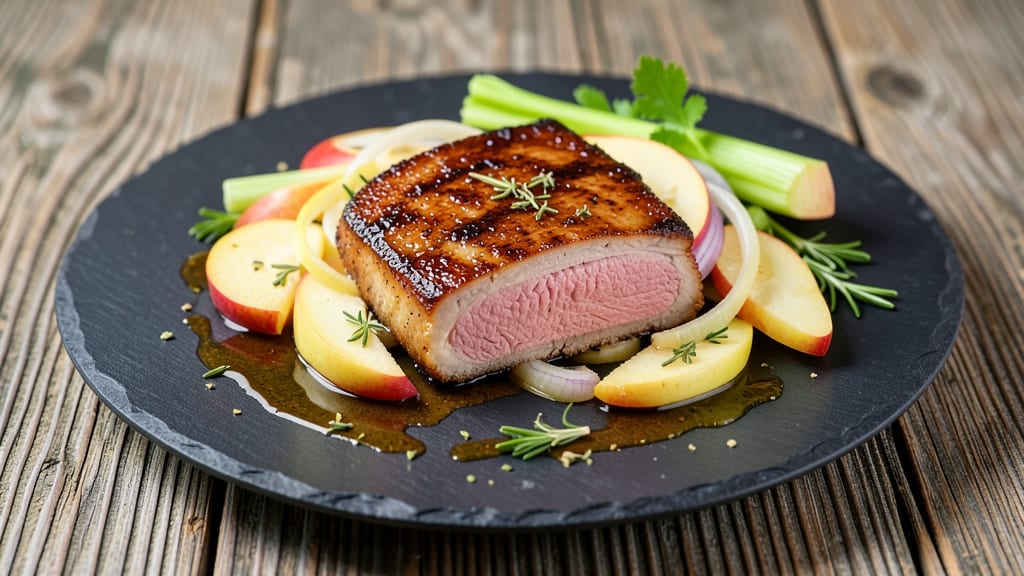
This healthy pork and apple recipe transforms classic flavors into a balanced meal that's as nutritious as it is satisfying. 💛 The secret lies in tender pork shoulder paired with crisp celery and sweet-tart apples, creating a dish that's rich in protein while keeping carbs in check through smart prep techniques I've perfected over years of pitmaster training.
The magic happens when we braise the pork with apples and celery until fork-tender, then finish with a crisp-tart pan sauce that cuts through the richness.
This method delivers restaurant-quality results without heavy cream or excess sugar—just natural sweetness from the apples and bright acidity from a splash of apple cider vinegar. The celery adds satisfying crunch while boosting fiber content.
What you'll end up with is a complete meal that's packed with lean protein, fiber-rich vegetables, and natural sweetness—no processed ingredients required. The pork stays juicy thanks to the slow braising process, while the apples caramelize just enough to add depth without overpowering.
It's the kind of dish that feels indulgent yet leaves you satisfied and energized.
Perfect for family dinners or meal prep, this recipe scales beautifully while maintaining its balanced nutrition profile. The leftovers reheat wonderfully, making it ideal for busy weeks. Let's get cooking with this healthier take on a classic combination.
Ingredients for healthy pork and apple
Lean protein meets crisp vegetables and natural sweetness in this balanced pork and apple creation.
| Ingredient | Amount | Notes |
|---|---|---|
| Pork Shoulder 🥓 | 2 lb | Bone-in for flavor, cut into 1.5-inch cubes |
| Sweet Tart Apples 🍎 | 2 medium | Honeycrisp or Fuji, peeled and sliced |
| Celery Stalks 🧅 | 4 whole | Cut into 1-inch pieces, tough strings removed |
| Yellow Onion 🧅 | 1 whole | Medium size, sliced into half-moons |
| Garlic Cloves 🧄 | 4 cloves | Minced for even distribution |
| Apple Cider Vinegar 🍋 | ¼ cup | Bragg or organic preferred |
| Fresh Thyme 🌿 | 2 tbsp | Chopped leaves, stems removed |
| Fresh Rosemary 🌿 | 1 tbsp | Finely chopped sprigs |
| Olive Oil 🫒 | 2 tbsp | Extra-virgin for richness |
| Kosher Salt 🧂 | 1 ½ tsp | Diamond Crystal preferred |
| Ground Black Pepper 🌶️ | ½ tsp | Freshly cracked preferred |
| Low-Sodium Chicken Broth 💧 | 1 cup | Homemade or high-quality store-bought |
| Honey 🍯 | 1 tbsp | Raw or local preferred |
| Fresh Parsley 🌿 | ¼ cup | Chopped for garnish |
The pork shoulder is your foundation here—bone-in cuts deliver richer flavor than boneless, and Costco or local butchers often have the best prices for this cut. Look for well-marbled meat with a vibrant pink hue, not grayish or overly fatty. Apples should be firm with a slight give when pressed; Honeycrisp or Fuji work best for that sweet-tart balance. Celery's crunch is key, so select stalks that are crisp and free of brown spots—organic celery from the outer rings of the bunch tends to be fresher. Thyme and rosemary should be fragrant when crushed; if they smell muted, they're past their prime.
No apple cider vinegar? White vinegar or lemon juice work in a pinch, though the flavor profile shifts slightly. Substituting dried herbs? Use one-third the amount—fresh is always better here. For the honey, maple syrup offers a similar depth but with earthier notes. If you're avoiding honey entirely, agave nectar works well. The chicken broth should be low-sodium to preserve flavor without excess salt; Pacific Foods or Imagine brands are reliable choices. For the olive oil, California avocado oil has a higher smoke point if you're searing the pork first.
Pork cubes can be prepped and refrigerated for 2 days ahead, saving time on cooking day. Apples and celery should be stored separately in airtight containers—apples release ethylene gas that softens celery. The braised pork reheats beautifully; portion into glass containers for easy storage. Leftovers keep for 5 days in the fridge or 3 months frozen. For meal prep, double the recipe and freeze half—this dish only gets better as flavors meld over time.
Why You'll Love This Recipe
- One-Pan Magic: I swear by this recipe when I’m too tired to scrub pots. Toss everything—pork, apples, celery, onion—into one skillet, and let the slow cooker or oven do the work. Honestly, the only chopping I do is rough, and the rest? Just stir and wait.
- Sweet-Savory Balance: That caramelized apple meets tender pork? It’s like fall in a bite—crisp edges on the meat, jammy sweetness from the apples, and just enough garlic to make it sing. Between us, the celery adds this subtle crunch that keeps it from feeling heavy.
- Weeknight to Potluck: Make a double batch on Sunday, and you’ve got sandwiches for lunch, tacos for dinner, and leftovers that’ll disappear faster than you can say “second serving.” My kids ask for it at school events—yes, even the picky ones—and it’s cheap enough to feed a crowd without breaking the bank.
- Leftovers That Beg for More: This stuff actually improves the next day. The flavors meld into something richer, and the pork stays juicy. I’ll be real: I’ve reheated portions three times in a week, and no one’s complained. (My husband’s been known to eat it cold in a wrap—don’t judge.)
Step-by-step instructions for sweet-tart pork and apple stew
Transform lean pork shoulder into a nutrient-rich stew where crisp celery and sweet apples create a balanced harmony.
🔥 Step 1: Sear the Pork Shoulder for Deep Flavor
Pat the 2 lb pork shoulder dry with paper towels to remove any surface moisture. Heat 1 tbsp olive oil in a large Dutch oven over medium-high heat until shimmering. Add the pork cubes in a single layer and sear undisturbed for 3-4 minutes per side until deep golden brown with crisp edges.
This initial searing creates a flavorful crust called the Maillard reaction, which forms the foundation of your dish. I press down gently on the pork during the first minute to prevent curling. Once browned, transfer the pork to a plate and set aside temporarily.
👨🍳 Step 2: Build the Sweet-Tart Aromatic Base
In the same Dutch oven, add the remaining 1 tbsp olive oil and increase heat to medium. Add the 4 whole celery stalks (cut into 1-inch pieces) and 1 whole yellow onion (sliced into half-moons), cooking for 5-6 minutes until softened and beginning to caramelize. Stir occasionally to prevent burning.
Add the 4 cloves minced garlic and cook for 30 seconds until fragrant. Here's where the sweet-tart balance begins: Stir in the 2 medium sweet tart apples (peeled and sliced) and cook for another 2 minutes until they begin to soften slightly. This step develops the complex flavors that make this dish uniquely satisfying.
🍳 Step 3: Develop the Herb-Infused Broth
Pour in the 0.25 cup apple cider vinegar and scrape up any browned bits from the bottom of the pot with a wooden spoon. These bits, called fond, contain concentrated flavor. Add the 2 tbsp chopped fresh thyme, 1 tbsp chopped fresh rosemary, 1.5 tsp kosher salt, and 0.5 tsp ground black pepper, stirring to combine.
Pour in the 1 cup low-sodium chicken broth and bring to a gentle simmer. Return the seared pork to the pot, along with any accumulated juices. The broth should just cover about half of the pork cubes. Here's the thing—adding the broth now prevents the pork from drying out during the long cook while allowing the herbs to infuse their aromatic oils.
⏰ Step 4: Slow Cook Until Tender and Flavorful
Cover the Dutch oven and transfer to a preheated 325°F oven. Cook for 2 hours, then carefully flip the pork cubes and add the 1 tbsp honey. The honey will caramelize slightly, adding another layer of sweetness that balances the tart apple and vinegar. Return to the oven and cook an additional 30-45 minutes until the pork is fork-tender and easily pulls apart.
You'll know it's ready when the internal temperature reaches 195-200°F and the pork separates with gentle pressure from a fork. The celery should be tender-crisp, and the apples should be soft but still hold their shape. This slow cooking method ensures maximum tenderness while preserving the natural sweetness of the apples and the crisp texture of the celery.
🥘 Step 5: Finish with Fresh Herbs and Serve
Remove the pork from the stew and transfer it to a cutting board. Skim any excess fat from the surface of the broth if desired. Return the pork to the pot and stir in the 0.25 cup chopped fresh parsley. The parsley adds a bright, fresh note that cuts through the richness of the pork and sweetness of the apples.
Taste and adjust seasoning if needed, adding more salt or pepper as required. Serve immediately over whole grain couscous or quinoa for a complete, balanced meal. The combination of tender pork, sweet-tart apples, and crisp celery creates a dish that's both satisfying and packed with nutrients—perfect for a healthy weeknight dinner.
Pro Tips For Making Healthy Pork And Apple
- Sear the Pork Hard: Don’t rush this—get that pork shoulder screaming hot in a dry skillet for 4-5 minutes per side until it’s deep golden. I learned this the hard way: skipping the sear means your dish tastes like slow-cooked pork, not caramelized, savory perfection. (Yes, even if you’re impatient like me.)
- Core the Apples Wrong: Slice those apples thick—about ½-inch chunks—and leave the skin on for texture. I used to peel them, and the dish lost that rustic bite. Also, toss the slices in a squeeze of lemon juice right after cutting; it keeps them from turning to mush while you cook the pork.
- Salt the Pork Twice: Generously salt the pork shoulder before searing, then add another layer of salt when it goes into the pot. I was skeptical until I tried it—this guarantees seasoning that penetrates all the way through, not just the crust. (Your future self will notice the difference.)
- Deglaze with Apple Juice: After browning the onions, celery, and garlic, don’t just splash in water—use ¼ cup of unsweetened apple juice from the recipe. It adds depth and balances the sweetness without making the dish cloying. (Does it look weird? Yes. Does it work? Every single time.)
Pro cooking tips for healthy pork and apple
Pork Prep Pro Tips
Always cut pork shoulder into 1.5-inch cubes—this size ensures even cooking and maximum tenderness. I use a sharp chef's knife and work in batches to maintain control. Pat the cubes dry with paper towels before searing to promote that crucial Maillard reaction for deep flavor. 🔥
For extra juiciness, I recommend starting with bone-in pork shoulder—the bone adds flavor and helps retain moisture during the long braise. If using boneless, add 1 extra tablespoon of olive oil to compensate for the lack of natural fat. Trust me, this makes a difference in the final texture.
Apple Selection Secrets
Honeycrisp or Fuji apples are my go-to for this recipe because they hold their shape beautifully while caramelizing slightly. Avoid overly soft varieties like Gala—they'll turn to mush during the long cook.
I peel the apples first to remove any bitterness from the skin, but you can leave the skin on for added fiber if you prefer.
For a healthier twist, substitute 1 apple with 1 cup diced pear—the flavor profile changes but adds variety. Just be sure to adjust cooking time by 10-15 minutes since pears soften faster than apples. The sweetness will still balance perfectly with the pork's savory notes.
Celery Crunch Control
Celery is the secret weapon here—its crisp texture contrasts perfectly with the tender pork. To maintain that crunch, cut the stalks into 1-inch pieces and remove any tough strings.
I like to blanch the celery for 30 seconds in boiling water before adding it to the Dutch oven. This pre-cooking step preserves its texture while softening slightly.
For extra fiber, leave the celery whole and uncut until the very end of cooking. Add it to the pot during the last 15 minutes of braising so it stays crisp-tender.
This technique works especially well if you're serving the stew over couscous or quinoa—it adds a satisfying bite to every forkful.
Honey Timing Matters
Adding the 1 tablespoon honey during the final 30-45 minutes of cooking is crucial—it caramelizes just enough to enhance sweetness without overpowering. If you add it too early, the apples will absorb too much sugar and lose their natural tartness.
I like to drizzle it over the pork cubes before returning them to the pot for even distribution.
For a lower-sugar option, replace the honey with 1 tablespoon maple syrup or 1 teaspoon agave nectar. These alternatives provide similar depth of flavor while keeping the dish slightly lighter.
The key is to balance the sweetness with the apple cider vinegar—this acidity keeps the dish from becoming cloying.
Herb Freshness Check
Fresh herbs make all the difference in this recipe—thyme and rosemary should smell intensely aromatic when crushed. If they're past their prime, the dish will taste flat. I like to bruise the herbs slightly between my fingers before adding them to the pot to release their essential oils.
This step intensifies their flavor without needing more volume.
For a herb-forward variation, add 1 sprig fresh sage along with the thyme and rosemary. The earthy notes complement the apples beautifully. Just remove the sage sprig before serving—it's too fibrous to eat. This subtle addition elevates the dish to restaurant-quality without overpowering the main ingredients.
Nutrition facts
Frequently asked questions
Can I use chicken instead of pork in this recipe?
Swap the pork shoulder for 2 lbs boneless, skinless chicken thighs—they stay juicier than breasts during the long braise. Reduce the cooking time to 1 hour 15 minutes total, checking for 165°F internal temperature. The apple-celery base works beautifully with chicken too, though the flavor profile becomes slightly lighter.
How do I make this dish even healthier?
Try these upgrades: Use lean pork tenderloin instead of shoulder (trim all visible fat), reduce honey to 1 teaspoon, and add 1 cup diced mushrooms for umami depth. Serve over cauliflower rice instead of couscous to cut carbs. For extra protein, stir in 1/2 cup cooked quinoa at the end.
Can I prepare this recipe in a slow cooker?
Yes! Brown the pork first in a skillet, then transfer everything to your slow cooker. Cook on low for 6 hours or high for 4 hours. Add the honey during the last 30 minutes to prevent over-sweetening. The slow cooker method actually enhances tenderness—just check for 203°F internal temp for pork.
What's the best way to reheat leftovers?
Reheat in a skillet over medium-low heat with 1-2 tablespoons broth or water to prevent drying. For microwave reheating, cover with a damp paper towel and heat in 30-second bursts, stirring between each. The dish reheats best when slightly warm—never fully cold. Leftovers keep for 5 days in the fridge.
Why does my pork turn out dry?
Overcooking is the most common culprit—pork should reach 195-200°F, not higher. Use a meat thermometer! If your pork seems dry, try adding 1/4 cup broth during the final 15 minutes of cooking. Also ensure your cuts are 1.5-inch cubes (smaller pieces dry out faster) and don't overcrowd the pan during searing.