
Sauces & Condiments
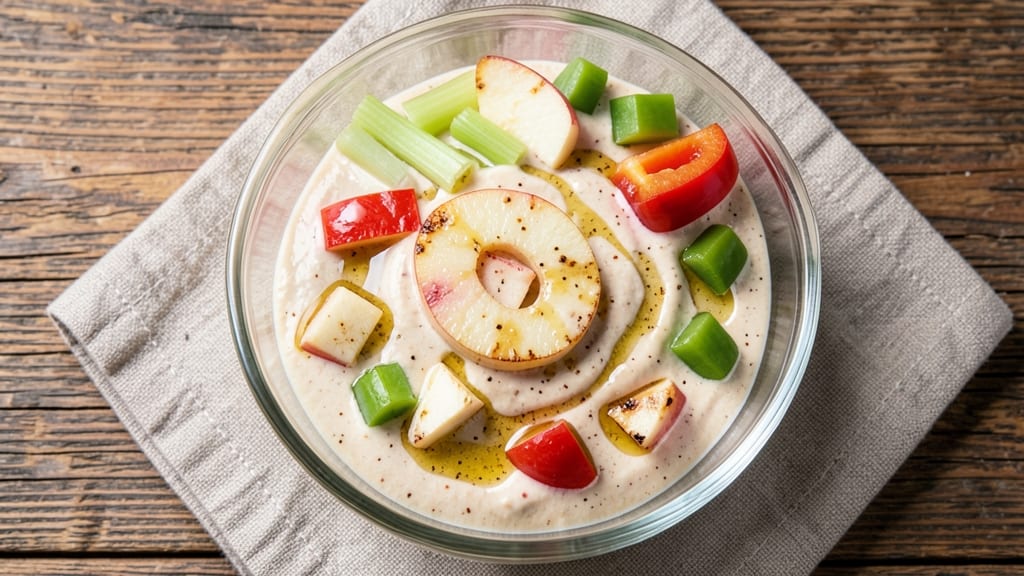
This Fuji apple chicken salad dressing recipe transforms ordinary salads into vibrant, flavor-packed meals with its perfect balance of sweet and tangy notes. 💛 The secret lies in caramelizing Fuji apples with celery and bell peppers, creating a dressing that's rich yet refreshing—ideal for chicken salads or even drizzled over grilled meats.
The recipe combines finely diced Fuji apples, crisp celery, and bell peppers with a blend of apple cider vinegar, Dijon mustard, and olive oil for a smooth, velvety texture. A touch of honey enhances the natural sweetness of the apples, while fresh herbs like dill and parsley add brightness.
The dressing stays fresh for up to a week in the refrigerator, making it perfect for meal prep.
What sets this dressing apart is its versatility—it elevates chicken salads with a creamy yet light consistency, while the caramelized apple notes add depth without overpowering. The celery and pepper provide a satisfying crunch, and the tangy vinegar keeps the flavors balanced.
Whether paired with grilled chicken, mixed greens, or even as a marinade, this dressing delivers restaurant-quality results at home.
With just 10 minutes of prep and no cooking required, this recipe is a game-changer for busy weeknights. The ingredients are simple, and the process is foolproof, ensuring you can create a dressing that’s as delicious as it is easy. Let’s get started!
Ingredients for fuji apple chicken salad dressing
Nine simple ingredients create this restaurant-quality Fuji apple chicken salad dressing.
| Ingredient | Amount | Notes |
|---|---|---|
| Fuji Apples 🍎 | 1 cup | Finely diced, skin on for texture |
| Celery Stems 🧅 | ½ cup | Finely diced, leaves reserved for garnish |
| Bell Peppers 🌶️ | ½ cup | Red or green, finely diced |
| Extra-Virgin Olive Oil 🫒 | ½ cup | Light fruity variety preferred |
| Apple Cider Vinegar 🍏 | ¼ cup | Unfiltered for depth of flavor |
| Dijon Mustard 🍯 | 1 tbsp | High-quality for tangy bite |
| Honey 🍯 | 1 tbsp | Wildflower preferred for floral notes |
| Fresh Dill 🌿 | ¼ cup | Chopped, stems removed |
| Fresh Parsley 🌿 | 0.15 cup | Chopped, for freshness |
| Salt 🧂 | ½ tsp | Diamond Crystal preferred |
| Black Pepper 🌶️ | ¼ tsp | Freshly ground for warmth |
Fuji apples are the heart of this dressing—look for firm, vibrant ones at Whole Foods or your local market. The celery and bell peppers should be crisp; Trader Joe's often has pre-cut options if you're short on time. Extra-virgin olive oil matters here: California avocado oil or Spanish Picual both work beautifully. For the vinegar, unfiltered apple cider adds depth—Bragg or Mott's are solid choices. Fresh herbs are non-negotiable; dried just won't give that same bright finish.
No Fuji apples? Gala or Honeycrisp hold up well too. Skip the honey? Maple syrup at half the amount works in a pinch. The Dijon mustard can be swapped for whole-grain mustard if you prefer texture. For extra crunch, add 1 tbsp toasted walnuts or pecans. The dressing thickens when chilled, so if it seems too thin initially, let it sit for 10 minutes before adjusting. Store-bought celery leaves? Toss them in—anything to add freshness counts.
This dressing keeps beautifully for 7 days in an airtight jar in the fridge. For longer storage, freeze portions in ice cube trays—just thaw overnight in the refrigerator. The flavors actually improve after 24 hours as the apples soften and release more sweetness. Double the batch if you're prepping for the week; it's perfect drizzled over grilled chicken, mixed greens, or even as a marinade for pork tenderloin.
Why You'll Love This Recipe
- No Pulse Required: I swear, this dressing comes together while you’re still debating what to have for dinner. Just toss in diced Fuji apples, celery, and bell peppers—no peeling, no fancy techniques—then whisk in olive oil and vinegar. Five minutes, tops.
- Tangy-Sweet Magic: That crisp Fuji apple bite cuts through the richness of chicken salad like a cool breeze. The apple cider vinegar gives it a bright lift, while the olive oil keeps it silky—honestly, it’s the kind of flavor that makes you reach for seconds without even thinking.
- Salad’s Best Friend: Slather it on greens, drizzle it over grilled chicken, or toss it with pasta—this dressing works everywhere. I’ve used it for picnic lunches, quick weeknight dinners, and even as a marinade for roasted veggies. (Yes, even on a Tuesday night.)
- Pantry Goldmine: You’re already using stuff you have: apples, celery, bell peppers. No specialty ingredients, no last-minute store runs. And the leftovers? They keep for a week in the fridge, so you’re always covered—no more scrambling for inspiration.
Step-by-step instructions for Fuji apple chicken salad dressing
Here's how to craft a vibrant dressing that balances sweet Fuji apples with bright celery-pepper zing.
🍳 Step 1: Caramelize the Apple-Celery-Pepper Base
Heat a medium skillet over medium heat and add the 1 cup finely diced Fuji Apples, 0.5 cup diced celery stems, and 0.5 cup diced bell peppers. Cook for 8-10 minutes, stirring occasionally, until the apples soften and the mixture releases natural juices. You're aiming for a sweet, jammy texture—not mushy—where the apples begin to caramelize slightly at the edges.
I like to press down gently with a wooden spoon during the last 2 minutes to help break down the apples further. This ensures they'll blend smoothly later. If the mixture starts to stick, add 1 tablespoon water to keep it moving. The vegetables should be tender but still retain some bite—this prevents the dressing from becoming too soft later.
👨🍳 Step 2: Build the Dressing Foundation
Transfer the caramelized apple mixture to a blender or food processor. Add the 0.5 cup extra-virgin olive oil, 0.25 cup apple cider vinegar, 1 tablespoon Dijon mustard, and 1 tablespoon honey. Blend until completely smooth, scraping down the sides as needed. The texture should be velvety with no visible chunks—this is your base.
Here's the thing—don't rush this blending step. You want the apples to emulsify fully with the oil and vinegar. If it looks too thick, add 1-2 tablespoons water to reach a pourable consistency. Taste the mixture now—it should be tangy from the vinegar, sweet from the honey and apples, and slightly peppery from the celery and bell peppers.
🥘 Step 3: Finish with Herbs and Seasoning
Return the blended mixture to the skillet and warm over low heat for 2-3 minutes. Stir in the 0.25 cup chopped fresh dill, 0.15 cup chopped fresh parsley, 0.5 teaspoon salt, and 0.25 teaspoon freshly ground black pepper. The herbs will release their aromatic oils, deepening the flavor profile.
This is where the dressing comes together. The heat helps integrate the herbs while the salt and pepper balance the sweetness. Give it one final taste—you might want to adjust the salt or honey slightly. If it's too thick after cooling, thin with 1 tablespoon apple cider vinegar at a time until it reaches a glossy, spoonable consistency perfect for tossing with chicken salad.
⏰ Step 4: Rest and Perfect the Texture
Remove the skillet from heat and let the dressing cool for 10 minutes. This resting period allows the flavors to meld completely and the texture to thicken slightly. I find the dressing improves after resting—it develops a more complex taste and better clinging properties.
Before using, give it a final stir. If needed, thin with an additional 1 tablespoon water or vinegar to achieve a silky, drizzling consistency. The dressing should coat the back of a spoon without being too heavy. Transfer to a clean jar and store in the refrigerator for up to 5 days. It's even better the next day as the flavors continue to develop!
Pro Tips For Making Fuji Apple Chicken Salad Dressing
- CHOP APPLES SMALL: Fuji apples turn to mush fast—cut them into ¼-inch dice instead of slices. I learned this the hard way when my first batch turned into apple soup in the bowl. Smaller pieces stay crisp longer and blend more evenly.
- SALT THE VINEGAR: Add a pinch of salt to the apple cider vinegar before mixing. It balances the sharpness and rounds out the flavors—trust me, it’s the thing that makes this dressing taste finished, not raw. (Yes, even if the recipe doesn’t say it.)
- PULSE DON’T PUREE: Use the pulse function on low in your food processor, not continuous blend. Over-blending turns the dressing into a gluey paste—you want texture, not a smoothie. Stop when it’s chunky but cohesive, like a salsa, not a sauce.
- STORE WITH OIL LAYER: After making it, press a thin layer of olive oil on top of the dressing in the jar. It acts as a seal, keeping the apples from browning and the celery from getting soggy. I skip this, and my dressing tastes dull by day 3. (Your future self will notice.)
Dietary considerations for this recipe
Gluten-Free Adaptation
This dressing is naturally gluten-free as long as you use certified gluten-free ingredients. The Dijon mustard is often gluten-free, but always check the label—Maille and Colman's make excellent gluten-free versions.
The apple cider vinegar and honey are typically safe, but brands like Bragg and Whole Foods 365 are reliable choices for those with gluten sensitivities. 🌾
Dairy-Free & Vegan-Friendly
No dairy or animal products are used in this recipe, making it perfect for vegan diets or those avoiding dairy. The olive oil and honey (or maple syrup) provide richness, while the apple cider vinegar adds tang.
For extra creaminess, stir in 1 tablespoon vegan mayo or silken tofu purée after blending. The texture remains smooth and delicious without any dairy substitutes. 🌱
Low-Sugar Options
If you're watching sugar intake, reduce the honey to ½ tablespoon or swap it for monk fruit sweetener (use ½ teaspoon for equivalent sweetness). The Fuji apples already provide natural sweetness, so the dressing will still taste balanced.
For added depth, increase the apple cider vinegar by 1 tablespoon to enhance tanginess. This keeps the dressing vibrant without relying on added sugars. 🍏
Nut-Free Considerations
This recipe is nut-free as written, but if you're avoiding nuts entirely, skip any optional additions like toasted walnuts mentioned in the notes. The dressing’s texture and flavor come from the apples, celery, and herbs, so no nuts are necessary.
Always double-check labels on Dijon mustard and honey for cross-contamination warnings if allergies are a concern. 🌿
Allergen-Friendly Swaps
For soy-free diets, ensure your Dijon mustard is soy-free (some brands contain soy lecithin). For egg-free needs, no swaps are required—this dressing is already egg-free. If you're sensitive to sulphites, use freshly ground black pepper instead of pre-ground (some brands add sulphites).
The Fuji apples and celery are low-allergen ingredients, making this dressing a safe choice for many dietary restrictions. ✨
Nutrition facts
Frequently asked questions
Can I make this dressing without cooking the apples first?
You can try a raw version, but cooking the apples caramelizes their natural sweetness and creates a deeper flavor. For a quick raw option, blend 1 cup diced Fuji apples with 0.25 cup apple cider vinegar and 1 tbsp lemon juice first to soften them before adding the rest of the ingredients. The texture will be lighter but less rich.
How can I make this dressing thicker or thinner?
For a thicker dressing, let it chill for 30 minutes—it naturally thickens as it cools. If too thin, stir in 1 tsp cornstarch mixed with 1 tbsp water and heat gently. To thin, add 1 tbsp apple cider vinegar or water at a time until smooth. The ideal consistency coats the back of a spoon.
Will this dressing work for non-chicken salads?
This dressing pairs beautifully with pork tenderloin salads, grilled shrimp skewers, or even roasted vegetable bowls. The sweet-tangy balance complements seafood, poultry, and plant-based proteins equally well. Try it with quinoa salads or as a drizzle for tacos too!
Can I substitute honey with another sweetener?
Yes! For a 1:1 swap, use maple syrup or agave nectar. For low-sugar, try monk fruit sweetener (½ tsp) or stevia (¼ tsp). The dressing will still taste balanced, though honey adds a unique floral depth that's hard to replicate. Adjust to taste after blending.
How long does this dressing last in the fridge?
The dressing stays fresh for 7 days when stored in an airtight jar in the refrigerator. For longer storage, freeze portions in ice cube trays—thaw overnight in the fridge. The flavors actually improve after 24 hours as the apples soften further and release more sweetness.