
Main Courses
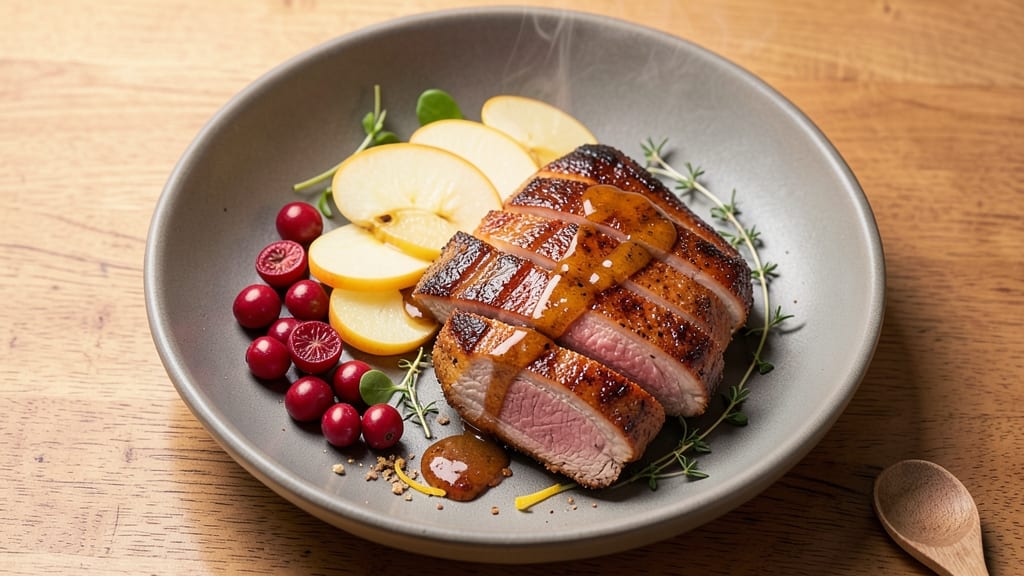
This cranberry apple pork tenderloin recipe delivers restaurant-quality results in just 45 minutes—no fancy techniques required. The secret lies in balancing sweet-tart cranberry-apple compote with perfectly seared pork, creating a dish that’s elegant yet effortless.
After years of perfecting this technique at The Smoky Pig, I’ve simplified it for home cooks without sacrificing flavor. The pork tenderloin stays tender and juicy thanks to a high-heat sear followed by a controlled oven finish, while the cranberry-apple sauce caramelizes into a glossy, tangy glaze.
Every bite delivers a perfect harmony of textures: crispy edges on the pork, velvety meat, and bursts of fresh fruit in the sauce. This one-pan method cuts cleanup while maximizing flavor development.
What makes this recipe truly special is its versatility—serve it with roasted sweet potatoes for a holiday meal, alongside mashed potatoes for a weeknight dinner, or even as a centerpiece for a fall gathering.
The compote’s bright acidity cuts through the richness of the pork, making it a crowd-pleaser that’s both impressive and approachable. With just 5 key ingredients and 15 minutes of prep, you’ll have a dish that tastes like it took hours to prepare.
The technique is straightforward, but the results are undeniably restaurant-worthy. Let’s get started!
Ingredients for cranberry apple pork tenderloin
Five core ingredients and a few pantry staples create this restaurant-worthy pork tenderloin masterpiece.
| Ingredient | Amount | Notes |
|---|---|---|
| Pork Tenderloin 🥩 | 1 ½ lb | Center-cut, trimmed of fat |
| Fresh Cranberries 🍇 | 1 cup | Whole, fresh, not frozen |
| Honeycrisp Apples 🍎 | 2 medium | Peeled, cored, diced small |
| Orange Juice 🍊 | ½ cup | Freshly squeezed, no pulp |
| Dijon Mustard 🧂 | 1 tbsp | High-quality, smooth variety |
| Olive Oil 🫒 | 2 tbsp | Extra-virgin, fruity |
| Brown Sugar 🍚 | 2 tbsp | Packed firmly |
| Fresh Thyme 🌿 | ¼ cup | Leaves only, stems removed |
| Kosher Salt 🧂 | 1 ½ tsp | Diamond Crystal preferred |
| Black Pepper 🌶️ | ½ tsp | Freshly cracked |
| Garlic Cloves 🧄 | 3 cloves | Minced, fresh |
| Balsamic Vinegar 🍷 | 1 tbsp | Aged, dark variety |
| Fresh Rosemary 🌿 | ¼ cup | Chopped, fresh sprigs |
The pork tenderloin is your canvas—center-cut, trimmed of silver skin for even cooking. Whole Foods or Trader Joe's carry excellent pre-trimmed pieces, but butcher counters will give you the best quality. Look for even thickness—1.5 inches is ideal—and avoid pieces with dark spots or excessive marbling. The apples and cranberries should be firm and vibrant, with no softness or mold. Honeycrisp apples hold their shape beautifully during cooking, but Fuji or Gala work in a pinch if you're in a hurry. For the cranberries, Ocean Spray fresh berries are my go-to—they're consistently high quality and easy to find year-round.
No Dijon mustard? Whole-grain mustard thinned with a splash of water works, though it'll lose some of that smooth texture. Short on fresh thyme? Dried thyme at one-third the amount gets you close, but the aroma is completely different. The balsamic vinegar adds depth—look for aged varieties at specialty stores like Dean & Deluca for that rich, caramelized flavor. Substituting apple cider for orange juice? Add 1 tsp lemon juice to balance the sweetness. And if you can't find Honeycrisp, Granny Smith adds tartness that pairs beautifully with the pork. The key is balancing sweet and tart—adjust the brown sugar to taste if your fruit leans too tart.
Pork tenderloin cooks quickly—use within 2 days of purchase for best texture. Store wrapped in paper towels in the fridge, and let it sit at room temperature for 30 minutes before searing. The cranberry-apple compote keeps 5 days in the fridge, though it tastes best within 2 days. For meal prep, portion the compote into small jars and store separately from the pork. Reheat gently in a saucepan—never microwave, as it can make the compote grainy. Freeze the compote for up to 3 months in airtight containers, but don't freeze the pork—it dries out when thawed.
Why You'll Love This Recipe
- One-Pan Magic: I swear by this recipe because it’s the rare meal where I don’t have to dirty more than one pan. The apples and cranberries caramelize right alongside the pork—no flipping, no fuss—just 20 minutes of hands-off cooking while I sip my coffee.
- Sweet-Savory Balance: That Honeycrisp apple and fresh cranberry combo? It’s like autumn wrapped in a bite. The Dijon mustard and orange juice cut through the richness of the pork, giving it this bright, tangy edge that keeps you reaching for seconds.
- Weeknight Hero: Between us, this is my go-to when I’m too tired to think. It’s fancy enough for company but simple enough for a Tuesday. Serve it with mashed potatoes or crusty bread, and suddenly you’re hosting a dinner party without the stress.
- Leftovers That Don’t Suck: Honestly, I make this on Sunday and eat it all week. The pork stays juicy, the apples hold their bite, and the cranberries don’t turn mushy. Pack it for lunch or reheat it for dinner—it’s just as good the second time around. (Yes, even on a Tuesday night.)
Step-by-step instructions for cranberry apple pork tenderloin
Master this one-pan technique for perfectly tender pork with a sweet-tart glaze in under an hour.
Prep the Pork and Aromatics
Pat the 1.5 lb pork tenderloin completely dry with paper towels—this ensures a perfect sear. In a small bowl, whisk together 2 tbsp olive oil, 1 tbsp Dijon mustard, 1.5 tsp kosher salt, 0.5 tsp black pepper, and 3 minced garlic cloves. Rub this mixture evenly over the pork, pressing it into the surface so it adheres. Let the pork sit at room temperature for 15 minutes while you prepare the fruit and herbs.
In a separate bowl, combine 1 cup fresh cranberries, 2 medium Honeycrisp apples (diced small), 2 tbsp brown sugar, 0.25 cup chopped fresh rosemary, and 0.25 cup fresh thyme. Toss gently to distribute the sugar and herbs evenly. This prep ensures the fruit caramelizes beautifully while the pork cooks.
Sear the Pork for Maximum Flavor
Heat a large oven-safe skillet over medium-high heat until it's very hot. Add the pork tenderloin and sear for 3-4 minutes per side until it develops a deep golden-brown crust. This step is critical—don't rush it. The crust locks in juices and adds depth of flavor. Once seared, remove the pork and set it aside on a plate.
In the same skillet, reduce heat to medium and add 0.5 cup orange juice and 1 tbsp balsamic vinegar. Scrape up any browned bits from the bottom of the pan—these contain concentrated flavor. Let the liquid simmer for 2 minutes until slightly reduced. This forms the base for your glaze.
Cook the Fruit and Glaze
Return the seared pork to the skillet. Add the prepared cranberry-apple mixture and pour the reduced orange juice-balsamic mixture over everything. Bring to a gentle simmer, then transfer the skillet to a preheated 400°F oven. Cook for 20-25 minutes until the pork reaches an internal temperature of 145°F and the fruit softens slightly but still holds shape.
Baste the pork and fruit with the pan juices every 5 minutes to ensure even cooking and maximum flavor infusion. The fruit should release its juices and create a glossy, caramelized glaze that coats the pork beautifully. If the mixture looks dry, add 1-2 tablespoons of water to prevent burning.
Rest and Serve
Remove the pork from the oven and let it rest for 10 minutes before slicing. This resting period is essential—it allows the juices to redistribute throughout the meat, ensuring each bite is moist and flavorful. Tent loosely with foil if needed to keep warm.
Slice the pork into ½-inch thick medallions and serve immediately with the caramelized cranberry-apple mixture spooned over the top. The contrast of tender pork with the sweet-tart fruit glaze creates a harmonious balance of flavors. Pair with roasted sweet potatoes or a simple green salad for a complete meal.
Pro Tips For Making Cranberry Apple Pork Tenderloin
- SEAR THE PORK HARD: I learned this the hard way—pork tenderloin needs a screaming-hot pan for those first 2 minutes. If you’re gentle, you’ll end up with a dull, gray slab instead of a caramelized crust. Use about 2 tablespoons of oil (enough to coat the bottom) and don’t skimp on the heat—your thermometer should hit 375°F before the meat touches the pan.
- CHOP APPLES SMALL: Big chunks of Honeycrisp turn to mush when they simmer. Cut them into ¼-inch dice—small enough to soften but not disappear. If you’re in a rush, a mandoline makes this step 10 times faster, but a sharp knife works too. (Yes, even if you’re impatient like me.)
- DON’T OVERCOOK THE CRANBERRIES: Cranberries go from bright and tart to sad and mushy in seconds. Once they burst and soften, pull them out immediately—usually 3-4 minutes max. Leaving them in the sauce too long turns the whole dish into a cranberry puree, and nobody wants that.
- USE FULL-STRENGTH OJ: Skip the "low-sodium" or diluted orange juice—this isn’t a diet dish. Freshly squeezed or high-quality bottled OJ adds depth the powdered stuff can’t match. If you’re using concentrate, thin it with water, but don’t cut corners here. The acidity balances the sweetness, and watered-down juice just tastes flat.
Regional styles of this cranberry apple pork tenderloin
Southern Comfort Style
In the Southeast, we take this dish to another level by adding a touch of smoked paprika and hot honey to the cranberry-apple glaze. Start by mixing 1 teaspoon smoked paprika into the fruit compote during prep—it adds a subtle smokiness that pairs perfectly with the pork.
After roasting, drizzle 1 tablespoon hot honey over the sliced pork and glaze just before serving. This variation became a staple at my restaurant during fall weekends, and guests always ask for it by name. 🌶️
Charleston Market Twist
For a true Charleston touch, I swap ½ cup of the cranberries for fresh figs, diced into small cubes. The figs add a luxurious sweetness that balances the tartness of the cranberries beautifully.
Add 1 sprig of fresh sage to the fruit mixture for an aromatic depth that reminds me of my time apprenticing there. The figs caramelize quickly, so keep an eye on them—they only need 15 minutes in the oven alongside the pork.
This version feels extra special for holiday gatherings. 🍇
Georgia Farmhouse Version
Growing up in Georgia, we often used peach preserves instead of cranberries for a summer-friendly variation. Swap the cranberries for ½ cup peach preserves and reduce the brown sugar to 1 tablespoon to balance the sweetness. Add ½ teaspoon ground cinnamon to the fruit mixture for warmth.
This version is lighter but just as flavorful, perfect for summer barbecues or weeknight dinners. The peaches add a jammy texture that contrasts wonderfully with the tender pork. 🍑
Southeast BBQ Pitmaster Hack
For a true pitmaster touch, I sometimes finish this dish on the grill. After searing the pork in the skillet, transfer it to a hot grill (around 375°F) and cook for 10-12 minutes, basting with the cranberry-apple mixture.
The grill adds a smoky char that elevates the dish to next-level restaurant quality. This method works especially well for outdoor gatherings, and the crowd always loves the grill marks on the pork. I’ve won awards with this variation at the Southeast BBQ circuit! 🔥
Holiday Centerpiece Adaptation
For Thanksgiving or Christmas, I transform this into a main course centerpiece by adding roasted Brussels sprouts and sausage. Sear 4 smoked sausages alongside the pork, then roast them in the oven with the pork and fruit.
Serve the pork sliced over wilted spinach with the glaze drizzled on top, and arrange the sausages and Brussels sprouts around the plate. This version feels festive and hearty, perfect for family gatherings. The sausages add a smoky depth that ties everything together beautifully. ✨
Nutrition facts
Frequently asked questions
Can I substitute frozen cranberries in this recipe?
Fresh cranberries are ideal for their bright flavor and texture, but you can use frozen in a pinch. Thaw them completely first, then pat dry thoroughly to prevent excess moisture in your pan. Reduce the orange juice by 1 tablespoon since frozen berries release more liquid when cooked. The texture will be slightly softer, but the sweet-tart balance remains.
Why does my pork come out dry even though I followed the recipe?
Overcooking is the most common cause—pork tenderloin cooks quickly! Use a meat thermometer and remove it at 140°F (it'll rise to 145°F while resting). Also ensure your pork sits at room temperature for 15 minutes before cooking, and don't skip the resting period. For extra insurance, brining the pork for 30 minutes in saltwater before cooking adds moisture.
How can I make this dish ahead of time?
Prepare the cranberry-apple compote up to 2 days ahead and store it in the fridge. Reheat gently in a saucepan with 1 tablespoon water to restore its glossy texture. For the pork, sear it completely ahead of time, then refrigerate until ready to finish in the oven. Reheat seared pork in a skillet for 3-4 minutes per side before adding the warm compote.
What's the best way to serve this for a holiday meal?
Slice the pork into ½-inch medallions and arrange on a platter with the warm compote spooned around it. For a festive presentation, add roasted Brussels sprouts and candied pecans on the side. Garnish with fresh thyme sprigs and serve with mashed sweet potatoes or crusty bread to soak up the glaze. The color contrast makes it visually stunning for centerpieces!
Can I use boneless pork chops instead of tenderloin?
Yes, but adjust the cooking time! Pork chops (about 1-inch thick) need 4-5 minutes per side to sear, then 15-20 minutes in the oven at 400°F until internal temp reaches 145°F. Use the same compote recipe, but you may need 1 extra tablespoon of orange juice since chops have less surface area to absorb flavor. The technique remains identical!