
Sauces & Condiments
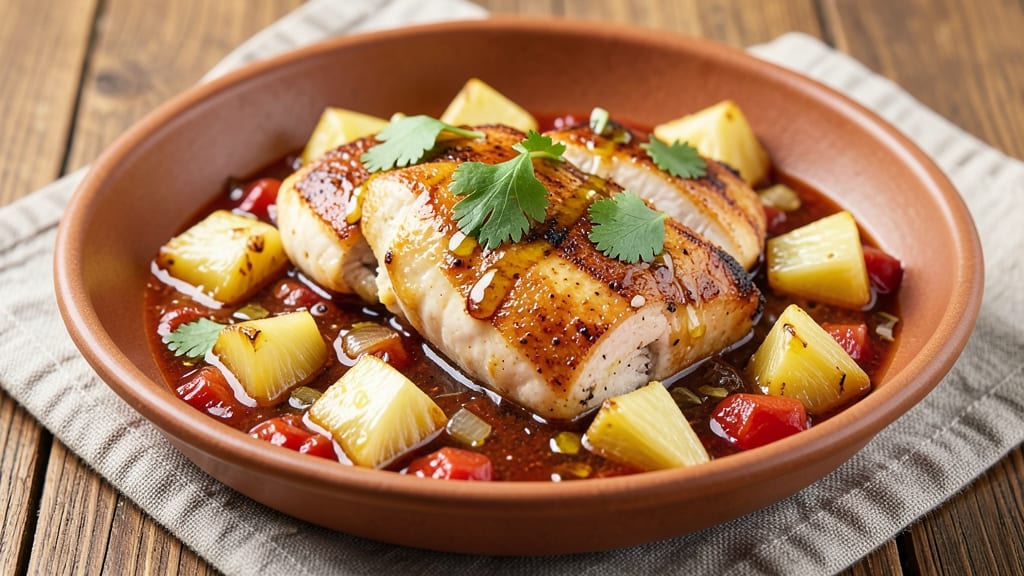
This chicken pineapple tomato sauce transforms a simple one-pan simmer into a vibrant, sweet-tart masterpiece that elevates grilled chicken, rice, or noodles. The secret lies in balancing pineapple’s natural acidity with tomatoes’ depth, while chicken broth infuses rich umami—no blending required.
Simmering aromatics like garlic and onion builds flavor gradually, ensuring every spoonful delivers that tropical brightness without overpowering heat.
The process is straightforward: sauté onions and garlic until fragrant, then add diced pineapple and crushed tomatoes to develop their natural sweetness. A splash of chicken broth deepens the sauce while keeping it light enough to coat proteins beautifully.
For extra richness, a touch of coconut milk or cornstarch can adjust the texture—whether you prefer it silky smooth or slightly chunky.
What you’ll end up with is a sauce that’s bright, balanced, and effortlessly versatile—perfect for drizzling over grilled chicken, spooning onto rice, or tossing with pasta. The pineapple’s tang cuts through the tomatoes’ richness, while the chicken broth ensures a savory foundation.
Best of all, it keeps well in the fridge for up to 5 days, making it an ideal make-ahead condiment for busy weeknights.
This recipe delivers restaurant-quality flavor in under 30 minutes, with minimal prep and no fancy techniques. The key is patience—letting the sauce simmer uncovered allows excess moisture to evaporate, concentrating the flavors into a glossy, cohesive finish.
Whether you’re serving it as a dipping sauce or a main component, this tropical twist on a classic tomato sauce is sure to impress.
Ingredients for chicken pineapple tomato sauce
Bright tropical flavors meet savory depth in this vibrant sauce—just ten ingredients transform simple pantry staples.
| Ingredient | Amount | Notes |
|---|---|---|
| Fresh Pineapple Chunks 🍍 | 1 ½ cups | Fresh or canned in juice, drained |
| Crushed Tomatoes 🍅 | 1 can | 15 oz can, San Marzano preferred |
| Yellow Onion 🧅 | 1 whole | Medium size, finely diced |
| Garlic Cloves 🧄 | 4 cloves | Fresh, minced for aromatic base |
| Chicken Broth 💧 | 1 cup | Low-sodium preferred for balance |
| Extra-Virgin Olive Oil 🫒 | 2 tbsp | For sautéing aromatics |
| Fresh Ginger 🌿 | 1 tbsp | Grated, adds tropical depth |
| Soy Sauce 🍶 | 1 tbsp | For umami richness |
| Brown Sugar 🍚 | 1 tbsp | Balances pineapple tartness |
| Cornstarch 🌾 | 1 tsp | Optional for thickening |
The pineapple is your flavor anchor here—fresh is ideal, but high-quality canned in juice works too (drain well). Trader Joe's carries excellent pre-cut pineapple chunks if you're short on time. For tomatoes, San Marzano cans deliver that sweet, meaty texture, but any good-quality crushed tomatoes will do. The onion and garlic form the aromatic base—don't skip browning them slowly in the olive oil, or you'll miss that deep, sweet foundation. Fresh ginger adds that tropical zing, but if you're using dried, reduce to one-third the amount—it's much more potent.
No chicken broth? Vegetable broth with a splash of soy sauce works beautifully, though the umami will be slightly different. Running short on pineapple? Mango chunks at half the quantity add a similar sweetness, though the texture will be softer. The brown sugar is crucial for balancing the pineapple's acidity—don't omit it, but if you prefer less sweetness, reduce to 1/2 teaspoon. For the cornstarch, remember it's optional—this sauce is delicious as-is, but if you want it thicker for dipping or coating, whisk it with 1 tablespoon of cold water first. The soy sauce might sound odd, but it's what makes this sauce sing with depth—low-sodium works best so you don't overpower the delicate flavors.
This sauce tastes even better the next day as the flavors meld—store in an airtight container for up to 5 days in the fridge. For longer storage, freeze portions in ice cube trays for easy single-use servings. If you're prepping ahead, add the cornstarch slurry at the end when reheating to avoid clumping. The sauce reheats beautifully—just warm it gently on the stove or microwave until bubbling. I always make double batches because it disappears so quickly—perfect for drizzling over grilled chicken, spooning onto rice, or tossing with noodles.
Why You'll Love This Recipe
- No Chopping Nightmare: Honestly, the onion and garlic take two minutes to mince—no tears, no fuss. The pineapple chunks are pre-cut, and the tomatoes? Just crush them by hand while you stir. That’s it. I’ve made this after a long day, and the only thing I had to do was open cans and measure broth.
- Sweet-Savory Magic: The pineapple’s bright tang cuts through the richness of the tomatoes, while the garlic and onion build this deep, warm base—like a hug in sauce form. It’s not too sweet, not too tangy, just right, and the chicken broth ties it all together so smoothly.
- Pantry-to-Table Flex: This sauce works over rice, as a pasta drizzle, or even straight from the pot with crusty bread. I’ve served it at potlucks (it’s a crowd-pleaser), packed it for lunches (adds flavor to bland meals), and even used it to deglaze a pan after roasting chicken—zero waste, all flavor.
- Leftovers That Don’t Suck: Between us, most sauces get sad after day two. Not this one. The tomatoes thicken just enough, the pineapple stays juicy, and the broth keeps it from drying out. I’ve reheated portions for five days straight—still tastes like it was fresh, and it’s cheap enough to make twice if you want. Win.
Step-by-step instructions for chicken pineapple tomato sauce
Here's how to create a vibrant, balanced sauce that marries tropical sweetness with savory depth.
Build the Aromatic Base
Heat the 2 tablespoons extra-virgin olive oil in a large skillet over medium heat until shimmering. Add the finely diced yellow onion and cook for 5-6 minutes until soft and translucent, stirring occasionally. This slow cooking draws out the onion's natural sweetness without browning.
Push the onions to the sides of the pan and add the minced garlic cloves and grated fresh ginger. Sauté for 30-45 seconds until fragrant—you should smell that bright, zesty aroma. Be careful not to let the garlic burn; it should just barely start to color. This aromatic foundation will carry through the entire sauce, so take your time here. The onions should be completely tender with no bite remaining, and the garlic should be golden rather than dark brown.
Develop the Sauce Base
Pour in the 1 can crushed tomatoes and stir to combine with the aromatics. Let the mixture simmer uncovered over medium heat for 8-10 minutes, stirring occasionally. This allows the tomatoes to break down slightly and their natural acids to mellow. You'll notice the sauce darkening slightly and becoming thicker as it reduces.
Add the 1 cup chicken broth and 1 tablespoon soy sauce, then increase heat to medium-high to bring the mixture to a gentle boil. Once boiling, reduce heat to medium-low and let it simmer for 5-7 minutes until the flavors meld. The sauce should now have a rich, slightly tangy base with no raw tomato taste remaining. This is where the umami begins to develop—don't rush this step, as proper simmering builds depth.
Sweeten and Thicken the Sauce
Stir in the 1.5 cups fresh pineapple chunks and 1 tablespoon brown sugar. Let the mixture simmer for 4-5 minutes until the pineapple begins to soften slightly but still maintains some texture. The brown sugar will help balance the pineapple's natural tartness while adding subtle caramel notes. You'll see the sauce begin to take on a beautiful golden hue as the sugar dissolves.
In a small bowl, whisk together the 1 teaspoon cornstarch with 2 tablespoons water to create a slurry. Slowly pour this into the simmering sauce while stirring constantly. Let it simmer for 2-3 minutes until the sauce thickens to your desired consistency—it should coat the back of a spoon but still be pourable. If it thickens too quickly, add a splash of water or broth to adjust. The cornstarch helps create that perfect sauce texture without making it gluey.
Finish and Serve
Taste the sauce and adjust seasoning if needed. You might want to add a pinch more salt or a squeeze of lime juice to brighten the flavors. The sauce should have a perfect balance of sweet, tart, and savory notes with the pineapple's tropical brightness shining through. Let it simmer for another 1-2 minutes to let all the flavors meld completely.
Serve the sauce immediately over grilled chicken, rice, or noodles. The sauce will continue to thicken slightly as it sits, so don't worry if it looks a bit looser right after cooking. For best results, serve while warm—this is when all the flavors truly come together. The pineapple chunks will add delightful texture contrasts, while the tomato base provides a rich, velvety finish that pairs beautifully with the chicken's natural juices.
Pro Tips For Making Chicken Pineapple Tomato Sauce
- Cook Pineapple First: I learned this the hard way—adding raw pineapple chunks to the pot and expecting them to soften later is a mistake. Sauté the pineapple in a dry pan for 3-4 minutes until it releases its juices and starts caramelizing slightly. This builds flavor before it even hits the sauce, and the texture stays better than if you dump it in cold.
- Sweat Onions Low: Skip the high-heat sear for onions here—you’re not making caramel. Cook them over medium-low for 5-6 minutes until translucent but not browned. Burned onions taste bitter and overpower the bright pineapple-tomato balance. (Yes, even if you’re impatient like me.)
- Deglaze Aggressively: After browning garlic, don’t just splash in broth. Scrape up every last bit of stuck-on fond with a wooden spoon—this is where the flavor lives. Add a splash of water first if needed, then let it simmer 1 minute before adding tomatoes. It’s extra effort, but the sauce tastes richer for it.
- Strain the Broth: Store-bought chicken broth is convenient, but it’s full of sediment that muddies the sauce. Strain it through a fine-mesh sieve or cheesecloth before using—it’s 2 minutes of work that makes the final texture smoother and the colors brighter. (Your future self will notice.)
Make-ahead tips for leftovers
Fridge Storage Secrets
Store your sauce in an airtight container—I use glass Pyrex with snap-on lids—and refrigerate for up to 5 days. The flavors actually deepen overnight as the pineapple softens and the tomatoes mellow. Let it cool completely before sealing to prevent condensation, which can dilute the sauce. 💧
When reheating, pour the sauce into a saucepan and warm over medium-low heat for 5-7 minutes, stirring occasionally. If it thickens too much, add 1-2 tablespoons of water or broth to restore its glossy consistency.
For quick meals, microwave portions covered for 1-2 minutes on 50% power, stirring halfway.
Freezer Prep Tips
Portion sauce into ice cube trays for single-use servings—just pop out what you need and reheat. For larger batches, use quart-sized freezer bags with 1-inch headspace to prevent expansion cracks.
Label bags with the date and freeze for up to 3 months. The pineapple holds its texture beautifully after freezing, though it may soften slightly. ❄️
To reheat frozen sauce, thaw overnight in the fridge, then warm gently on the stove. For faster results, transfer to a microwave-safe bowl and heat on medium power in 30-second intervals, stirring between each. Avoid boiling to prevent skin formation on the surface.
Sauce Texture Hacks
If your sauce separates after refrigeration, whisk in 1 teaspoon cornstarch slurry (mix ½ tsp cornstarch with 1 tsp water) while warming. For extra richness, stir in 1 tablespoon coconut milk before serving—it adds a silky finish without altering the flavor balance.
The sauce thickens as it cools, so adjust consistency by thinning with broth if needed.
To prevent skin formation when reheating, place a damp paper towel over the sauce while warming. For best results, reheat only what you plan to use immediately—leftover reheated sauce keeps for 2-3 days in the fridge. The cornstarch helps maintain that glossy, velvety texture even after storage. 💫
Batch Prep Strategy
Double the recipe and freeze half immediately—this sauce disappears fast! I make 2 batches on Sundays so I always have a backup for weeknight dinners. Store one batch in the fridge for immediate use and freeze the other.
The frozen portion is perfect for last-minute meals when you're short on time. 📅
When using frozen sauce, add it directly to your dish (like stir-fries or grilled chicken) and simmer for 3-5 minutes to blend flavors. The sauce reheats beautifully in this way, with no need for separate warming. This strategy ensures you always have a flavorful base ready, even on busy days.
Nutrition facts
Frequently asked questions
Can I use canned pineapple instead of fresh?
Yes! Canned pineapple works perfectly—just drain it well to avoid watery sauce. Look for pineapple packed in its own juice (not syrup) for the best balance of sweetness. For extra flavor, use 1 cup drained chunks and add 1 teaspoon lime juice to mimic fresh pineapple’s brightness.
How do I adjust the sweetness if I don’t like brown sugar?
Swap the 1 tablespoon brown sugar for ½ teaspoon honey or maple syrup—both add subtle sweetness without overpowering. For a tangier profile, reduce to ½ teaspoon brown sugar and add ½ teaspoon lime zest to balance the pineapple’s acidity. Taste as you go!
Can I make this sauce spicier?
Add ½ teaspoon red pepper flakes or 1 chopped Thai chili when sautéing the onions. For smoky heat, stir in ½ teaspoon smoked paprika with the soy sauce. Start with less—pineapple’s natural sweetness can make spice feel more intense.
Why did my sauce turn out too thin?
Sauce thickens as it cools, so don’t panic! If it’s still too thin, whisk in 1 teaspoon cornstarch mixed with 1 tablespoon water and simmer for 2 minutes. For a quicker fix, stir in 1 tablespoon coconut milk or reduce heat and simmer uncovered for 5 minutes to evaporate excess liquid.
What’s the best way to use leftover sauce?
Drizzle over grilled chicken skewers, spoon onto steamed jasmine rice, or toss with udon noodles. For extra flavor, reheat with 1 tablespoon butter or a splash of chicken broth**. It also makes a fantastic dip for spring rolls or a marinade for shrimp—just thin with a little water if needed.