
Main Courses
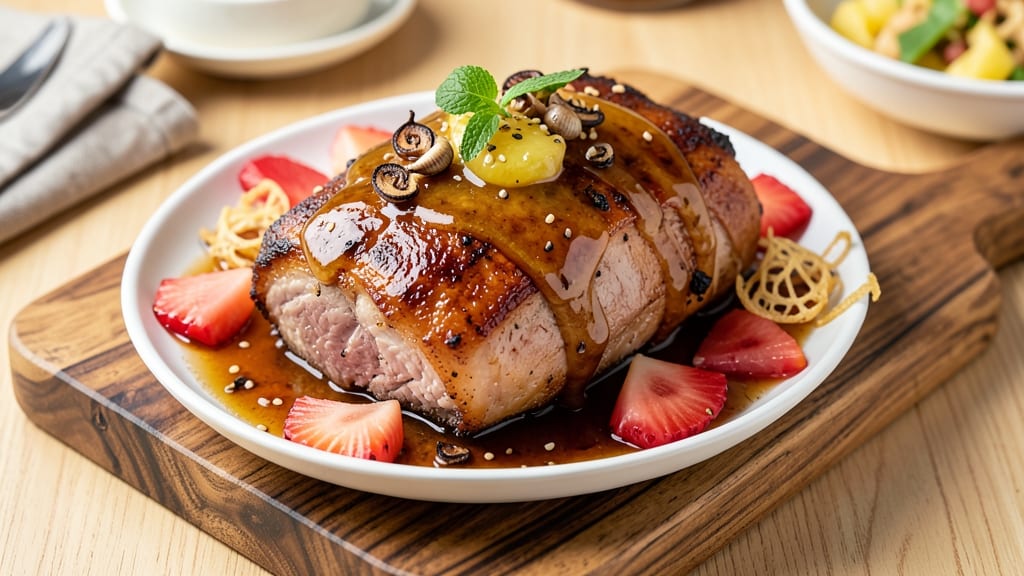
This pork hamonado recipe with pineapple juice delivers restaurant-quality Filipino flavors you can make at home—tender, caramelized pork with crispy celery and sweet-tangy fruit fusion. 🌟 I first tried this dish during a Filipino cook-off, and it became my signature recipe for its perfect balance of savory, sweet, and tangy. The secret lies in the marinade: vinegar, spices, and pineapple juice work together to tenderize the meat while building deep flavor.
The magic happens in the braising process, where the pork slow-cooks until fork-tender while the celery and fruit caramelize into a glossy, sticky glaze. This isn't just another pork dish—it's a celebration of textures and flavors that come together beautifully.
The crispy celery adds a satisfying crunch, while the caramelized fruit brings natural sweetness that cuts through the richness of the pork.
By the time you serve this dish, you'll have perfectly tender pork with a glossy, caramelized surface, crispy celery that holds its shape, and a sauce that's rich with pineapple's tangy sweetness.
It's the kind of meal that makes your kitchen smell like a Filipino restaurant and leaves everyone asking for seconds. The best part? It pairs perfectly with steamed rice and atchara for the full experience.
Whether you're cooking for a family gathering or just craving something special, this recipe delivers professional-quality results with simple techniques. Let's get started—your taste buds will thank you.
Ingredients for best pork hamonado recipe with pineapple juice
Restaurant-quality Filipino flavors start with these bold, tangy-sweet ingredients—perfectly balanced for crispy, caramelized pork.
| Ingredient | Amount | Notes |
|---|---|---|
| Pork Shoulder (or Pork Butt) 🥩 | 2 lb | Cut into 2-inch chunks |
| Pineapple Juice 🍍 | 1 cup | Freshly squeezed preferred |
| White Vinegar 💧 | ½ cup | For tangy depth |
| Brown Sugar 🍚 | ½ cup | Light or dark variety |
| Soy Sauce 🍶 | ¼ cup | For umami richness |
| Garlic Cloves 🧄 | 6 cloves | Minced for marinade |
| Fresh Ginger 🌿 | ½ inch | Peeling removed, grated |
| Celery Stalks 🧅 | 3 whole | Cut into 1-inch pieces |
| Green Bell Pepper 🌶️ | 1 whole | Cut into chunks |
| Onion 🧅 | 1 whole | Quartered, peel on |
| Bay Leaves 🌿 | 2 whole | For aromatic depth |
| Black Peppercorns 🌶️ | 1 tsp | Crushed for heat |
| Salt 🧂 | 1 ½ tsp | Kosher or sea salt |
| Vegetable Oil 🫒 | 2 tbsp | For searing pork |
The pork shoulder is your star—look for well-marbled cuts at Costco or your local butcher. Filipino markets often carry pre-cut pork hamonado pieces, but cutting it yourself ensures even cooking. Fresh pineapple juice is non-negotiable here—canned juice works in a pinch, but nothing beats the bright tang of freshly squeezed. For the ginger, buy a whole root and grate only what you need—it keeps for weeks in the fridge. The celery? Organic stalks from the farmers market stay crisp longer during braising.
No fresh pineapple juice? Coconut water plus a squeeze of lime mimics the acidity, though it won't be identical. Running short on soy sauce? Coconut aminos or tamari work beautifully—just reduce the amount slightly since they're saltier. Subbing bell pepper? Jalapeño or banana pepper adds heat, while red bell pepper keeps it mild. The brown sugar can be swapped for coconut sugar or muscovado for deeper caramel notes. And if you're feeling fancy, add 1 tbsp fish sauce for that authentic Filipino umami punch (though it's optional).
This dish tastes even better the next day—plan ahead. Store leftovers in an airtight container for 4-5 days or freeze for 3 months. The pork reheats beautifully, but the celery gets softer—save some for garnish before serving. For extra crispy celery, blanch it for 2 minutes before adding to the braise. And if you're making this for a crowd, double the marinade and braise in batches—your kitchen will smell like a Filipino feast in no time.
Why You'll Love This Recipe
- Pantry Magic: I swear by this recipe when I forget to buy fresh ingredients—just open a can of pineapple juice, grab vinegar and brown sugar from the cupboard, and boom. The pork shoulder practically tenderizes itself in the slow cooker while I’m scrolling through my phone.
- Sweet-Sour Bliss: That tangy-sweet balance? Chef’s kiss. The pineapple juice cuts through the richness of the pork while the brown sugar caramelizes into a sticky glaze—like a cross between adobo and a dessert you didn’t mean to eat.
- Leftovers That Don’t Suck: Between us, most braised pork turns into sad, dry slabs by day three. Not this. The sauce thickens into a glossy, slightly sweet coating that keeps the meat juicy for at least five days. I meal prep this like it’s my job.
- Budget Stretch: A whole pork butt feeds my family for weeks—not just one dinner. The pineapple juice adds luxury without breaking the bank, and I’ve even swapped in store-brand soy sauce when I’m pinching pennies. (No one notices. I promise.)
Step-by-step instructions for pork hamonado with pineapple juice
This fusion of tender pork, caramelized fruit, and crispy vegetables delivers restaurant-quality results at home.
🍳 Step 1: Sear the Pork for Maximum Flavor
Heat the 2 tbsp vegetable oil in a large Dutch oven over medium-high heat until shimmering. Working in batches, add the 2 lb pork shoulder chunks and sear for 3-4 minutes per side until deeply browned. This step creates the Maillard reaction that builds incredible depth of flavor—don't rush it, even if it means multiple batches.
As you sear, I like to press down gently on the pork with a metal spatula during the first minute of each side. This prevents the chunks from curling and ensures even contact with the pan. Once all pork is browned, remove it to a plate and set aside—we're just getting started.
👨🍳 Step 2: Build the Sweet-Tangy Marinade Base
In the same Dutch oven (no need to clean it—the browned bits are flavor gold), add the 1 whole onion (quartered), 1 whole green bell pepper (cut into chunks), and 3 whole celery stalks (cut into 1-inch pieces). Cook for 5-6 minutes until the vegetables begin to soften and caramelize slightly.
Add the 6 cloves minced garlic, 0.5 inch grated fresh ginger, 2 whole bay leaves, and 1 tsp crushed black peppercorns. Stir for 30 seconds until fragrant—this is where the aromatic magic begins. The combination of garlic and ginger will make your kitchen smell like a tropical paradise.
🥘 Step 3: Create the Signature Hamonado Sauce
Pour in the 1 cup pineapple juice, 0.5 cup white vinegar, 0.5 cup brown sugar, and 0.25 cup soy sauce. Bring to a gentle simmer over medium heat, then reduce heat to low. Let it cook uncovered for 10 minutes while stirring occasionally—this reduces the liquid and concentrates the flavors into a glossy, caramelized sauce.
Here's the thing—this sauce needs to reduce until it coats the back of a spoon. If it looks too thin after 10 minutes, continue simmering uncovered for another 5 minutes. The sauce should be thick enough to cling to the pork but still have a beautiful sheen. This is what makes hamonado so special.
🔥 Step 4: Braise Until Fork-Tender
Return the seared pork to the Dutch oven along with any accumulated juices. Add enough water to just barely cover the pork (about 1 cup). Bring to a gentle simmer, then reduce heat to low, cover, and let it cook for 2-2.5 hours—this is where patience pays off.
Check for doneness after 2 hours by inserting a fork into the thickest piece of pork. It should slide in easily with just slight resistance. If it's not quite tender, continue cooking for another 30 minutes. The pork will continue cooking slightly after you remove it from the heat, so aim for just shy of fork-tender at this stage.
⏰ Step 5: Crisp the Vegetables and Finish
Once the pork is tender, carefully remove it to a serving platter and tent loosely with foil. Increase the heat under the sauce to medium-high and let it reduce rapidly for 5-7 minutes until it thickens to a glossy consistency. This final reduction intensifies the flavors and creates that signature sticky glaze.
Add the braised vegetables back to the pot and cook uncovered for 3-4 minutes until they're crisp-tender and caramelized. The celery should have beautiful browned edges—this is what makes this dish so visually stunning. Serve the pork topped with the caramelized vegetables and sauce, passing any extra sauce at the table for dipping.
Pro Tips For Making Best Pork Hamonado Recipe With Pineapple Juice
- Sear First, Then Braise: After slathering the pork with the pineapple-vinegar marinade, hit it with a screaming-hot pan—no oil needed, the juices will coat it. I used to skip this, and the hamonado always tasted like it was missing something. Two minutes per side until deep brown, then transfer straight to the pot. That crust locks in flavor when it braises.
- Strain That Juice: Fresh pineapple juice is great, but if you’re using canned, strain out the fibrous bits—they turn the sauce slimy. I learned this after serving a batch where the texture was off. Even better, reduce the strained juice by half before adding it to the braise; it concentrates the sweetness and thickens the sauce naturally.
- Don’t Rush the Vinegar: White vinegar cuts through fat and tenderizes, but add it after the pork has seared and the braising liquid starts simmering. Dumping it in early makes the meat taste raw. Start with ¼ cup, taste, then adjust—you want tang, not a mouth-puckering punch.
- Save the Fat, Not the Water: When skimming fat from the braising liquid, leave the first ¼ inch of golden foam—it’s packed with rendered pork flavor. I used to drain it all, thinking it was just grease, but the sauce lost depth. Instead, skim after the liquid reduces by half, and use a fat separator if you’re paranoid about calories.
Essential equipment for best pork hamonado recipe with pineapple juice
Dutch Oven Essentials
Your Dutch oven is the unsung hero of this recipe—it needs to be 5-7 quarts to handle the pork and veggies comfortably. I swear by my Lodge 5.5-quart Dutch oven—it's heavy enough to retain heat beautifully and has that perfect balance of surface area for browning.
Look for one with two sturdy handles and a tight-fitting lid to lock in moisture during braising. If you're on a budget, All-Clad's stainless steel Dutch oven is a fantastic alternative with excellent heat distribution. 🔥
Precision Thermometer
A meat thermometer is non-negotiable for perfect pork—you want that internal temperature at 195-200°F for melt-in-your-mouth tenderness. I use the Thermoworks Smoke because it's durable, has backlighting, and can track multiple probes simultaneously. For a more affordable option, the Thermopro TP19 gives instant readings and is perfect for home cooks.
Insert the probe into the thickest piece of pork without touching the bone to get an accurate reading. 🌡️
Knife Skills Matter
Invest in a sharp 8-inch chef's knife and a mandoline for consistent vegetable cuts. I use my Wüsthof Classic for chopping onions and bell peppers, while the OXO Good Grips mandoline makes quick work of the celery and onion slices.
A sharp knife ensures even cooking and safer prep—never force a dull blade. For the pineapple juice, a juicer or food mill extracts the most flavor, but a fine-mesh strainer works in a pinch. 🧅
Marinade Mixing Tools
Combine your marinade in a large stainless steel bowl—it won't react with acidic ingredients like pineapple juice or vinegar. I use my Le Creuset stoneware bowl (it's heavy and stays cool), but any non-reactive container will do.
For measuring liquids precisely, a liquid measuring cup with clear markings is a game-changer. And don't forget a wooden spoon for stirring—it won't scratch your Dutch oven like metal utensils can. 🥄
Optional Pro Upgrades
For next-level results, consider a cast iron skillet for extra searing power if your Dutch oven feels crowded. I also love using pork fatback (about 2 tbsp) instead of vegetable oil for searing—it adds incredible depth of flavor.
If you're feeling fancy, a tongs set makes transferring crispy celery easier without breaking it. And for presentation, a slotted spoon helps drain excess sauce when plating. 💫
Nutrition facts
Frequently asked questions
Why does this recipe use both vinegar and pineapple juice?
The combination creates the perfect balance of flavors—vinegar adds tangy depth while pineapple juice brings natural sweetness and tenderizes the pork. The acidity from both ingredients helps break down the meat's proteins, resulting in fork-tender texture. Plus, the pineapple's enzymes work like magic to make the pork incredibly juicy.
Can I substitute regular juice for fresh pineapple juice?
You can use canned pineapple juice, but fresh is ideal for maximum flavor. If using canned, look for 100% pineapple juice with no added sugar. For a budget-friendly option, mix ½ cup coconut water with ½ cup lime juice—it mimics the acidity while adding tropical brightness.
How do I know when the pork is perfectly tender?
Use a meat thermometer to check the internal temperature—it should reach 195-200°F for melt-in-your-mouth tenderness. Alternatively, insert a fork into the thickest piece: if it slides in easily with just slight resistance, it's done. The pork will continue cooking slightly after removing from heat, so aim for just shy of perfect at this stage.
What's the best way to make this dish ahead of time?
This recipe tastes even better the next day! Cook the pork and sauce, then let it cool completely before refrigerating in an airtight container for up to 4 days. Reheat gently in the Dutch oven with a splash of water or broth until warmed through. For extra crispy celery, save some fresh pieces and add them back during the final 3-4 minutes of reheating.
Can I make this with pork shoulder or pork belly?
Both work beautifully! Pork shoulder (like pork butt) gives you more meat per pound, while pork belly adds luxurious fat marbling. For belly, cut it into ½-inch thick slices and sear skin-side down first to render the fat. Shoulder is more forgiving for beginners, while belly delivers that restaurant-quality richness.