
Sauces & Condiments
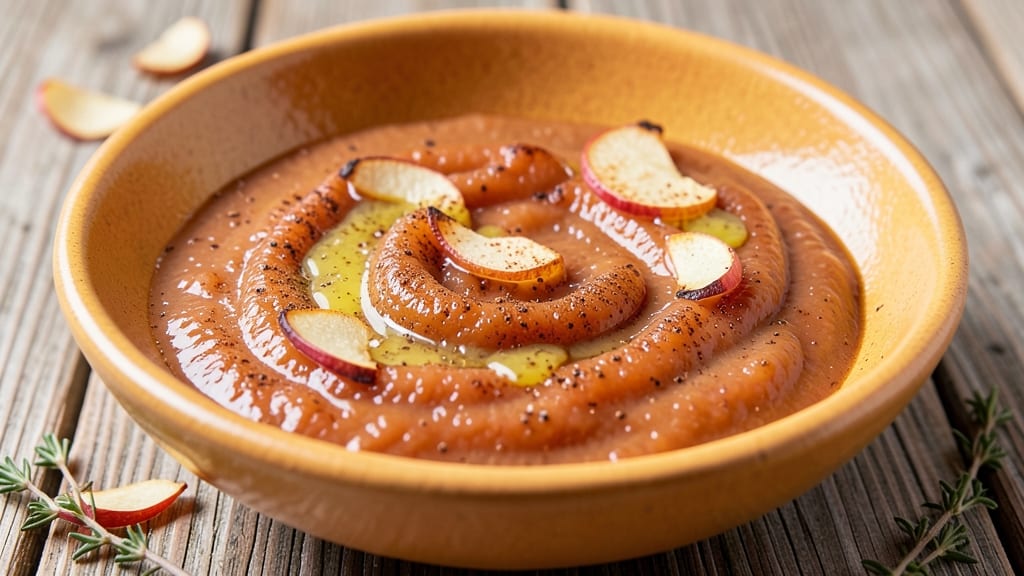
This apple sauce recipe with peel transforms humble apples into a rich, aromatic spread that keeps its texture and flavor for weeks. 💛 Growing up in Atlanta, I learned from Nana Mae that peels add depth—earthy notes that store-bought versions miss entirely.
The secret lies in slow simmering, which develops caramelized sweetness while preserving that satisfying chunkiness.
We start with a simple ratio—equal parts apples and water, plus just enough sugar to balance natural tartness. A pinch of cinnamon and nutmeg rounds out the flavor, while lemon juice brightens the finish.
The peels infuse subtle bitterness that actually enhances the sauce's complexity, creating something far more interesting than smooth commercial versions.
What you'll end up with is a versatile condiment that works as a pie filling, toast topping, or meat glaze. The texture stays perfectly balanced—neither too thick nor too thin—thanks to careful cooking time.
This isn't just apple sauce; it's a bold, spiced accompaniment that elevates any dish it touches.
Store it in the fridge for up to two weeks or freeze for months—its rich flavor only improves with time. Perfect for holiday baking, weeknight dinners, or gifting in jars. Here's how to make it—once you try this, you'll never go back to store-bought again.
Ingredients for apple sauce recipe with peel
Eight simple ingredients transform tart apples into bold, aromatic sauce with texture that lasts.
| Ingredient | Amount | Notes |
|---|---|---|
| Apples with Peel 🍎 | 4 medium | Use tart varieties like Granny Smith |
| Water 💧 | 4 cups | Filtered or spring water preferred |
| Granulated Sugar 🍚 | ½ cup | Adjust to taste for tart apples |
| Ground Cinnamon 🌿 | 1 tsp | Freshly ground for best flavor |
| Ground Nutmeg 🌿 | ¼ tsp | Freshly grated preferred |
| Fresh Lemon Juice 🍋 | 1 tbsp | Brightens the finished sauce |
| Salt 🧂 | ¼ tsp | Diamond Crystal kosher salt |
| Unsalted Butter 🧈 | 2 tbsp | For richness and gloss |
The apples are everything here—Granny Smith or McIntosh work best for that perfect tartness. Local farmers markets often have heirloom varieties with deeper flavor. Skip the pre-peeled ones; the peel's bitterness actually balances the sweetness. If you can't find fresh lemons, bottled lemon juice works in a pinch, but fresh is ideal. For sugar, I always grab the organic cane sugar at Whole Foods—it dissolves better and has a cleaner finish. The cinnamon and nutmeg should be freshly ground if possible, but pre-ground works too.
No Granny Smiths? Fuji or Honeycrisp add sweetness that balances the spices beautifully. Out of cinnamon? Cardamom at half the amount gives a different but equally interesting depth. The butter can be swapped for coconut oil if you're avoiding dairy, though it'll be slightly less rich. For a smoother texture, blend after cooking, but Nana Mae always left it slightly chunky—that's where the real character hides. If your sauce turns out too thick, just add a splash of water or apple cider and simmer again.
This sauce keeps beautifully—2 weeks in the fridge or 6 months in the freezer. I always portion it into small glass jars for gifting. The flavor actually improves with time, especially the spice notes. For holiday baking, make a big batch and freeze it—nothing beats pulling out jars of homemade sauce for Thanksgiving pies. If you're worried about browning, cover the surface with a thin layer of water before sealing. The butter keeps it glossy, so don't skip it if you can help it.
Why You'll Love This Recipe
- No Peel Waste: I’ll be real—most recipes tell you to peel apples, but this one keeps the skin. That fiber-rich peel adds a subtle earthy depth, and honestly? It’s the secret to that restaurant-quality texture without extra work. Just core, chop, and simmer—no peeling, no fuss.
- Spiced Perfection: The cinnamon and nutmeg aren’t just sprinkled on top; they’re simmered right into the sauce, so every spoonful is warm and aromatic. That first bite? It’s like autumn in a jar—sweet, cozy, and just a hint of spice to wake up your taste buds.
- Pantry Staple Magic: Between us, this sauce is my go-to for everything from oatmeal to roasted pork. The sugar balances the tartness of the apples, and the peel keeps it from being too smooth. It’s the kind of thing you’ll make once and then reach for again and again—no fancy ingredients, just pure flavor.
- Make-Ahead Miracle: Simmer a big batch on Sunday, and you’ve got a ready-to-use sauce for the week. It thickens beautifully when chilled, so you can dollop it on toast, stir it into yogurt, or even use it as a glaze. Plus, the peel keeps it from turning mushy—so it stays fresh for days, not hours.
Step-by-step instructions for apple sauce with peel
Here's how to make rich, textured apple sauce that keeps its vibrant flavor and stays fresh.
🍳 Step 1: Core and Chop the Apples
Start by coring the 4 medium apples with peel using an apple corer or a small knife. I like to cut them into ¼-inch thick slices for even cooking—this ensures they soften uniformly while keeping some texture. Leave the peels on for that rustic look and extra fiber, but make sure they're washed first if they're not organic.
Place the apple slices in a large pot with the 4 cups water. The water should cover the apples by about an inch. This helps prevent burning while they cook. If your apples are particularly tart, you might want to taste one slice now—this will help you adjust the 0.5 cup granulated sugar later.
🔥 Step 2: Simmer Until Tender
Bring the pot to a boil over medium-high heat, then reduce to medium-low and let it simmer uncovered for 15-20 minutes. You'll know they're ready when a knife slides in easily, but they still have a slight resistance—this keeps the sauce from being mushy. Stir occasionally to prevent sticking, especially if the apples are releasing a lot of juice.
Here's the thing—don't rush this step. If you rush, you'll end up with a watery sauce. The apples need to break down just enough to release their natural sweetness and develop that perfect balance of texture. You're aiming for a consistency that's between smooth and chunky, with visible apple pieces throughout.
👨🍳 Step 3: Season and Thicken the Sauce
Once the apples are tender, add the 0.5 cup granulated sugar, 1 tsp ground cinnamon, 0.25 tsp ground nutmeg, 1 tbsp fresh lemon juice, and 0.25 tsp salt. Stir well to combine. Taste and adjust the sugar if needed—remember, tart apples need more sweetness, while sweeter varieties might need less.
Let the sauce simmer uncovered for another 5-7 minutes to allow the flavors to meld. This is when the spices really bloom and the lemon brightens everything up. You'll notice the sauce thickening slightly as the water evaporates. If it's too thin for your liking, you can simmer it a few more minutes to reduce it further.
🍳 Step 4: Finish with Butter for Richness
Remove the pot from heat and stir in the 2 tbsp unsalted butter. This adds a lovely richness and gloss to the sauce, balancing the tartness and sweetness. Let the sauce sit for 2-3 minutes to thicken slightly more from the residual heat. The butter should melt completely, giving the sauce a velvety finish.
If you prefer a smoother texture, you can use an immersion blender to partially blend the sauce while keeping some texture. Just pulse a few times until you reach your desired consistency. For a more rustic look, leave it as is with visible apple pieces and peels.
⏰ Step 5: Cool and Store Properly
Transfer the apple sauce to a clean jar or airtight container while it's still warm. Let it cool to room temperature before refrigerating. This sauce keeps well in the fridge for up to 1 week or can be frozen for up to 3 months. When reheating, warm it gently over low heat or in the microwave, stirring occasionally to prevent skin formation.
I always like to make a double batch—it's perfect for topping pancakes, mixing into oatmeal, or spreading on toast. The peels add a lovely visual appeal and a nice texture contrast, making this apple sauce stand out from the usual smooth versions.
Pro Tips For Making Apple Sauce Recipe With Peel
- PEEL FIRST, CORE LATER: I learned this the hard way—peeling apples after cutting them turns your kitchen into a sticky mess. Instead, slice them, then peel the curved side with a paring knife while holding the apple steady. The peel stays attached, and you avoid the "apple glue" situation.
- USE A LITTLE LESS WATER: Start with just enough water to barely cover the bottom of the pot—about ¼ cup for 6 medium apples. Too much water dilutes the flavor, and you’ll end up with a sad, watery sauce instead of something thick and rich.
- STIR CONSTANTLY AT FIRST: The first 5 minutes are critical—apples stick to the pot like they’re auditioning for a horror movie. Keep stirring until the mixture releases from the bottom, or you’ll have to scrape burnt bits off later (trust me, it’s not worth it).
- SWAP SUGAR FOR HONEY LAST: Add the sugar halfway through cooking, then stir in honey or maple syrup in the final 2 minutes for a deeper flavor. The heat caramelizes it slightly, giving your sauce that gourmet touch without extra effort.
Wine and beer pairings for this recipe
White Wine Pairings
For this spiced apple sauce, I reach for crisp, dry white wines that cut through the richness while complementing the cinnamon and nutmeg. A Sauvignon Blanc from New Zealand—like Kim Crawford—brings bright citrus notes that mirror the lemon juice in the sauce.
The wine's herbal undertones also enhance the apple's natural acidity, creating a perfect balance. 🍷
If you prefer something lighter, try a Pinot Grigio from Italy's Alto Adige region. The delicate almond flavors in wines like Cantina Tramin won't overpower the sauce but instead highlight its subtle complexity.
For a Southern twist, a Viognier from Texas—like William Chris—adds a touch of floral elegance that pairs beautifully with the warm spices.
Red Wine Options
Don't dismiss reds entirely—lighter styles work surprisingly well. A Pinot Noir from Oregon, such as Domaine Serene, offers enough acidity to stand up to the sauce's sweetness while its red fruit notes complement the apples. The earthy undertones in these wines also echo the peel's subtle bitterness. 🍇
For a bold contrast, try a Gewürztraminer from Alsace. Its lychee and rose aromas create an unexpected but delightful pairing with the spiced apples. This wine's natural sweetness mirrors the sauce's caramelized notes without being cloying.
Beer Pairings
For beer lovers, a crisp Belgian Witbier like Hoegaarden is my go-to. The coriander and orange peel notes in these beers enhance the apple sauce's spices, creating a harmonious balance. The slight effervescence also cleanses the palate between bites. 🍺
If you prefer a darker beer, try a German Dunkelweizen from Bavaria. The caramel maltiness complements the sauce's sweetness, while the yeasty notes add depth. For a local Texas option, Real Ale's Saison offers a fruity, spicy profile that works beautifully with the warm spices in the sauce.
Non-Alcoholic Options
For a refreshing non-alcoholic pairing, try sparkling apple cider with a splash of ginger beer. The effervescence and spicy ginger notes echo the sauce's cinnamon and nutmeg, creating a delightful contrast. I love Woodchuck Hard Cider's Ginger Apple variety for this.
For something more sophisticated, a sparkling white grape juice—like Martinelli's Sparkling White—works surprisingly well. The bubbles and slight sweetness complement the sauce's rich flavors without overpowering them. It's a great option for brunch or holiday gatherings where alcohol isn't served.
Nutrition facts
Frequently asked questions
Why include apple peels in the sauce?
The peels add subtle bitterness that actually enhances the sauce's complexity, creating depth store-bought versions miss. They also contribute fiber and nutrients while giving that rustic texture. Nana Mae always said the peel's earthy notes make the sauce taste "more like autumn." Just wash them well first!
Can I make this sauce without sugar?
Use 1-2 tablespoons honey or 1 mashed banana instead for natural sweetness. Tart apples like Granny Smith need more sugar than sweeter varieties. Taste as you go—you might need ¼ cup unsweetened applesauce to help thicken while keeping it sugar-free.
How do I adjust the texture?
For thicker sauce, simmer uncovered 5-10 more minutes> to evaporate water. Too thin? Add 1 tablespoon cornstarch> mixed with water, stir in, and cook 2 minutes>. For chunkier texture, skip blending entirely—just mash slightly with a fork after cooking.
What's the best way to store leftovers?
Transfer warm sauce to clean jars while still hot to prevent mold growth. Fridge keeps it fresh for 2 weeks>, while freezing extends shelf life to 6 months>. For freezing, leave ½-inch headspace> and seal tightly. Thaw overnight in the fridge for best texture.
Can I use frozen apples?
Yes! Thaw them first, then proceed with the recipe. Frozen apples work well but may release more water, so you might need to simmer 5 extra minutes> to reach desired thickness. The flavor won't be as vibrant as fresh, but it's a great way to use up winter apples.