
Sauces & Condiments
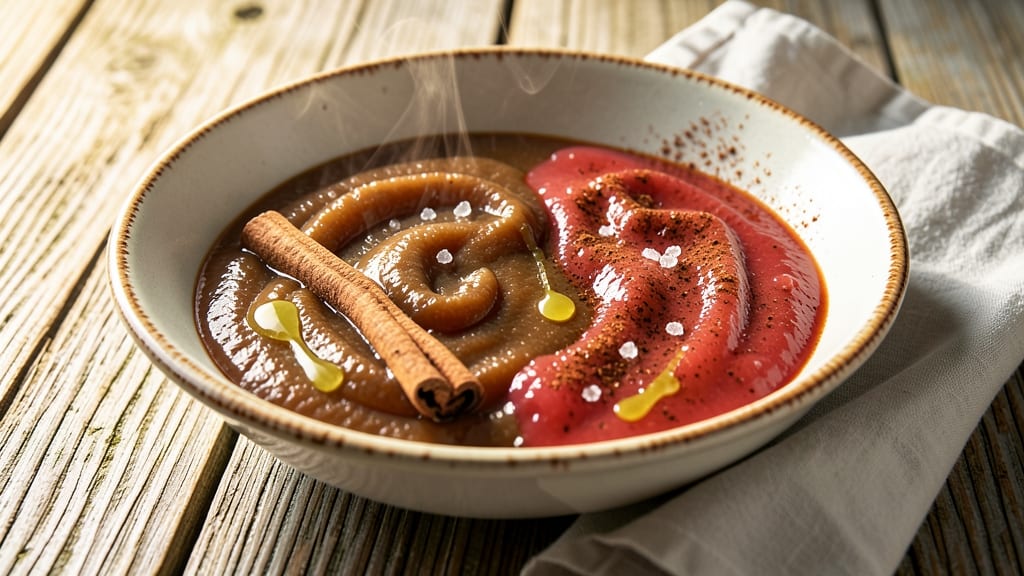
This homemade apple sauce and apple butter recipe transforms seasonal fruit into two versatile spreads that elevate everything from toast to roasted meats.
The chunky apple sauce delivers fresh, spiced sweetness perfect for pairing with breakfast or pairing with savory dishes, while the slow-cooked apple butter offers deep caramelized richness that keeps for months. Both recipes use simple ingredients and proven techniques to create restaurant-quality results at home.
The apple sauce simmers tender apples with cinnamon and a touch of lemon until they break down into a naturally thick, slightly chunky consistency—no added sugar required.
For the apple butter, we slow-cook the mixture until it reduces to a velvety, spreadable texture with concentrated apple flavor and warm spice notes. Both methods preserve the natural sweetness while developing complex, comforting aromas that make them irresistible.
What sets these recipes apart is their versatility—use the apple sauce as a topping for pancakes, a glaze for pork, or a filling for pies, while the apple butter shines on toast, in oatmeal, or even as a glaze for ham.
The slow-cooking process for the butter creates a smooth, caramelized spread that tastes even better with time, while the sauce maintains a bright, fresh character that pairs beautifully with both sweet and savory dishes.
With just a few basic ingredients and minimal effort, you'll have two pantry staples that taste homemade and last for weeks.
The key to success lies in proper simmering times and storing them correctly—vacuum-sealed jars keep the apple butter fresh for up to six months, while the sauce stays fresh in the refrigerator for about two weeks. Let's get started on creating these timeless spreads that will become household favorites.
Ingredients for apple sauce apple butter
Nine core ingredients craft two restaurant-quality spreads from seasonal fruit.
| Ingredient | Amount | Notes |
|---|---|---|
| Apples (Mixed Varieties) 🍎 | 4 lb | Honeycrisp, Fuji, or Gala preferred |
| Granulated Sugar 🍚 | ½ cup | Adjust to taste for sauce |
| Cinnamon Sticks 🌿 | 2 whole | For infusion, removed after cooking |
| Ground Cinnamon 🌶️ | 1 tbsp | For apple butter spice blend |
| Lemon Juice 🍋 | 2 tbsp | Freshly squeezed for brightness |
| Apple Cider Vinegar 🍶 | 1 tbsp | For apple butter preservation |
| Brown Sugar 🍚 | ¼ cup | Enhances caramelization in butter |
| Ground Nutmeg 🌶️ | ½ tsp | Freshly grated for depth |
| Salt 🧂 | ½ tsp | Kosher or sea salt preferred |
| Water 💧 | ¼ cup | For sauce thinning if needed |
For optimal apple selection, prioritize Honeycrisp or Fuji varieties—their balance of sweetness and tartness yields the most complex flavors. Local farmers markets often carry organic apples with superior texture, though conventional varieties from Whole Foods or Trader Joe's work perfectly. Avoid overly soft or bruised fruit, as it releases excess liquid during cooking. The cinnamon sticks should be whole and aromatic; Penzeys Spices carries high-quality organic options. For the spices, freshly ground nutmeg makes a noticeable difference compared to pre-ground varieties, which lose potency quickly.
No brown sugar? Substitute white sugar at a 1:1 ratio, though it won't caramelize as deeply. Short on apples? Pear varieties like Bosc add subtle complexity when mixed with apples. The apple cider vinegar can be replaced with white vinegar or lemon juice, though it won't preserve as effectively. For a sugar-free version, omit all sweeteners and rely solely on the natural sweetness of ripe apples—though the texture will be less spreadable. The lemon juice should be freshly squeezed; bottled versions lack the bright acidity needed to balance the apples' sweetness. If your sauce becomes too thick, apple juice or water can thin it without diluting flavor.
Both spreads store beautifully when properly sealed. The apple sauce maintains peak freshness in an airtight container in the refrigerator for 2 weeks, though its flavor actually improves over time. For longer storage, freeze in ice cube trays for single-serving portions. The apple butter develops deeper flavor when stored—vacuum-sealed jars preserve it for 6 months at room temperature. Label both with dates, as the butter's rich texture can mask spoilage. Reheat gently in a saucepan or microwave for 20-second bursts to maintain texture. These spreads make excellent gifts; package them in decorative jars for holidays or housewarming presents.
Why You'll Love This Recipe
- No Chopping Needed: I swear by this—just peel, core, and toss in whole apples. The cinnamon sticks infuse the sauce while you stir, so no extra prep, no fuss.
- Sweet-Spiced Magic: That balance of tart apples, warm cinnamon, and a hint of lemon brightens every bite. Honestly? It’s the kind of flavor that makes you pause mid-spoonful.
- Pantry Staple Upgrade: Turns basic apples into something luxurious with just sugar and spices. Between us, this is my go-to for toast, oatmeal, or even swirling into yogurt—no extra shopping needed.
- Lasts for Days: A big batch keeps for weeks in the fridge, and freezes like a dream. Perfect for lazy mornings or when you’ve got company and want to impress without extra work.
Step-by-step instructions for apple sauce and apple butter
Transforming fresh apples into rich spreads requires patience and precise technique.
Prepare and Peel the Apples
Start by coring and peeling the 4 lb of mixed apples. I prefer Honeycrisp or Fuji for their balance of sweetness and texture. Cut each apple into quarters and remove the core using a paring knife or apple corer. For efficiency, I slice the peeled quarters into ½-inch chunks—this ensures even cooking and faster breakdown during simmering.
Place the chopped apples in a large, heavy-bottomed pot. The pot should be deep enough to accommodate the apples without overflowing as they release juice. I use a Dutch oven for its even heat distribution, which prevents scorching. Add the 2 whole cinnamon sticks and the 0.5 tsp salt to the pot, stirring gently to distribute evenly. This initial seasoning creates a flavorful base before we add the sugars.
Simmer Until Apples Break Down
Cover the pot and bring the apples to a boil over medium-high heat. Once boiling, reduce the heat to low and let the apples simmer uncovered for 30-45 minutes. You'll know they're ready when a wooden spoon glides through them effortlessly, leaving behind a thick, chunky consistency. Stir occasionally to prevent sticking, especially if your pot isn't non-stick.
Here's the thing—don't rush this step. The apples need time to soften completely and release their natural pectin, which will later help thicken the sauce. If the mixture looks too dry, add the 0.25 cup water in small increments. The goal is a thick, spoonable texture without adding unnecessary liquid. Taste the apples at this stage—they should be sweet but not overly tart, as the spices haven't fully infused yet.
Season and Cook for Apple Butter
For apple butter, increase the heat to medium and add the 0.25 cup brown sugar, 1 tbsp ground cinnamon, 0.5 tsp ground nutmeg, 2 tbsp lemon juice, and 1 tbsp apple cider vinegar. Stir well to combine, then reduce the heat to low again. The mixture will thicken dramatically as it simmers, so keep stirring frequently to prevent burning.
Simmer the apple butter for an additional 45-60 minutes, stirring every 10 minutes. You're looking for a glossy, jam-like consistency that coats the back of a spoon. The color should deepen to a rich amber, and the aroma should be intensely spiced with warm cinnamon and nutmeg notes. If the butter becomes too thick, add water 1 tbsp at a time until it reaches your desired consistency. For a smoother texture, use an immersion blender here—just pulse briefly to avoid making it too smooth.
Strain and Finish for Apple Sauce
For apple sauce, strain the cooked apples through a fine-mesh sieve or food mill to remove skins and seeds. Press down gently with a spoon to extract all the juice. Return the strained sauce to the pot and add the 0.5 cup granulated sugar. Stir over medium heat until the sugar dissolves completely, about 2-3 minutes. Taste and adjust sweetness if needed—some varieties may require slightly more sugar.
For both apple butter and sauce, remove from heat and let cool for 5 minutes before transferring to sterilized jars. The apple butter will thicken further as it cools, so don't be alarmed if it looks too runny while warm. The lemon juice and vinegar act as natural preservatives, extending shelf life when stored in the refrigerator for up to 3 weeks or frozen for 6 months. The cinnamon sticks can be removed after cooling for a cleaner presentation.
Pro Tips For Making Apple Sauce Apple Butter
- PEEL AND CORE FAST: Grab a sharp paring knife instead of a peeler—it’s faster and cleaner for thick-skinned apples like Granny Smith. Cut from the stem down in one smooth motion, then twist the core out with your fingers. I used to waste 10 minutes peeling with a vegetable peeler; this cuts that in half.
- STIR AND SCRAPE OFTEN: Don’t let the apples stick. Every 5–7 minutes, scrape the bottom of the pot with a wooden spoon—especially after the first 20 minutes when sugars start caramelizing. I learned this the hard way when my first batch turned into a glued-together mess. A splash of water or apple cider helps if it gets too dry, but add it sparingly.
- USE WHOLE CINNAMON STICKS: Toss in 2–3 whole cinnamon sticks at the start, not just ground cinnamon. They infuse deeper flavor and look stunning when you strain them out later. Skip the pre-ground stuff—it burns faster and lacks complexity. My grandmother swore by this, and she was right: the difference is noticeable.
- SWEETEN GRADUALLY: Add half the sugar first, then taste after 30 minutes of cooking. Adjust with the rest—some apples (like Honeycrisp) need less, while tart varieties (like McIntosh) demand more. Rushing the sugar leads to cloying sweetness. I was skeptical until I tried it: patience here makes all the difference in balance.
Creative variations of this recipe
Spiced Apple Butter Twist
Add ½ teaspoon of cardamom alongside the cinnamon and nutmeg for a Middle Eastern-inspired twist. The floral notes complement the apples beautifully, especially when paired with Greek yogurt or labneh for breakfast. I've found that organic cardamom pods from Spicewalla work best—just crush them lightly before adding. 🌶️
Caramelized Onion Apple Butter
Sauté 1 cup thinly sliced yellow onions in 1 tablespoon butter until deep golden brown before adding to the apple mixture. This adds a sweet, jammy depth that pairs perfectly with cheddar cheese on toast or as a glaze for roasted pork loin.
Cook the onions slowly over low heat for 30 minutes to develop maximum caramelization.
Apple Butter with Vanilla
Infuse the apple butter with 1 vanilla bean or 1 teaspoon vanilla extract for a luxurious touch. Split the vanilla bean lengthwise and scrape out the seeds, then add both the pod and seeds to the simmering mixture.
Remove the pod after 20 minutes of cooking. This version shines when spread on warm brioche or drizzled over vanilla ice cream for a dessert twist.
Savory Apple Butter
Balance the sweetness with ½ teaspoon smoked paprika and ¼ teaspoon black pepper for a savory-sweet spread. This works wonderfully as a glaze for grilled chicken or pork ribs, or as a dip for sharp cheddar cubes.
The smoky depth cuts through rich meats beautifully. I like to add it in the final 10 minutes of cooking to preserve its aroma.
Apple Butter with Walnuts
Toast ½ cup walnut halves in a dry skillet over medium heat for 5 minutes, then chop roughly and stir into the finished apple butter. The crunchy texture contrasts perfectly with the smooth spread.
This version is ideal for oatmeal or yogurt bowls, adding both texture and nutty richness. Store the nuts separately until ready to serve to maintain freshness.
Herbed Apple Sauce
Infuse the apple sauce with 1 sprig fresh thyme and 1 sprig fresh rosemary during cooking. Remove the herbs before straining for a clean finish. This herbaceous twist pairs exceptionally with roasted chicken or pork tenderloin.
I often add it to the sauce during the final 10 minutes of simmering to develop the flavors without overpowering the apples.
Nutrition facts
Frequently asked questions
Can I make apple sauce and apple butter without added sugar?
Yes, but the results will vary! For apple sauce, use very ripe, sweet apples (like Honeycrisp) and reduce the sugar to 2-3 tablespoons—the natural fruit sweetness will shine. For apple butter, you'll need at least ¼ cup brown sugar to help with caramelization and preservation. Taste as you go and adjust based on your apple variety.
How do I know when apple butter is done?
Look for a glossy, jam-like texture that coats the back of a spoon and leaves a clean trail when dragged across the surface. The color should deepen to rich amber, and the aroma should be intensely spiced. If it's still runny after 60 minutes, simmer uncovered for another 10-15 minutes to reduce further.
Can I substitute pears for apples in these recipes?
Pears add a subtle floral note that works beautifully. Use a 50/50 mix of apples and pears (like Bosc) for balanced flavor. Pears break down faster, so reduce simmering time by 10-15 minutes for both recipes. The texture will be slightly softer, but the sweetness remains concentrated.
Why did my apple sauce turn out too runny?
This usually happens from overcooking (releasing too much liquid) or underripe apples with less natural pectin. For a quick fix, simmer uncovered for 5-10 minutes longer to reduce liquid. If that doesn't work, mix in 1 tablespoon cornstarch or tapioca starch dissolved in 2 tablespoons water and cook until thickened.
How long can I store these spreads?
Apple sauce stays fresh in the fridge for 2 weeks and freezes well for 3 months. Apple butter's rich texture makes it shelf-stable—vacuum-seal it for 6 months at room temperature or 1 year in the fridge. Both develop deeper flavor with time, so label jars with dates!