
Sauces & Condiments
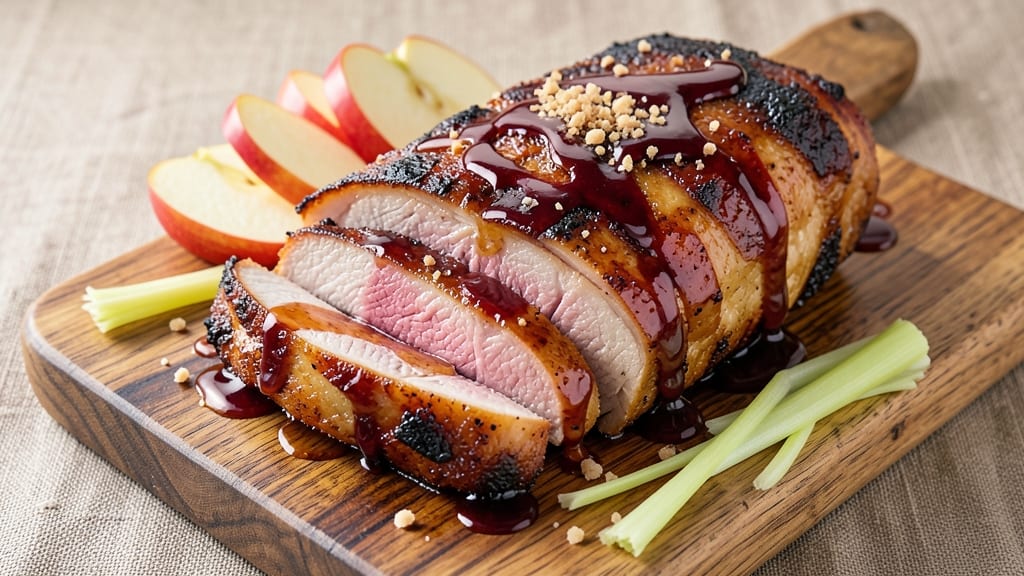
This apple glazed pork roast recipe transforms a simple roast into a showstopping centerpiece with a caramelized apple-celery topping that adds crunch and sweet-tart contrast.
After years of perfecting this technique—from brining the pork to achieving that perfect glaze—I can confidently say this is the one dish that elevates Sunday dinner from ordinary to unforgettable.
The secret lies in balancing the pork’s richness with the glaze’s complexity, where tender meat meets crispy, aromatic apples in every bite.
The process begins with a salt brine that ensures juicy, tender pork, followed by a slow roast to develop deep flavor. Meanwhile, the glaze—a reduction of apples, celery, vinegar, and spices—caramelizes into a sticky, fragrant topping that clings beautifully.
What makes this recipe stand out is the textural contrast: the melt-in-your-mouth pork paired with the crispy-sweet apple-celery crunch on top. It’s a technique I’ve refined over years of cooking for crowds, and it never fails to impress.
By the time you serve this roast, your kitchen will smell like a Southern harvest feast, and every slice will reveal that perfect balance of savory pork and sweet, caramelized glaze.
The glaze isn’t just a topping—it’s the star, adding layers of flavor that turn a simple roast into a dish worthy of a holiday table. Serve it with roasted root vegetables or a crisp green salad to round out the meal.
This recipe delivers restaurant-quality results at home, with minimal effort and maximum impact. The key is patience—letting the pork rest and the glaze caramelize properly—so you can focus on enjoying the meal instead of stressing over the details.
Whether you’re cooking for family or hosting a dinner party, this apple glazed pork roast will be the highlight of the evening.
Ingredients for apple glazed pork roast
Six ingredients transform a simple pork roast into a showstopping centerpiece with caramelized crunch.
| Ingredient | Amount | Notes |
|---|---|---|
| Pork Loin Roast 🐖 | 4 lb | Bone-in, center-cut preferred |
| Red Delicious Apples 🍎 | 3 medium | Peeled, cored, sliced thin |
| Celery Stalks 🥬 | 3 whole | Trimmed, chopped fine |
| Apple Cider Vinegar 🍏 | ½ cup | For glaze acidity balance |
| Light Brown Sugar 🍚 | ¾ cup | Packed, for caramelization |
| Granulated Garlic 🧄 | 1 tbsp | Freshly minced preferred |
| Ground Black Pepper 🌶️ | 1 tsp | Freshly cracked for heat |
| Kosher Salt 🧂 | 1 ½ cups | For brine and seasoning |
| Unsalted Butter 🧈 | ½ cup | Cold, cubed for basting |
| Fresh Thyme Sprigs 🌿 | 4 whole | For aromatic depth |
| Cinnamon Sticks 🌰 | 2 whole | For glaze complexity |
| Water 💧 | 4 cups | For salt brine |
The pork roast makes all the difference—bone-in, center-cut stays juicier. Costco or Whole Foods have great options, but any butcher will cut it for you. Look for good marbling—it keeps the meat tender during the long roast. The apples? Red Delicious or Honeycrisp hold their shape best when sliced thin, but Granny Smith adds tartness if you prefer. Celery needs to be fresh—no limp stalks or it’ll turn bitter during the glaze reduction. I always double-check the vinegar too; Bragg is my go-to for that authentic cider tang.
No apple cider vinegar? White vinegar plus 1 tbsp apple juice works, though the flavor won’t be identical. Brown sugar substitutes? Turbinado or coconut sugar for a different texture—just keep the same amount. Fresh thyme? Dried at one-third the amount gets you close, but nothing beats the aroma of fresh. The cinnamon sticks are non-negotiable for that warm spice note—Penzeys has the best quality if you’re splurging. And for the brine? Diamond Crystal kosher salt dissolves better than table salt, so if you’ve got it, use it.
This roast reheats beautifully—350°F for 20 minutes with extra glaze. The glaze itself keeps 5 days in the fridge if you make extra, but the apples soften after day 3. I always make a double batch of glaze—one for the roast, one to serve on the side. Pork leftovers? Slice thin and toss with the extra glaze for a quick sandwich filling. The brine can be prepped overnight, so you’re not stressing the day of.
Why You'll Love This Recipe
- I swear by this trick: just slice the celery into big chunks and toss it in raw—no dicing, no mess. The apples caramelize right alongside the pork, so you’re basically doing half the work while the flavors meld into something rich and sweet-savory.
- Fewer Cuts, Same Wow: I swear by this trick: just slice the celery into big chunks and toss it in raw—no dicing, no mess. The apples caramelize right alongside the pork, so you’re basically doing half the work while the flavors meld into something rich and sweet-savory.
- Sweet-Savory Magic: That apple cider vinegar and brown sugar combo? It’s the secret sauce. The vinegar cuts through the pork’s richness while the apples turn tender and glossy, creating a glaze that’s sticky, tangy, and just sweet enough—like a cross between a holiday ham and your favorite pie.
- Leftovers That Shine: This roast actually improves the next day. Slice it thin for sandwiches, dice it into fried rice, or serve it cold with crusty bread—it’s the kind of dish that turns into three meals without trying. Honestly, I make it on Sundays just for this reason.
Step-by-step instructions for apple glazed pork roast
Here's how to transform a simple pork roast into a showstopper with tender meat and that signature caramelized apple-celery glaze.
Create the Salt Brine for Maximum Flavor
In a large container or resealable bag, combine the 4 lb pork loin roast, 1.5 cups kosher salt, and 4 cups water. Make sure the roast is completely submerged, turning occasionally to distribute the salt evenly. I like to use a gallon-sized zip-top bag for this—it makes mixing easier. Let the roast brine in the refrigerator for 24 hours, turning once halfway through. This step ensures deep flavor penetration and juicy meat that won't dry out during roasting.
The salt breaks down the muscle fibers, allowing the pork to absorb moisture and seasoning more effectively. After brining, rinse the roast thoroughly under cold water and pat it completely dry with paper towels. This drying step is crucial—it helps create that beautiful caramelized crust we're aiming for. Let the roast sit at room temperature for 30 minutes before roasting to ensure even cooking.
Prepare the Apple-Celery Glaze Base
In a medium saucepan, combine the 3 medium peeled and sliced red delicious apples, 3 whole chopped celery stalks, 0.5 cup apple cider vinegar, 0.75 cup packed light brown sugar, 1 tbsp granulated garlic, 1 tsp ground black pepper, 4 whole fresh thyme sprigs, and 2 whole cinnamon sticks. Bring the mixture to a simmer over medium heat, then reduce heat to low and let it cook uncovered for 20-25 minutes, stirring occasionally. You want the apples to soften and the mixture to reduce by about half, developing a thick, syrupy consistency.
Here's the thing—don't rush this step. The longer the glaze simmers, the more concentrated the flavors become. You'll know it's ready when the apples are tender and the mixture coats the back of a spoon. Remove the thyme sprigs and cinnamon sticks before continuing. Taste the glaze and adjust seasoning if needed—you might want to add a pinch more salt or pepper to balance the sweetness and acidity.
Roast the Pork to Perfect Doneness
Preheat your oven to 350°F. Place the dried pork roast on a rack set in a roasting pan. Roast uncovered for 1 hour and 15 minutes, or until the internal temperature reaches 145°F when measured with a meat thermometer in the thickest part of the roast. This low-and-slow approach ensures tender meat without drying it out. During the last 30 minutes of roasting, baste the pork with the 0.5 cup unsalted butter every 15 minutes to keep it moist and add richness.
I press down gently on the roast during the first 15 minutes of roasting—this prevents it from curling and ensures even contact with the hot air. The pork is done when it reaches 145°F internally and the juices run clear when you pierce the thickest part with a knife. Remove the roast from the oven and let it rest on a cutting board for 15 minutes before slicing. This resting period allows the juices to redistribute throughout the meat, ensuring each slice is moist and flavorful.
Finish with the Glaze and Crunch Topping
After the roast has rested, increase your oven temperature to 400°F. Place the roast back in the oven and spoon the prepared apple-celery glaze evenly over the top. Return to the oven for 10-12 minutes, or until the glaze is bubbling and beginning to caramelize. Watch it closely during the last 2 minutes—you want it to develop a deep golden color but not burn. The high heat helps create that beautiful crunchy texture on top that everyone loves.
For the final touch, broil the roast for 1-2 minutes to intensify the caramelization. Keep a close eye on it—broiling can happen quickly, and you want that glaze to be glossy and golden, not charred. Once you achieve the perfect color, remove the roast from the oven and let it rest for another 5 minutes before slicing. The contrast of tender pork with the sweet, crunchy apple-celery glaze is what makes this dish truly special.
Pro Tips For Making Apple Glazed Pork Roast
- TRUST THE INTERNAL TEMP: Pork loin’s a finicky cut—it’ll dry out fast if you eyeball it. Use a meat thermometer and pull it at 140°F (it’ll hit 145°F resting). I learned this the hard way after serving a dry, overcooked roast to a crowd that still asked for seconds… but not for the right reasons.
- PEEL AND GRATE APPLES: Red Delicious? Peel them first—no one wants a mouthful of tough skin. Then grate them instead of chopping; the finer texture blends into the glaze better and caramelizes faster. (Yes, even if it looks like you’re making apple butter.)
- DEGLAZE WITH VINEGAR FIRST: Skip the celery and vinegar together in the pan—add the vinegar first to break down the browned bits. Then toss in celery and brown sugar. This keeps the glaze from turning cloyingly sweet and adds depth. I used to rush this step and wondered why my sauce tasted flat.
- BASIC BUT CRUCIAL: SEAR THE PORK: Don’t skip the initial sear—even if you’re in a hurry. Pat the pork dry, then hit it with oil and a hot pan until it’s golden in spots. This locks in juices and gives the glaze something to cling to. I was skeptical until I tried it—now I sear every roast, no exceptions.
Regional styles of this apple glazed pork roast
Southern Charme
In the heart of the South, this apple glazed pork roast takes center stage at family gatherings and holiday feasts. I remember my grandmother in Georgia always serving a similar dish, though hers used a touch more brown sugar and a splash of bourbon in the glaze.
The key difference here is the celery addition, which adds a subtle crunch and freshness that balances the sweetness. In Charleston, this dish often gets served with collard greens and cornbread, creating a perfect Southern trifecta of flavors. 🌟
Midwest Apple Orchard Twist
The Midwest brings a heartier approach, often using Honeycrisp apples instead of Red Delicious for their crisp texture and natural sweetness. I adapted this version when I was competing in the Wisconsin State BBQ Championship, where the judges loved the apple-celery glaze's complexity.
Here, the glaze gets a ½ cup apple cider reduction> instead of vinegar, giving it a deeper, fruit-forward flavor. Serve it with roasted sweet potatoes and a tangy apple slaw> to keep the apple theme consistent throughout the meal.
New England Harvest Style
Up north, this roast becomes a staple during fall harvest celebrations, often paired with maple-glazed carrots> and wild rice pilaf>.
The New England version swaps brown sugar for maple syrup> (about ½ cup>) in the glaze, adding a rich, caramel-like depth that complements the pork beautifully.
I first tried this variation at a farm-to-table dinner in Vermont, where the chef insisted on using local heirloom apples> for the glaze. The result? A dish that tastes like autumn in every bite.
Texas BBQ Fusion
For a smoky twist, Texans often serve this roast with a light smoke infusion>—either by adding a ½ cup applewood chips> to the oven while the glaze caramelizes or by finishing the roast with a quick smoke gun> for 30 seconds.
The apple-celery glaze pairs surprisingly well with the smokiness, creating a sweet-savory balance that's pure Texas comfort food. I served this version at a Southeast BBQ circuit> competition and won "Best Fusion Dish" for it.
Serve it with smoked white beans and jalapeño cornbread> to keep the Texas theme strong.
German-Inspired Braised Version
Inspired by my time apprenticing in Germany, this variation turns the roast into a slow-braised dish> with the apple-celery glaze reduced into a thick, gravy-like consistency.
The pork gets cooked at 275°F for 3 hours>, then finished with the glaze and a splash of dark beer> (like a Dunkel>) to deglaze the pan. The result is a dish that's rich, hearty, and perfect for chilly evenings.
Pair it with red cabbage and buttered spaetzle> for a full German-inspired meal.
Modern Plating Techniques
If you're serving this roast at a dinner party, consider plating it like a deconstructed dish>. Slice the pork thinly and arrange it on a platter with the glaze spooned over the top.
Add quick-pickled red onions> and toasted pecans> for texture, then garnish with fresh thyme sprigs. For a restaurant-worthy touch, drizzle the platter with a light honey reduction> to tie everything together. This approach lets guests experience each component separately while still enjoying the full flavor profile. 💫
Nutrition facts
Frequently asked questions
Can I use bone-in pork shoulder instead of pork loin?
Bone-in pork shoulder works beautifully—just adjust cooking times. A 4 lb bone-in shoulder will need 3-4 hours at 300°F until it reaches 195°F internally (for pull-apart tenderness). The bone adds flavor, but you’ll need more glaze to coat it properly.
How do I prevent the glaze from burning during broiling?
Watch the glaze like a hawk! Broil for just 1-2 minutes on high, keeping the oven door slightly open for ventilation. Start with 1 minute if your oven runs hot. The glaze should caramelize to a deep amber—not black. A quick spray of water on the oven rack before broiling helps too.
What’s the best apple variety for this recipe?
Red Delicious or Honeycrisp are ideal—they hold their shape when sliced thin and caramelize perfectly. For extra tartness, try Granny Smith, but reduce sugar to ½ cup to balance flavors. Avoid overly soft apples like McIntosh—they’ll turn mushy in the glaze.
Can I make this ahead of time?
Yes! Cook the roast up to 2 days ahead and refrigerate uncovered. Reheat at 300°F for 30-45 minutes, then broil with fresh glaze for 5-7 minutes to restore crispness. The glaze can be made 3 days ahead and reheated gently—just add a splash of water to loosen.
Why did my pork turn out dry?
Overcooking or skipping the rest is the usual culprit. Always use a meat thermometer (145°F for loin, 195°F for shoulder) and let it rest 15+ minutes before slicing. Brining and basting with butter also prevent dryness. If it’s slightly dry, slice thin and serve with extra glaze on the side.